
• 41. Caroline to Luise Gotter and Wilhelmine Bertuch in Gotha: Göttingen, 28 May 1784
Göttingen, 28 May [17]84
|82| Because I had so much to tell you, my dears, I almost chose instead simply to remain silent. Writing only a little would not do, and my own joyous restlessness quite took away my courage to write more. So I really did have to resolve firmly to relate everything, and yet whenever I did finally put quill to paper, so many images flew through my soul and my heart became so full and yet everything closed in so tightly around me — that I ran away yet again, perhaps to make sure that my brother really was still in his room upstairs and had not perhaps even returned to America.
He is not here just now, being summoned to Cassel the day before yesterday, so I will use his absence to speak about him. These entire three weeks I have hardly left his side.
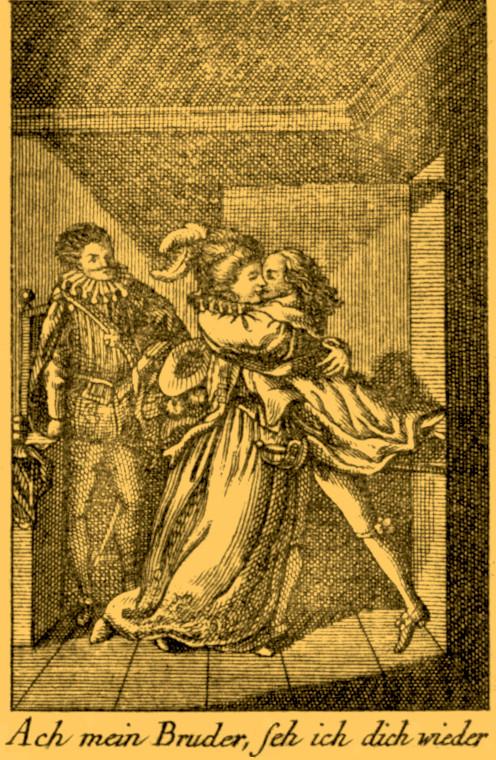
Although he arrived in the night of May 3/4, he went to an inn so as not to startle us. Then early that morning he surprised us all while we were still in bed. My first thought upon awakening was for him, and my first act a prayer. But then I heard an unfamiliar but gentle voice in the next room, and I called out without even thinking, “Who’s there?” And at the precise moment of my prescient anticipation — I see him and am in his arms. [01]
I truly cannot relate anything coherent about these initial moments; I remember only that he acted with extraordinary restraint and even dampened the tone of his voice to avoid becoming too vehement; quite unconsciously, I remarked how he had changed much to his own advantage, with such self-control, and beheld his figure, which — so it seemed to me — had become even more beautiful through a certain manifestation of virtue, and who can possibly describe, who share the rushing flood of impressions that swept over me about how precious he is, about my love, about the present!
These impressions gradually calmed down, and the pure, simple feeling of joy made me happier, and so |83| light that I was finally able to speak with him and see him without such unpleasant stirrings.
We quickly became reacquainted from both sides with enhanced friendship and with twice the inseparable brotherly and sisterly love. Although he himself does not know what to call our relationship, once it had been determined — even without a name — the rest of our time together became one long series of happy moments composed of trust, stories, mutual observations about each other, respect, and tenderness, and this series cannot but go on into infinity. An alliance for all eternity is, after all, the most beautiful thing imaginable to human beings.
He has not changed at all, and yet has changed completely. That is, although his basic characteristics are completely the same as before, virtually all have now been cultivated to perfection; not much more was needed to turn him into one of the very best men. Nor is it partiality on my part that I consider him such, my dear woman and my dear girl. There are more intelligent people on my side than me alone. “As beautiful inwardly as outwardly,” Spittler said; and Madam Less: “Your brother is the most noble, charming man I know.”
I can truthfully say, my dears, that it is not his external qualities that blind me, nor his remarkable talent for attraction, which prompts the approval of the world from every quarter. I love him because I appreciate him, and I appreciate him primarily for the sake of the untainted, ennobled virtue he has brought back from the dangerous setting of the world that was surrounding him. Religion, true, profound reverence for God, and a feeling of his own dignity were the pillars of that virtue.
When he departed England, one of his more refined acquaintances issued an ardent request through a third party that he not let himself be corrupted. My brother in his own turn sent word to that acquaintance that there was no danger of that, and that he |84| was much too proud to go over to the coarser class of people. This same motivation, rather than allowing his manners to become coarser amid the constant company of sailors and officers, instead refined them, just as in the larger sense the delicacy of all his feelings is now more finely tuned. One can see that everywhere he went, he sought out the very best people and profited from their company; indeed, his sojourn among the English may even have spoiled him. He has become just too much an Englishman, and for that reason he will now necessarily find Germany less to his liking.
But in this regard he is nonetheless not unjust toward anyone and is much too well mannered to allow it to be noticed. Those manners have become second nature to him and now seem utterly without pretension. And in general, everything has been completely wiped out that in regard to this latter issue might be classified as folies [folly, extravagence], even the affected element of elegance in his clothes.
That is, not a trace of the kind of amour-propre [pride, self-esteem] that might make a person seem ridiculous or irksome. There is no longer anything about him one would call amour-propre, and his pride oppresses no one because it elevates him, in his innermost heart, above all that is base or low. His intensity, his fieriness is the same, as is the vehemence of his passions. The strength of his spirit, however, balances it out, and that is what makes him a man. His physical form has improved considerably and has indeed become the symbol of his character. He has recently become stronger again; as proof, I am including his silhouette.
That is basically the brother who is so fond of me, and of whom I am so fond, so much so that we are, the two of us, still, even now, the dearest thing in the world to each other. He is pretending I will always remain so for him, but I do not wish to; and in three weeks I will doubtless not be permitted to say aloud even to the two of you that he is indeed so to me.
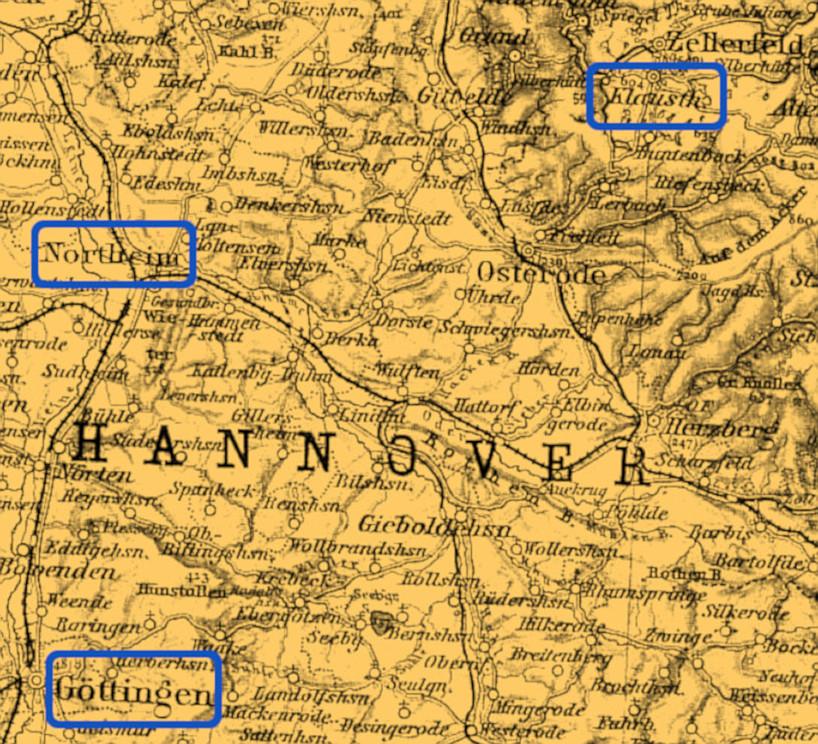
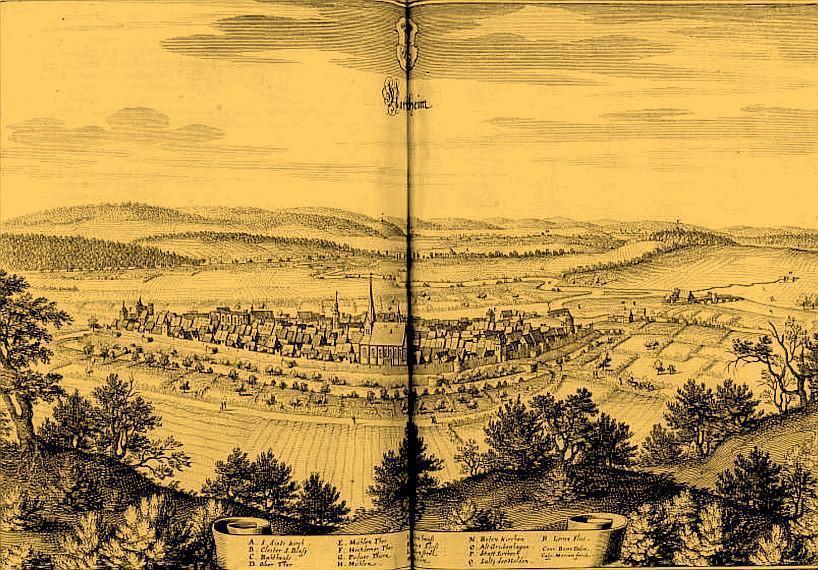
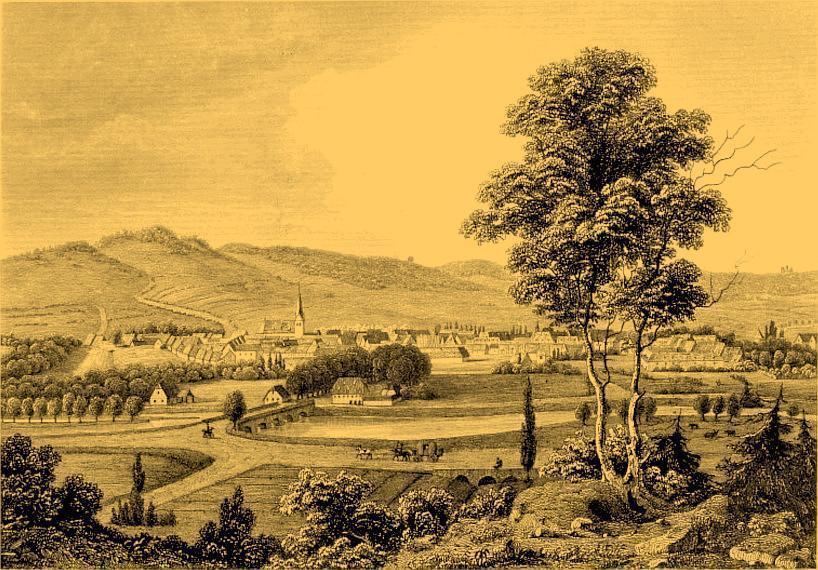
On May 14 we arranged a rendés-vous for Böhmer in Nordheim. [1] |85| Madam Less went with us. Although I experienced all the joys of reunion again, that evening I was exhausted and ill, for of all the days of my life, this was indisputably the one characterized by the strongest feelings and emotions. When my brother gave me over to his friend — I between the two of them [1a] — and they arguing over who loved me the most — Madam Less as empathetic spectator — you just cannot imagine. And then occasionally also the most painful moments in between, and still others in which I would have sacrificed my own happiness in order to give it to my brother. But not a single minute of rapturous enthusiasm, for I could feel only what I was genuinely seeing.
Dejeuners, diners, and soupers without moderation and without end. Some quite unusual and pleasant. We gave a grand dejeuner on his birthday, he was fêted like the prodigal son. We also took several pleasant outings with the Heynes. He and Madam Heyne have always gotten along extremely well, and he still considers her the most charming lady in Göttingen. Therese had already asked me beforehand to introduce her to him as soon as possible.
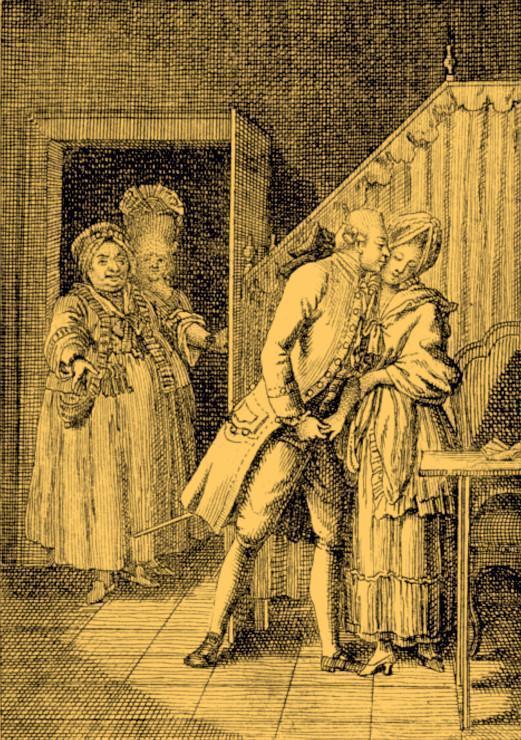
As it happened, they did become acquainted — indeed, so much so that she voluntarily gave him a kiss, the first kiss I have ever seen her give anyone — the whole thing sans consequence! [1b] Although he greatly appreciates her and respects her intelligence, he did notice almost on the very first afternoon, and without being the least prévenu [prejudiced], the coquette and freethinker in her. Nor, of course, does she wish to conceal the latter; but say nothing of this. I do not like talking about her precisely because I so much enjoy talking with her, and because we are cordial to each other. That discovery was, however, enough to make my brother indifferent toward her. [2]
One morning the three of us went to the Paper Mill, [3] where we spent 6 very enjoyable hours. As an aside, let me tell you |86| about a company of people we encountered there. A certain Madam Elise Bethmann from Frankfurt is currently staying here to have her child’s illness treated by Richter; an enormously rich woman. Her husband is Germany’s premier banquier.
Of course, she cannot stand him, since she herself does not really make anything of the uncertainty of wealth; [4] but she is as sensitive as all the other sensitive people I have hitherto known put together; she carries scores of little things in her — albeit extremely thick — praestantes, including paintings, copper engravings, little boxes with hair, cases with dried flowers, ancient relics, etc. She has absolutely no original thoughts of her own, was reared in the school of Madam La Roche, is a great admirer of the latter and, without so much as a spark of her good qualities, exhibits all her weak frivolities. She speaks disparagingly about her husband and is a poor teacher, e.g., pinching her children in public; and yet she is knitting money purses for forty of her intimate lady friends.
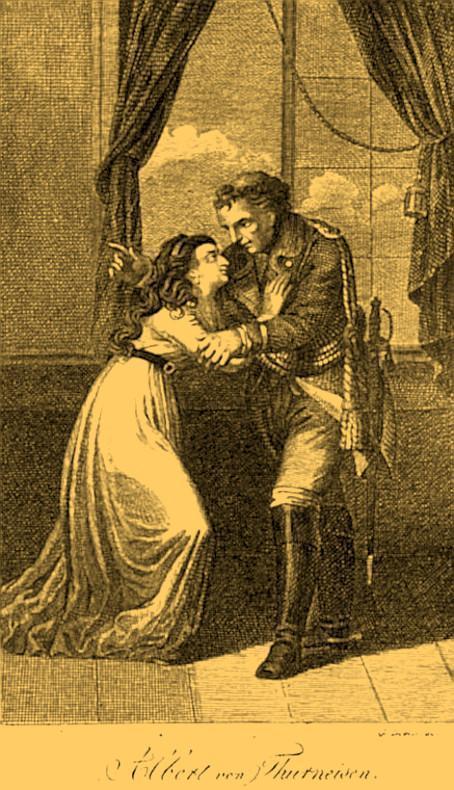
In any event, this woman, with whom we were already acquainted beforehand, was there with a small company that also included a stranger to whom, when we approached, she turned and called out “Thurneysen.” “My God,” I said, “are you Thurneysen?” It was not Albert von Thurneysen, [5] but a young merchant from Frankfurt [6] who was indeed expected that day and who acquired a measure of interest in me because of a particular past incident.
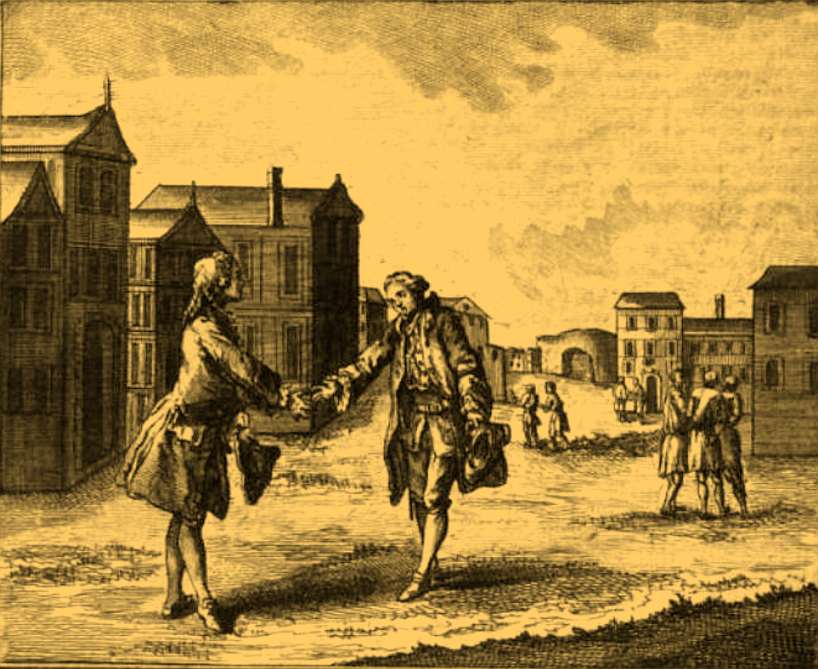
To wit, Madam Less met him upon arriving in Zürich; finding that he bears a striking resemblance in every feature to Meyer, she describes Meyer to him and Thurneysen to Meyer; both are merely told that they would meet sometime during their journeys. When the Grand Duke was in Stuttgart, these two men did indeed see and recognize each other in a large crush of people, approached each other and said: “Are you Meyer?” “Is your name Thurneysen?” [7]
And thus did they form a serious and lasting friendship. |87| He was just now on his way to Hamburg and wanted to visit Friederike in Göttingen. My own outcry puzzled him at first, but he was also already familiar with the name C.M. [Caroline Michaelis] through Meyer. In short, what an amusing scene! Not that I might have found him pleasing; we, all of us, found him rather ridiculous with all his affectation and declamations.
Later, however, after I had gotten to know him better, I was reconciled with him. He read a poem aloud by Goethe’s mother, and Therese remarked that my brother looked like someone who was expecting a pistol to go off at any moment. Afterward, in his passionate manner, he told Therese, “The good Lord would be committing an injustice were he to allow Lavater to die.” He did admittedly make quite an impression on everyone with that.
When he heard I had a copy of Goethe’s Iphigenie in manuscript form, he almost keeled over dead with joy; [8] in a word, he was a bit of a fool, but an extremely good person nonetheless. His resemblance to Meyer is indeed extraordinary, extending even to expression and countenance. The reason is probably that they were born in the same month.
In the meantime, Madam Bethmann asked me, “Have you already spoken with Count Schimmelmann?” [9] — “No, Madam” — “Ah, his sister’s glove is quite dear to me!” whereupon she pulls an old, torn glove out of her bag and passes it around for all to see. She showed my brother an old nail she had brought with her from one of her walks. Even should you two never have encountered such things, do at least believe that what I am telling you is literally true.
We had yet another singular and refined outing with the Heynes. Madam Heyne rented accommodations in a farmhouse in a nearby village, where she occasionally spends a few days during the summer for health reasons. She calls it her villa, Therese calls it “Schnützelputz’s Housekin.” [10] Therese |88| wrote a billet urgently inviting my brother and me to accompany her and her mother there . . .
It was charmant to see Madam Heyne being as amiable as was possible for her to be; Therese was almost too exuberant. After the souper, which, in the middle of a village like that, would have seemed quite romantic to a stranger who might have been passing through — we walked into the village itself. Some 30–40 farmers had assembled in the center. And then loudly enough for everyone to hear, Therese said to the girl who had accompanied us, “If anyone asks you who the gentleman is, just tell them it is the great pagan general who slew so many people in America.” We laughed until our sides hurt.
Madam Heyne accompanied us a third of the way before going back alone, and we three then continued on toward town in the moonlight, fantasizing about the charms of such a summer night and ultimately talking about religion. [11] When we arrived home, my brother said to me, “I am beginning to dislike Therese.”
You can see that I would not be finished before my wedding were I to describe everything so exhaustively.
We often joked about how we were always going around together, and about how the brother was so charming toward his sister that he might even be taken for her lover. [12]
The approval he finds virtually everywhere really is unusual; I hear about it all the time, read about it in letters, see it everywhere. He was successful especially in England. And in Hannover as well. Both princes have summoned him. [13] If only that could make him happy! Quite according to the proverb: Blowing lots of bubbles is still nothing more than blowing lots of bubbles!
My brother will be returning for my wedding . . . The day has been set for June 15. Oh, please celebrate it in your hearts as the day that will determine my future fate; and send along to me your wishes as a wedding present, your good wishes |89| that I myself may prudently engage whatever power is in my own hands to make that fate a happy one. This entire time I really have not even had the power to reflect on things seriously. Indeed, why think about it any further, I thought, since I have already reflected enough? But one cannot escape it.
And now all my new, unknown duties are lining up before me. I am suddenly displaced into their midst, into a completely different setting, and into a completely different circle of people, and torn out of my own. —
Yes, it is a big step. Nor could I take it without having absolute trust in the man for whose sake it is happening, without being completely convinced that, when I give myself to him, he will do everything he can to make it pleasing for me. Ah, may not a single one of my or his hopes be disappointed! I thought for a long time about how I might fulfill them. May God help me carry out the ideal now standing before my soul to make us both happy and to make me ever more worthy of the love of my brother and of my eternally dear friends. [14]
And so farewell until I see you again in Clausthal! There she will come to greet you with the same heart with which she now parts from you, namely,
Caroline Michaelis
Notes
[01] See this remarkably similar and contemporaneous “stormy reunion” of sister and brother in an anonymous engraving to a scene from Miss Jennys Uebersetzerinn [sic], Marianne oder der Sieg der Tugend: Ein rührendes Lustspiel in dray Aufzügen [Frankfurt, Leipzig 1777], act 3, scene 10, p. 69, spoken by the sister, Henriette, to the brother, Worthi: “Ah, my brother, so finally I see you again?” (engraving with the title “Stürmisches Wiedersehen,” Herzog August Bibliothek; Museums./Signatur Graph. Res. A:89):
[1] Today spelled Northeim, 20 km north of Göttingen and on the southwestern edge of the Harz Mountains (Karte des deutschen Reichs, ed. C. Vogel [Gotha 1907], no. 13):
Here in engravings from 1654 and ca. 1850 (Martin Zeiller, Topographia und Eigentliche Beschreibung Der Vornembsten Stäte, Schlösser auch anderer Plätze und Örter in denen Hertzogthümer[n] Braunschweig und Lüneburg, und denen dazu gehörende[n] Grafschafften Herrschafften und Landen [Franckfurt 1654], following p. 162; Julius Umbach, after Friedrich Adolf Hornemann, Nordheim von der Nord West Seite: Historische Ortsansicht [1850]):
[1a] Representative grouping in period clothing (1783) in the Goettinger Taschen Calender vom Jahr 1783; Inhaltsverzeichnis deutscher Almanache, Theodor Springmann Stiftung:
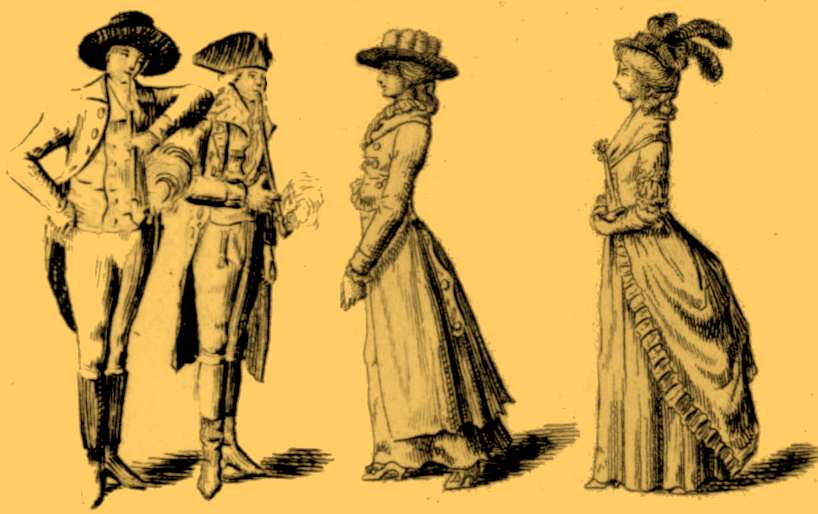
See also the similar juxtaposition of three figures in Daniel Nikolaus Chodowiecki’s illustration to Wilhelm Gottlieb Becker’s W. G. Becker’s Reise nach Paris, vol. 1, in Taschenbuch und Almanach zum geselligen Vergnügen (1799); attested in Wilhelm Engelmann, Daniel Chodowiecki’s sämtliche Kupferstiche (Leipzig 1857), 46, illustration no. 869:

[1b] Compare Daniel Nikolaus Chodowiecki’s illustration of a similar situation from Johann Timotheus Hermes, Sophiens Reise von Memel nach Sachsen, 5 vols. (Leipzig 1769–73), Herr Less gibt Sophien einen Kuss [ca. 1777–80]; Herzog August Bibliothek; Museums./Signatur Uh 4° 47 [143]):
[2] See Therese Heyne’s version in a letter to Samuel Thomas von Sömmerring in Kassel on 26 June 1784 (Forster’s Briefwechsel mit Sömmerring 105):
A few words now about your Sir Michaelis, or rather — since it is the papa who is in fact the knight [Caroline’s father had received the Swedish Order of the Polar Star (Nordstjärneorden) with the rank of “knight” in 1775] — about your court physician Michaelis. —
I fear he probably left Göttingen quite dissatisfied with me. The cordial tone I allowed him with me doubtless mightily flattered the man’s vanity, but he abused it in society, taking it even as far as familiarity; now, since such has never been my thing, I joked about it and then withdrew. On the final evening he spent here there was a ball, where I in any case had to engage considerable politics to avoid all sorts of petty jealousy, and thus quickly stole away, found myself a Cicisbeo, and left the good doctor to my mother, who then had to dance with him God knows how often and toward whom he was so meltingly tender that I almost died of laughter; indeed, tenfold so, since my dear mother could not but approve of my malice.
Concerning Caroline’s own relationship with her brother Christian Friedrich Michaelis as also reflected esp. earlier in this letter, see also Therese Heyne to Samuel Thomas Sömmering on 6 June 1784 (letter 43a). Back.
[3] A popular, romantically situated excursion destination just north of Göttingen in Weende; see supplementary appendix Weende Paper Mill. Back.
[4] 1 Timothy 6:17 (NRSV): “As for those who in the present age are rich, command them not to be haughty, or to set their hopes on the uncertainty of riches, but rather on God who richly provides us with everything for our enjoyment.” Back.
[5] Albert von Thurneisen. Ein bürgerliches Trauerspiel in vier Aufzügen (Mannheim 1781), August Wilhelm Iffland’s first piece, a sentimental play involving soldiers; it premiered in the Mannheim Nationaltheater on 27 May 1781. Here the frontispiece to the edition of 1813 (A. W. Iffland’s Theater, vol. 3 [Prague 1813]):
[6] Erich Schmidt (1913), 1:681, identifies this person as Karl Wilhelm Thurneisen (1760–1806) but gives no source. Thurneisen (also Thurneysen) was a Frankfurt businessmen and dealer in woolen and cotton manufactures and was acquainted with the Goethe family there. Back.
[7] Schauplatz der Natur und der Künste, vol. 10 (Vienna 1783), plate 13:
“Grand Duke”: Grand Duke Paul of Russia, who in 1776 had married his second wife, Sophie Dorothea, Duchess of Württemberg and niece of Karl Eugen of Württemberg. It was, incidentally, during the confusion caused by a grand, ostentatious illumination given by Karl Eugen for this same royal couple at the Solitude Castle (Stuttgart-West) on the night of 22 September 1782 that Schiller managed to escape from Württemberg for the last time, with the manuscript of his play Die Verschwörung des Fiesco. Ein republikanisches Trauerspiel (Mannheim 1783) in his luggage. Back.
[8] A copy of Goethe’s second prose version of Iphigenie auf Tauris, probably based on the copy sent to the family of Johann Christian Kestner in Hannover around mid-March 1783 (the first prose version was written in 1779 and performed in Ettersburg by an amateur company in 1779; the reworked, verse version would be published in Goethe’s Schriften, vol. 3 [Leipzig 1787], 1–136). Here, in order, that volume’s frontispiece, title vignette, and illustrations at the beginning and ending of the play:
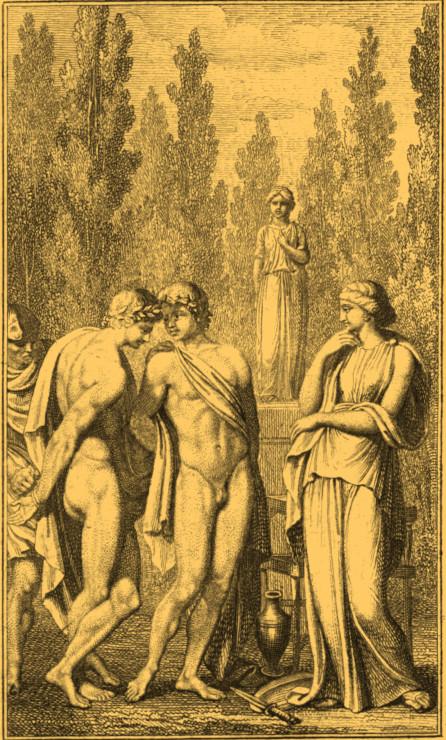
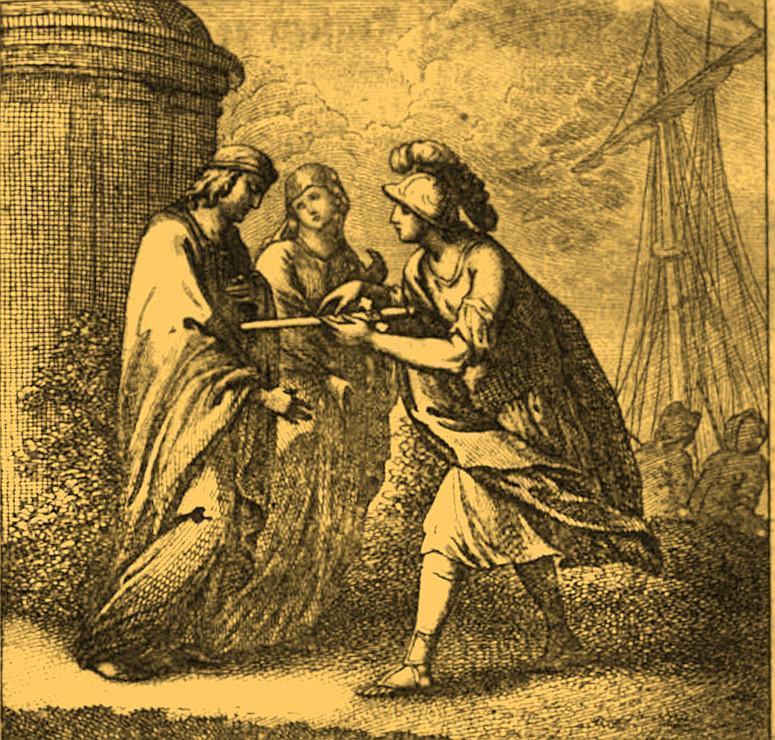
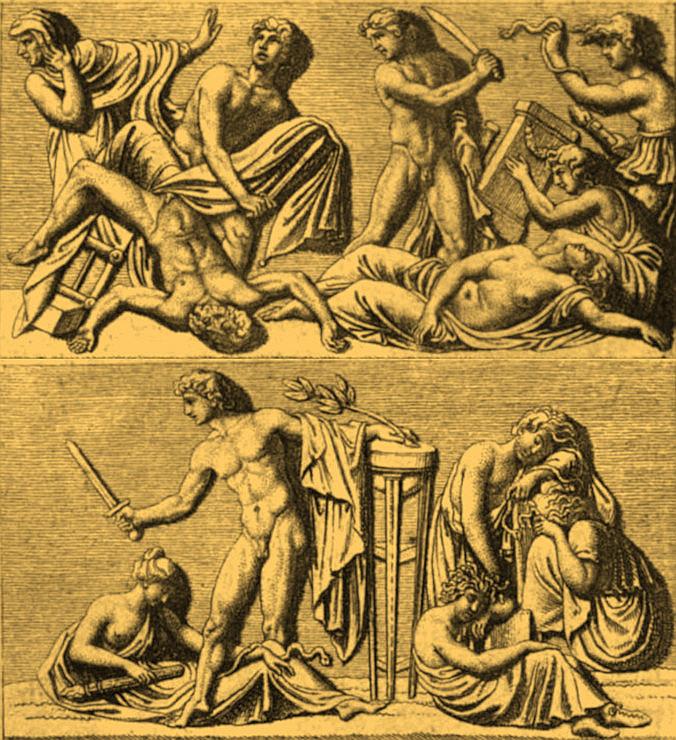
Goethe writes to Kestner from Weimar on 15 March 1783 (Weimarer Ausgabe IV:6:136):
Here my Iphigenie. Please do return it to me soon. Feel free to to share it with some good friends as well, just please keep it from the eyes of budding authors. Although it is not all that important, it is vexing — as has already happened to me often enough — to find oneself exposed to the public in distorted bits and pieces
Concerning the differences between Goethe’s Iphigenie and the version from antiquity, see supplementary appendix 432a.1, note 1. Concerning Caroline’s special relationship with this play, see her letter to Johann Diederich Gries on 18 April 1808 (letter 432a), note 2. Back.
[9] Unclear reference; the family von Schimmelmann was a German family from Mecklenburg that eventually settled in Denmark, where it was ennobled in the eighteenth century; the reference to a brother and sister might involve the children of Henrich Carl von Schimmelmann (1724–82), who had two sons and two daughters born between 1747 and 1762. Back.
[10] Representative illustration from Der tägliche Gesellschafter: Ein Taschenbuch zum Nutzen und Vergnügen auf das Jahr 1801 (Inhaltsverzeichnis deutscher Almanache, Theodor Springmann Stiftung):
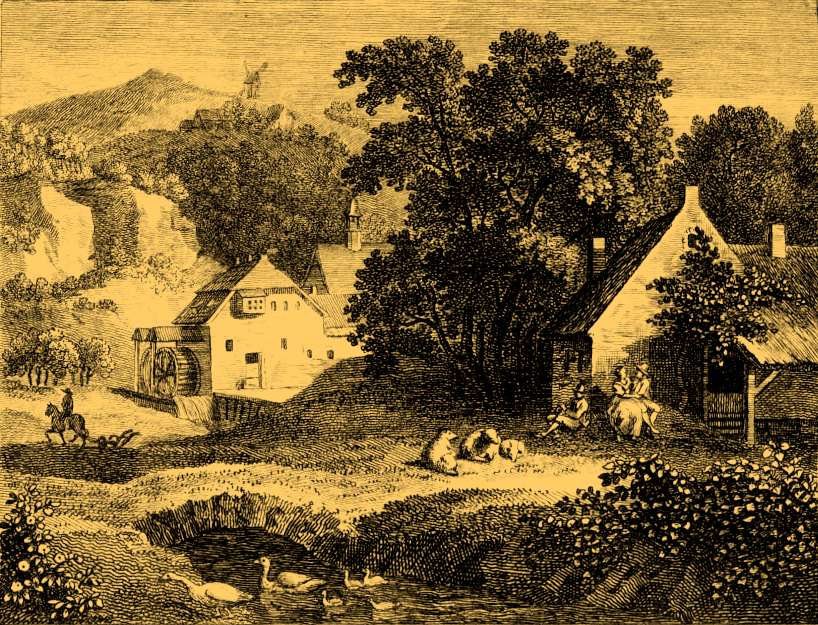
The folk song “So geht es in Schnützelputz Häusel,” later included in Des Knaben Wunderhorn: Alte deutsche Lieder, vol. 2, ed. Ludwig Achim von Arnim and Clemens Brentano (Heidelberg 1808), 406–7. Traditional melody: Ludwig Erk, Neue sammlung deutscher volkslieder: mit ihren eigenthümlichen melodien, no. 1 (Berlin 1841), 54:
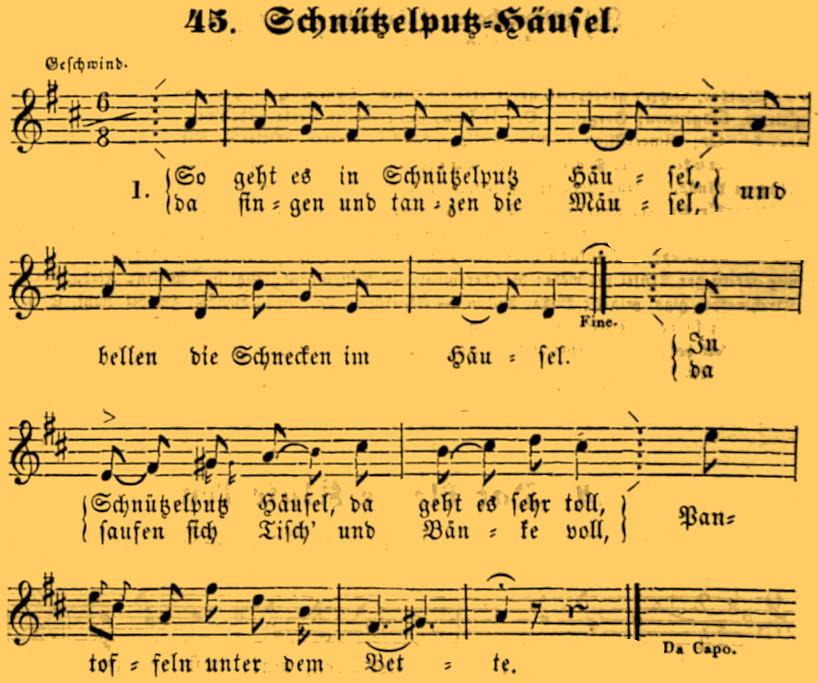
For such is the life in Schnützelputz's housekin,
Where sings and dances each little mousekin,
And every snail barks in its own little housekin,
In Schnützelputz's housekin the world's willy-nilly,
The tables and chairs all drink themselves silly,
And slippers sleep 'neath every tinykin bedkin.

For such is the life in Schnützelputz's housekin etc.
Two oxen did sit in the stork's lovely nest,
And did lovingly think about what would be best,
And lo, would they brood and hatch every egg.

For such is the life in Schnützelputz's housekin etc.
Two storks then did fly to the tower's high spire,
Considering well what was 'bout to transpire,
With their pikes in the air, mighty and strong.

For such is the life in Schnützelputz's housekin etc.
Much more could I tell you of things such as this,
That happen in Schnützelputz's housekin amiss,
Too funny to tell, too funny to tell. Back.
[11] Taschenbuch für das Jahr 1816 der Liebe und Freundschaft gewidmet; Inhaltsverzeichnis deutscher Almanache, Theodor Springmann Stiftung:
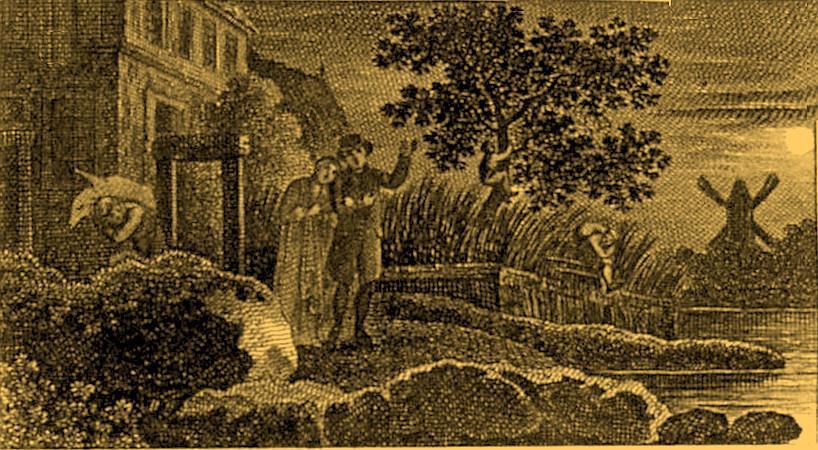
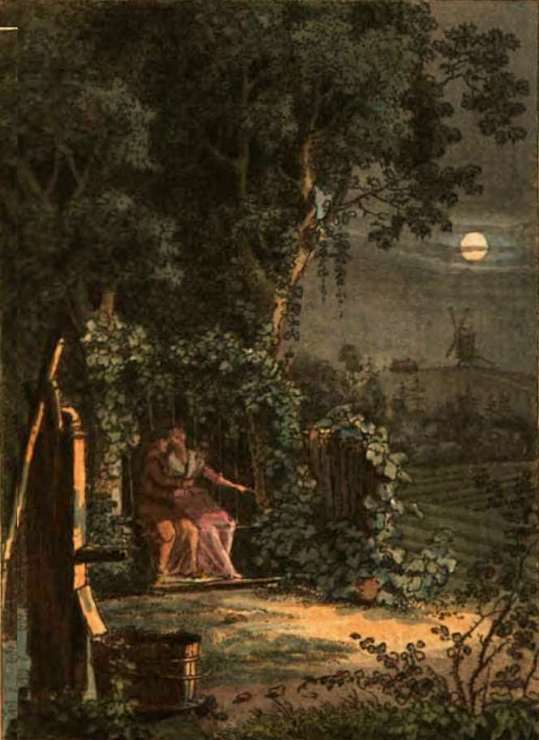
As much as Caroline’s sensibility in these early letters otherwise often reflects the Age of Sentimentalism, the particular tableau she evokes here quietly anticipates one of the most powerful and enduring topoi in later German Romanticism, namely, that of the “moonlit magic night” that leads into the more magical but also often irrational, darker side of human nature, though not without attention to religion (Johann Konrad Pfenninger, Ueber Aufklärung: Unvorgreifliche Gedanken; Nebst Prüfung einer berühmten, wichtigen, vorgreiffenden Abhandlung über diesen Gegenstand: “Ueber Aufklärung und die Beförderungsmittel derselben, von einer Gesellschaft” [Zurich 1791], 137):
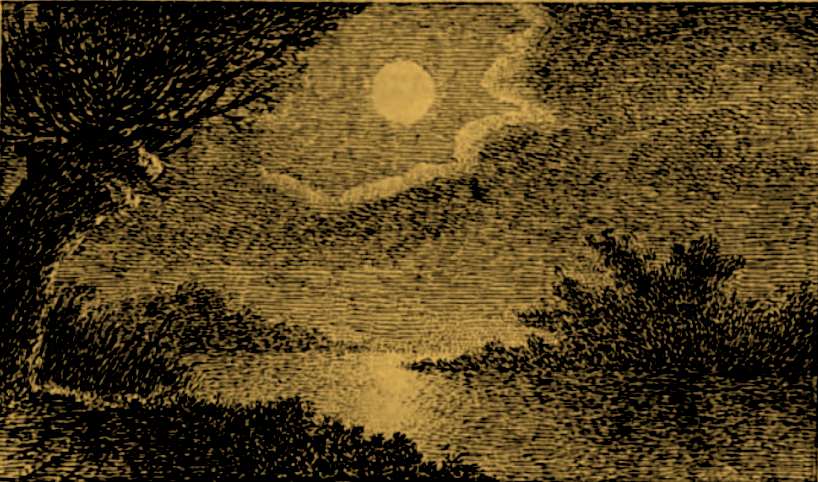
See Robert Maximilian Wernaer, Romanticism and the Romantic School in Germany (New York, London 1910), 128; the allusion is to lines from Ludwig Tieck’s — Caroline’s later acquaintance in Jena — play Kaiser Octavianus: Ein Lustspiel in 2 Theilen, in which the chorus — the allegorical figure Romanze — speaks at the end of the prolog what has variously been called the “manifesto of German romanticism” (illustration: from Karl Friedrich Henzler, Der Alte Überall und Nirgends , vol. 1, 2nd ed. [Vienna 1795], 24):
[The muse is] Romance, that shy muse of the Middle Ages, who was not tied to the leading strings of classic poetry, who could weep and sing, and tell her tales all at once. Faith was her father and Love her mother; and this was her lyre’s sweetest song: —
Moon-illumined magic Night!
Sense by thee is captive taken;
World of fairy tales, awaken!
Don thy olden splendor bright!
This song, often quoted by the romanticists, contains much of their philosophy and much of the secret longings of their hearts. The magic charms of the night stood for that vast realm of the unconscious and the invisible in which their feelings had taken root, and towards which they stretched out their arms with longing desire. The night was a symbol of the prophetic visions which are open to the imagination of the poet but closed to the understanding of the man who lives only by the sights his eyes behold in the daytime. The moon sent her silvery rays from that marvelous realm, and peopled the night with dream-images that captivated the senses.
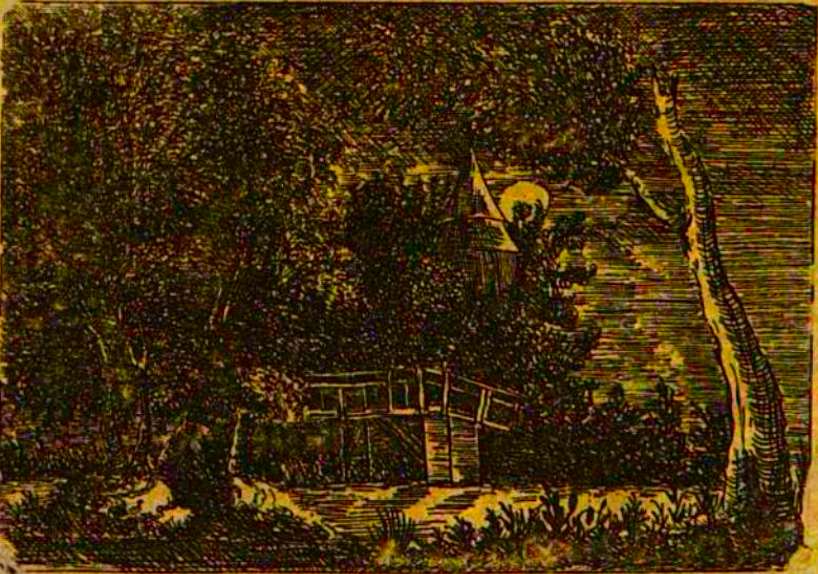
The witchery thus revived, the mysteries and wonders chronicled by man in his legendary lore and fairy tales, the dream-world of a poetic past, — stimulated in their minds a desire to reawaken to new life under the guidance of Romance, Faith, and Love, the Märchenwelt [fairy-tale world] of bygone days. A dream of beauty that once was and may again be was the grand theme of these two symphonies, the leading motifs of the orchestration. Other underlying ideas they had not, no other meaning, no other ideal, no other purpose but this.
In this we recognize at once Tieck as their author. Wackenroder, Novalis, or the two Schlegels [Friedrich and Wilhelm], could they have written these symphonies, would have endeavored to give them a deeper meaning. Such a meaning might not have connected itself very deeply with human life; nevertheless, the why and wherefore of the whole would have shown itself in something more tangible [ed. note: than Tieck, whom Wernaer here criticizes].
Although several familiar paintings from later Romancticism incisively illustrate this topos (e.g., from Caspar David Friedrich), the first illustration below is, perhaps remarkably, contemporaneous with Caroline’s letter here and derives from illustrations with which she became acquainted in folio format and then mentioned in the letter preceding the present letter, namely that to Luise Gotter on 3 April 1784 (letter 40); see esp. note 6 there.
It touches on the darker side of such moonlit nights and is found in Joseph Franz von Goez’s copious illustrations from Lenardo und Blandine. The second illlustration, from the early nineteenth century, combines the mysterious moonlit night and castle ruins with a longing for the “dream world of a poetic past,” often that of medieval legends (Versuch Einer Zalreichen Folge Leidenschaftlicher Entwürfe: Für Empfindsame Kunst- Und Schauspiel-Freunde (Augsburg n.d. [1783]), 91; anonymous, Ruine bei Mondschein [ca. 1801–50]; Herzog August Bibliothek Museums./Signatur Graph. C:854):


At the same time, the topos of the idealized romantic moonlit night associated with love continues to play a role (Friedrich Wilhelm August Schmidt, Gedichte [Berlin 1797], illustration following p. 88):
[12] In her memoirs, Luise Wiedemann recalls (p. 76) that Fritz Michaelis “greatly loved his family, love that even went as far as the romantic sort in the case of his sister Caroline.” Back.
[13] It is uncertain to which of George III’s sons Caroline is here referring. Back.
[14] Caroline’s ominously unenthusiastic, uncertain, and anxious reflections in these final paragraphs, coming, significantly, as she takes leave of the friends of her youth before her wedding, clearly reflect that she is marrying not from inclination or as a result of coercion, but rather as a result of persuasion by others, and indeed is still struggling, almost frantically, to persuade herself. See esp. her letter to Julie von Studnitz earlier that year, on 17 February 1784 (letter 39), note 1a. Back.
Translation © 2011 Doug Stott