
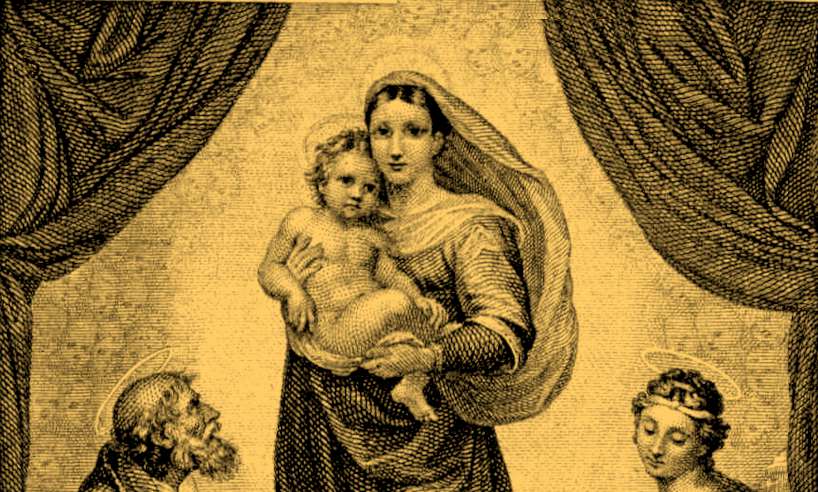
(Raphael, The Madonna of San Sisto [1512];
Taschenbuch zum geselligen Vergnügen auf das Jahr 1819)
 My translation of Schelling’s Philosophy of Art is available in a later printing as volume 58 in the series Theory and History of Literature from the University of Minnesota Press. Also available as an e-book for Android.
Schelling seems to have delivered some version of these lectures in Jena during the winter semester 1800–1801, summer semester 1801, winter semester 1802–3, then apparently also in Würzburg during the summer semesters 1804 and 1805 and the winter semester 1805–6. The lectures were not published until 1859 in his Sämmtliche Werke, 5:353–736.
Interest in theories of literature and art has led to a reexamination of classic texts on aesthetics. The Philosophy of Art, a central work in its time, has a place in that discussion, as it does in the contemporary reassessment of Romanticism. [*]

In The Philosophy of Art, Schelling presents an ordered system of the arts based on his philosophy at the time, including key elements of his transcendental idealism and philosophy of nature.
He systematically treats various forms of art, including music, painting, sculpture, narrative, and poetry, and concludes with a theory of tragedy.
Schelling bases this system on the structure of the Absolute, discusses classical and Christian mythology, and presents a philosophical disclosure of the idea or essence of art itself, an essence that transcends the actual work in history.
Caroline writes in a letter to Schelling on 1 March 1801:
I merely thought the reason was that he [Fichte] lacked divine inspiration, and that if you have broken through a certain circle out of which he himself is as yet unable to break, I would believe you did so not so much as a philosopher — if this appellation perhaps be incorrectly applied here, there is no need to scold me about it — but rather insofar as you have poesy, and he none. It is poesy that has guided you directly to the position of production just as it was the clarity of his perception that guided him to consciousness. He has light in its most radiant brightness, whereas you also have its warmth. The former can only illuminate, whereas the latter produces.

Joseph P. Lawrence, Canadian Philosophical Reviews (1990): “Douglas Stott has provided us with a splendid translation of Schelling’s lectures on the philosophy of art. Schelling, who in the English-speaking world generally has a reputation for being the most obscure or, indeed, confused of the idealists, is revealed through this translation as the literary master that German readers have long known him to be. The language is characterized by both conceptual lucidity and an impelling musicality that serves to set Schelling apart as a thinker who, like Plato, accomplished the most sublime fusion of poetry and philosophy.”
Mark W. Roche, The German Quarterly 64 (1991): “The translation reads very well, and one might describe some passages as elegant, e.g., Schelling’s description of the fall of Rome and the rise of Christianity. Beyond the introductions . . . the work’s apparatus includes 34 pages of explanatory footnotes, which will interest even those who read the text in the original.”
Oxford Guide to Literature in English Translation (2001): “Almost a critical edition, Douglas W. Stott’s version of Die Philosophie der Kunst (The Philosophy of Art, lectures given in 1804/5 but published first in 1859) is a magisterial, flowing translation of a systematic work which unites philosophy with art and religion.”
Notes
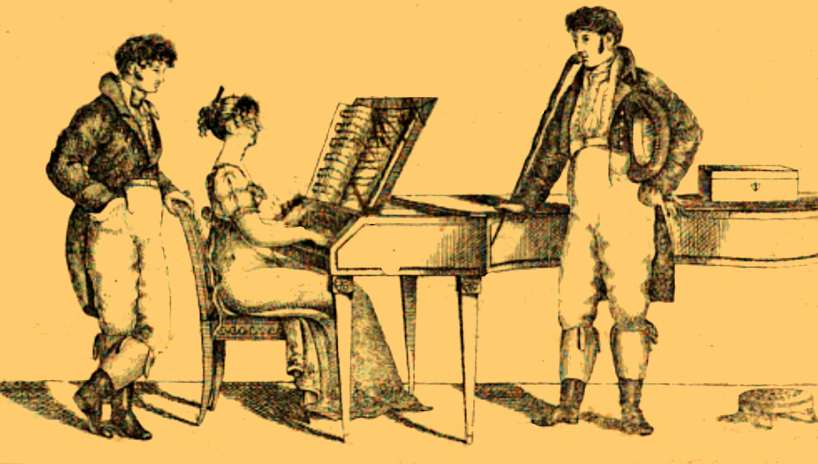
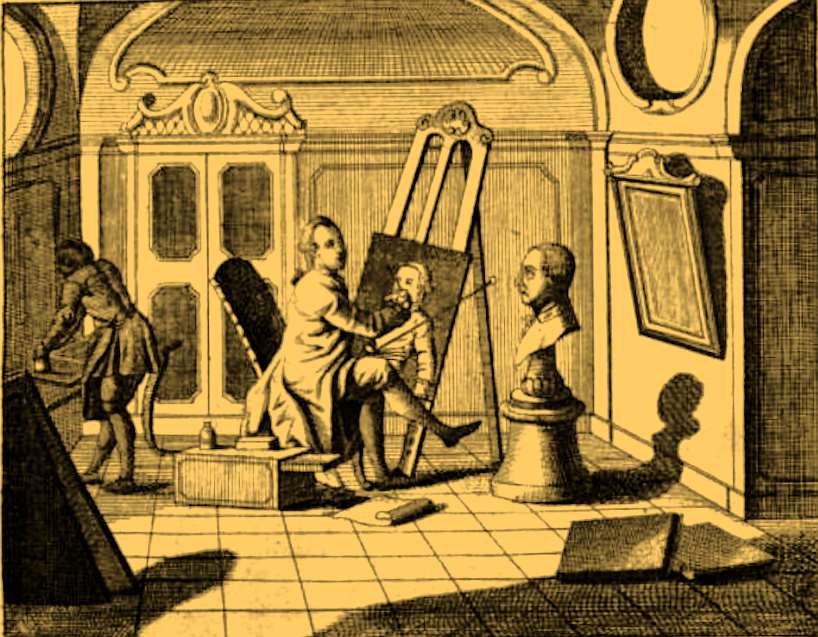
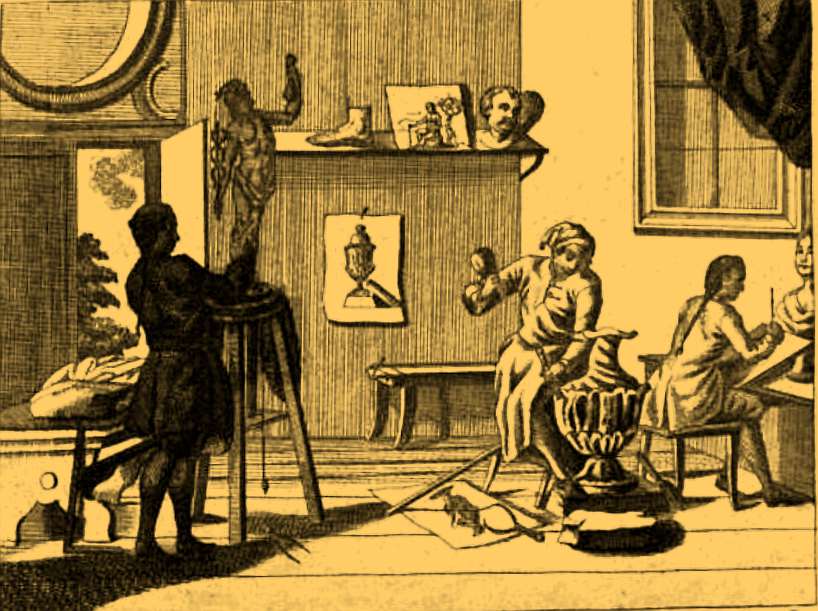
[*] Illustrations: “Woman at the pianoforte,” frontispiece to D. Steibelt, La Coquette: Sonate pour Piano-Forté, 2nd ed. (Offenbach 1806); “Drawing,” “Painting,” “Sculpture”: Schauplatz der Natur und der Künste, vol. 2 (Vienna 1775), plates 1, 2, 3. Back.