
• 117. Caroline to Friedrich Ludwig Wilhelm Meyer in Berlin: Mainz, 16 October 1792 [*]
Mainz, 16 Oct[ober 17]92
|269| No letter I have ever received from you has seemed as long as this one — as if it would never end — a bit like drinking bitter medicine from an apothecary glass. —
My impatience might have brought me to despair had I not constantly told myself: “Just take it easy! This is a story of long ago — it is all in the past, the dead are all resting peacefully, all the pain has been overcome — and they will doubtless even be resurrected soon to new joy.” I am almost tempted not to be so angry at myself for having been such a fool [1] — for Meyer will forgive — that much resonates even through his invectives — and then we will be ten times more fond of each other — like jealousy between lovers once it has been reconciled, so also the false suspicion here, which has now been so pristinely removed that the countenance of him on whom such suspicion was cast will now shine with twice the brilliance —
Gladly would I melt away before you,
Gladly shed tears of bitter remorse,
And entreat — ah, so ardently entreat! [2]
|270| As I already told you, [3] without the sort of certainty I imagined I possessed it would not have been possible for anyone — not even my own, silly self — to have persuaded me that such an ugly deed was even possible. But there were the words: Baiocco Romano, in all their leaden heaviness [4] — and that is what riveted my attention — because it never occurred to me in the slightest that someone else might have misused the name, my inclination was sooner to convince myself that the object was in fact a different one [5] — though even that did not make the matter much better — in any event, the clarity of my thinking at the time was probably not all that impressive to begin with.
At every turn, I took my own ability to reason prisoner in the conviction of that initial impression — I was aware that you had never been reviewed in the Litteratur-Zeitung [6] — and also that Huber had never approached too closely to you — nor would he — in any review, in any collected works, [7] or in any secret court. [8] —
What I focused on was thus a general disinclination toward his statements. If you genuinely read the thing, you will be even more astonished that I could consider you capable of such — even now, the notion makes me shudder — but good heavens — you are dealing here with a female mind — in which, to be sure, not even the strongest wind can threaten friendship — but which now and then can indeed go astray on some rather daft paths.
But I can assure you that it does accept words of warning and, with regard to you, will certainly take such as instruction for the future. Your indignation in this matter strengthens the opinion to which I have been inclined to subscribe in any case — namely, that it is only of very few people that I would dare maintain: such and such an action would simply be impossible for them — has our own acquaintance really been tested in such a way that you might be included in that group? My friendship was a belief I do not encounter that often, and which I thus am not accustomed to thwarting by placing all sorts of anxious, overly cautious obstacles in its |271| path — woe to those no longer capable of taking any risks at all!
I have revealed so much to you that is dear and precious to me — I am not so reserved that I should be incapable of speaking with this upright man about things I do not conceal from myself. When I am quite cool, I will not be quite so open quite so easily — lest I compromise a third party. The recollection of one of my more recent letters has caught me by surprise on several occasions, and I have indeed blushed — but I was never worried. — It was nonetheless merely faith — admittedly, it did manage to outlive my indignation in some sort of rather dark instinct — for I did not worry in the slightest for myself after having accused you of this action. —
Now it is more than faith — because it stands on a more abiding foundation — and now let me entreat you, my good brother, to find it in yourself to try things again from the beginning. —
By the way, I let this camel’s head appear completely alone and only for myself — no one loaned me any magic lantern to illuminate it. [9]
That night, after reading it earlier in the evening, I did not sleep at all, since giving you up certainly did not seem merely a trifling thing to me — indeed — my pride also suffered, with regard to my friends here — toward whom the most fundamental propriety required that I also break off every connection with you. I was silent until I knew it was Bouterweck — then I related everything, and everyone scolded me soundly for my childish behavior.
Strange that I never thought of Bouterweck at all, especially since in Göttingen I myself yet witnessed how pathetically he rebelled against that review of his Donamar, a review I considered as justified as I also knew it to be impartial. Neither did I suspect the presence of Bouterweck in the Allmanach in the first place, since he has had a falling out with Bürger — nor does his name appear in it even though that dreadful horde of sonnets may well be his as well. [10]
What I would sooner prefer is that your own |272| name not be included — as much as I do like that under which it stands there [11] — for when you receive this Allmanach, you yourself will see that I was correct in calling it a “gathering place for second-rate characters” [12] — although Bürger regards himself as quite the grand fellow in his epigrams [13] — to any honest person he appears extraordinarily small and uncouth, and dull on top of that. How could upright Heyne allow all these improprieties to pass the censor — and yet for the sake of a single expression — “in the hour of his tryst of love,” which was merely meaningless — one entire sheet had to be reprinted after 800 copies had already been sent out. [14] —
It occurred to me that it may be advisable, since you are so generally known under the name Baiocco Romano — to issue a simple explanation — that this time it does not concern you — I told Forster as much, who just stopped by to inquire about the contents of your letter — he disagreed, and put it as harshly as he could for me, namely, that whoever is so stupid as to believe it should simply go ahead and do so. Ah, behold — how I am indeed doing penance! He also charged me with reconciling with you in every way possible — but what else can I do? — were you here now, I would be more than happy to stupefy you a thousand times over with the sweetest flattery.
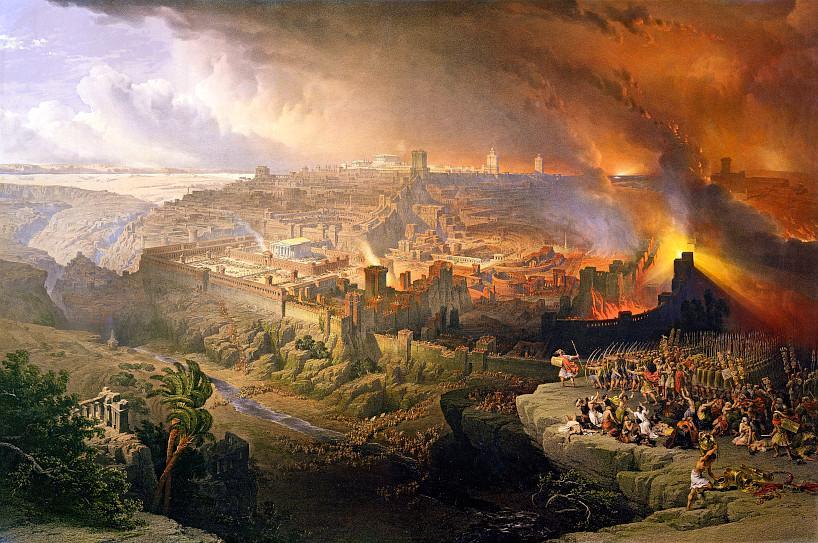
I am pressed now because the postal coach is about to depart — so I cannot relate to you anything concerning our previous and present circumstances — unfortunately we have not been taken — Custine pressed forward as far as Worms and has now taken up a fortified position at Speyer to prevent the Prussians from advancing there, whose army is in a pitoyable condition and is everywhere retreating [15] — our Mainz army was captured at Speyer — taken to Strasbourg, treated very well, as were the citizens of Speyer and Worms. The officers were released on their word of honor — 28 Mainz soldiers were sent back from Strasbourg at Dorsch’s |273| request because they had wives — they brought back little booklets, are relating wondrous things — though they have already been muzzled and silenced — in a general sense, “the times are beginning here about which it is written” [16] — certain ideas are becoming quite common and accepted, and decrees are being issued prohibiting rationalization.
On the same day when a drunken hussar saw a herd of cows and then thundered into the city with the news that the French were already in Oppenheim [16a] — where warning shots were fired and the city never went to bed — hasty democrats imagined they were seeing the very end itself of the prince electorate, and began wearing the tricolor cockade — on their pockets — it goes without saying that these were silly people who did not belong to my circle of friends. We were not occupied by any troops at all — what few imperial troops were here ran away — the citizens mounted watch and were intent on putting up a stiff and resolute defense until these gueux [17] had come.
The entire nobility has fled — the terror was indescribable and, as usual, resulted in the most comical scenes among courageous personages, e.g., the emissary of a royal court. So few people remained behind — that all the businesses came to a standstill — only 2 physicians, among others. In Frankfurt, too, people fled, and the deputation had assembled that was to go out to the enemy with 200,000 Florins [18] — the carriages were standing ready, hitched up in front of the town hall and bearing the 3 colors. [19] We remained — out of curiosity and because we had a clear conscience — namely, clean hands [20] — we are not rich, and I am poor.
Here is B[ürger]’s letter — I myself already know from him what he is writing to you — so it does not really matter.
Stay well — I am still sick with an extremely stubborn, evil sore throat. Fiekchen Diez is sitting here with me now — she usually |274| lives just across the street from me. The elder Madam Diez has a picture of you when you were still a slim young man — something she inherited from her husband — I would love to have it and have offered her all sorts of things for it — ½ dozen life-size silhouettes of interesting persons — a piece of an old foot blanket — a warming basket — but she will hear nothing of it. Take care.
Notes
[*] Albert Leitzmann, “Aus Karolinens Lebenskreisen,” 128, notes that the following remarks from Georg Christoph Lichtenberg’s diaries bear on the overall situation in this letter: “I am reading Madame Böhmer’s letter to her sister from Mainz” (15 October 1792); “very nice letter from Madame Böhmer concerning Mainz” (30 October); “letter from Madame Böhmer” (10 November); “letter from Madame Böhmer in Mainz with Custine’s notice to the citizens of Mainz, Speier, and Worms” (23 November). Leitzmann notes that these were likely the same letters, full of enthusiasm and ardent indignation, that Caroline let Friedrich Schlegel read later in Lucka. Back.
[1] For having mistaken Meyer as the author of a vindictive poem by Friedrich Bouterwek against Ludwig Ferdinand Huber in the Göttinger Musenalmanach (1793); see Caroline’s letter to Meyer on 22 September 1792 (letter 115). Back.
[2] Verse extract from Heinrich Wilhelm von Gerstenberg’s “Das Glück der Eifersucht,” in Sämmtliche poetische Schriften von Joh. Wilhelm von Gerstenberg. Gerstenbergs Sämmtliche Werke, part 2, Sammlung der vorzüglichsten Werke deutscher Dichter und Prosaisten 39 (Vienna 1794), 145–47. Schmidt points out that Caroline alters the verses, or cites them incorrectly from memory (viz. second line: “of your grief”; third line: “smolder”). The first two stanzas of Gerstenberg’s poem read as follows (original version in italics to contrast with Caroline’s alterations):
Blessed be you in my heart
You god of enviable pain,
And of sweet, sweet desire!
In your seriousness as in your playfulness
May I feel you to the fullest,
You, king of my breast!

Gladly would I melt away before you,
Gladly shed tears of your grief
[Caroline: "of bitter remorse"]
And smolder — ah, so ardently smolder!
[Caroline: "entreat . . . entreat "]
Before the altars of your Amathunt
[place of veneration of Venus Aphrodite;
often used as a fictitious place of publication for erotica]
Would I venerate you with trembling,
And draw your chariot! Back.
[3] In her letter to Meyer on 6 October 1792 (letter 116). Back.
[4] The poem “Huberulus Murzuphlus oder der poetische Kuss” in the Göttinger Musenalmanach (1793), 178–88, was signed by the pseudonym “Baiocco [Bajocco] Romano,” a pseudonym, however, that Meyer never used; it is unclear how Caroline made the association, though see her letter to Meyer on 6/8 December 1791 (letter 111) with note 16. Back.
[5] That is, other than Ludwig Ferdinand Huber. Back.
[6] The review that prompted Bouterwek’s vindictive poem, namely, Huber’s review of volume 1 of Bouterwek’s novel Graf Donamar. Briefe, geschrieben zur Zeit des siebenjährigen Krieges in Deutschland (Göttingen 1791–93), appeared in the Allgemeine Literatur-Zeitung (1791) 349 (Saturday, 31 December 1791) 677–78 (text see supplementary appendix 115.2). Back.
[7] Caroline may be alluding to Huber’s anticipated Vermischte Schriften von dem Verfasser des heimlichen Gerichts (Berlin 1793). Back.
[8] An allusion to the title of Huber’s Das heimliche Gericht. Eine dramatisirte Geschichte (“The secret court: a dramatized story”), published in Schiller’s periodical Thalia 2, no. 5 (1788), 1–66; no. 6 (1789), 72–83; no. 9 (1790), 3–40. Back.
[9] Concerning the camel-head illustration associated with Jacques Cazotte’s novella Le diable amoureux (Naples 1772), see Caroline’s letter to Luise Gotter on 3 April 1784 (letter 40) with note 7. Caroline’s reference to having the camel’s head appear is unclear; she may be referring not to Meyer’s translation but to the 1792 play Biondetta: Ein allegorisches Schauspiel mit Gesang in vier Aufzügen, by Karl Christian Engel (Berlin 1792), which does include an illustration of a distorted camel’s head (invoked as Beelzebub) as its title vignette:
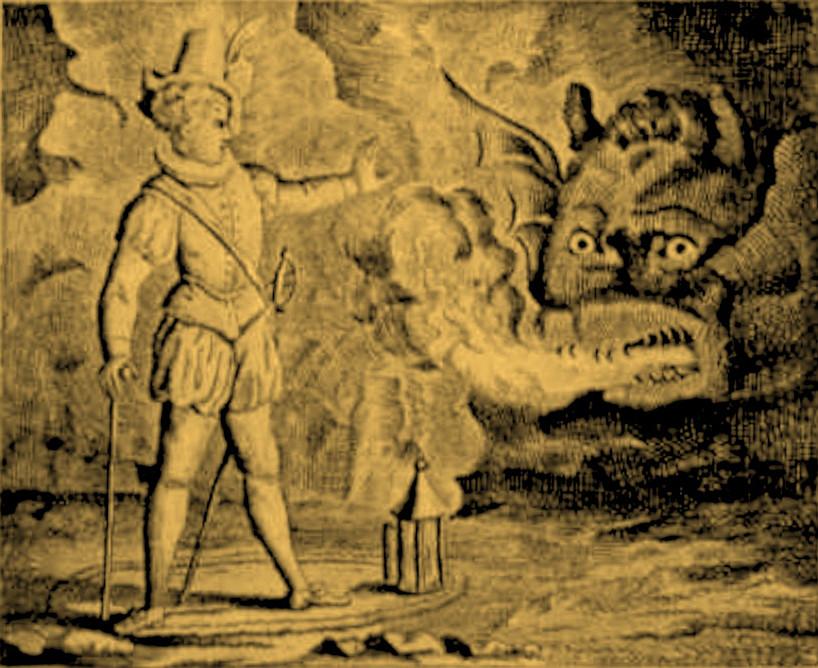
Here the same head after its invocation in Cazotte’s original (Le diable amoureux, following p. 14):

[10] Concerning Bouterwek’s quarrel with Gottfried August Bürger, see Caroline’s letter to Luise Gotter on 20 April 1792, (letter 112), note 19.
The reference is otherwise to eight sonnets in the Göttinger Musenalmanach (1793): “Maigefühl. / Sonett,” 54; “Der Scheideweg. / Sonett,” 92; “Die Dämmerungsfeier. / Sonett,” 107; “Letzte Liebe. / Sonett,” 119; “Philosophie der Liebe. / Sonett,” 140; “Sehnsucht. / Sonett,” 158; “Das Mühlenwäldchen. / Sonett,” 207; “Lyda’s Mängel. / Sonett,” 216.
The initial “B.” does in fact refer to Friedrich Bouterwek (see notes to Caroline’s letter to Meyer on 22 September 1792 [letter 115] and esp. Carl Christian Redlich, Versuch eines Chiffernlexikons zu den Göttinger, Vossischen, Schillerschen und Schlegel-Tieckchen Musenalmanachen [Hamburg 1875], 2). Back.
[11] Meyer was well represented in that issue, Göttinger Musenalmanach (1793): “An meinen Freund,” 202; “An meinen Meister,” 205; “Am Jahresabend,” 208; “In das Stammbuch einer Dame,” 211; “Mädchen und Pferd. / Nach Bouflers,” 213; “Schifferlied. / Venezianisch,” 220; “Wohin? / Sicilisch,” 226; “Die Kleine. / Savoyardenlied,” 236; “Ubaldo,” 243; “Worte der Weisheit,” 249. Back.
[12] In her letter to Meyer on 22 September 1792 (letter 115). Back.
[13] Göttinger Musenalmanach (1793): “Kampfgesetz,” 79; “Die Brüderschaft,” 137; “Reiz und Schönheit,” 151; “Unmuth,” 168; “Vorschlag zur Güte,” 201. Back.
[14] The offending phrase was “die Schäferstunde des Allliebenden,” lit. “the pastoral hour [viz. lovers’ tryst] of the All-Loving,” here approx. “the hour of his [the All-Loving’s] tryst of love”; the poem, by Klamer Eberhard Karl Schmidt (but signed only by “Xz.”), was “Gute Nacht!” Göttinger Musenalmanach (1793), 46. Its first stanza originally read (my italics):
Good night!
Thou creature, created for me!
Most precious, most dear on this planet!
Image made, in the hour of his tryst of love,
By the All-Loving!
Good night!
Gottfried August Bürger, editor of the Göttinger Musenalmanach, wrote in this regard from Göttingen to Wilhelm Schlegel on 28 September 1792 (Strodtmann 4:215):
At Heyne’s initiative, I had to have several pages reprinted. To wit, on p. 46, in the poem by Clamer Schmidt, he found the expression “hour of his tryst of love” too offensive, and on p. 224 the motto from the Bible [the love song “An —” by Karl von Reinhard bore a motto from 1 Peter 3:1: “so that, even if some of them do not obey the word, they may be won over without a word by their wives’ conduct”]. With respect to the first he is undeniably right, and the tasteless expression only escaped my attention the way it usually does with authors whose contributions one is accustomed to accept without seeing them. That said, however, it is more an aesthetic than a moral sin. I changed it into “Image made, in the most blessed hour, / By etc.” and then also deleted the biblical motto entirely. Back.
[15] Pitoyable in French in original. — General Adam Philippe de Custine had taken Speyer on 30 September 1792 and Worms on 5 October; the Prussians, after their defeat at Valmy on 20 September 1792, were retreating through Champagne to Luxembourg and across the Rhine River. For a map of the French movements, see Caroline’s letter to Meyer on 6 October 1792 (letter 116), note 5. Custine would, however, begin the siege of Mainz on 18 October 1792, two days after Caroline is here writing. Here an illustration of that siege by Georg Melchior Kraus; French troops in the foreground, Mainz in the far distance, center left, where Caroline is writing this letter:
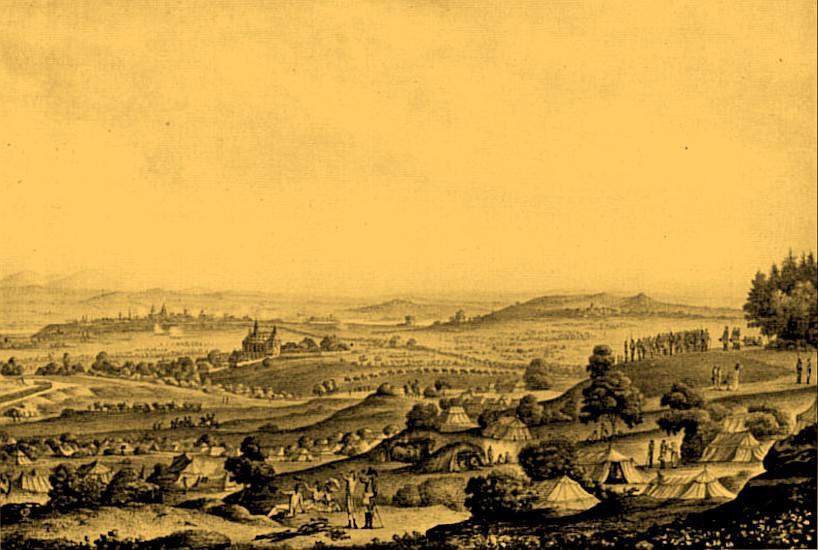
[16] An allusion to the expression “as a fulfillment of all that is written”; see Luke 21:20–24 (NRSV); illustration: David Roberts, The Siege and Destruction of Jerusalem by the Romans under the Command of Titus, AD 70 (1850):
When you see Jerusalem surrounded by armies, then know that its desolation has come near. Then those in Judea must flee to the mountains, and those inside the city must leave it, and those out in the country must not enter it; for these are days of vengeance, as a fulfillment of all that is written. Woe to those who are pregnant and to those who are nursing infants in those days! For there will be great distress on the earth and wrath against this people; they will fall by the edge of the sword and be taken away as captives among all nations; and Jerusalem will be trampled on by the Gentiles, until the times of the Gentiles are fulfilled.
[16a] Oppenheim is located ca. 18 km south of Mainz (Post Karte Durch ganz Deutschland, ed. J. Walch [Augsburg 1795]):

[17] Fr., “knaves, rascals, tramps,” i.e., the French troops. Back.
[18] For having helped French emigrés. Back.
[19] The French would occupy Frankfurt on 22 October 1792. Back.
[20] Possibly a broad allusion to Ps. 24:3–5 (NRSV):
Who shall ascend the hill of the Lord?
and who shall stand in his holy place?
Those who have clean hands and pure hearts,
who do not lift up their souls to what is false,
and do not swear deceitfully.
Even disregarding for a moment the NRSV translation of this verse, Luther’s German translation is reversed from what one might expect given Caroline’s own wording in German (D. Martin Luther, Die gantze Heilige Schrifft Deudsch [Wittenberg 1545]):
Luther 1545
unschüldige Hende ["innocent hands"]
reines Hertzen ["a pure heart"]
Caroline
reine Hände ["pure hands"]
ein gut Gewissen ["a good conscience"]
See also Iphigenie’s lines in Goethe’s Iphigenie auf Tauris. Ein Schauspiel, in Goethe’s Schriften, vol. 3 (Leipzig 1787): “Secluded from the fortunes of my race, / I, with pure heart and hands, some future day, / Might cleanse the deep defilement of our house?” See supplementary appendix 432a.1, note 1.
As has become evident in this correspondence, Caroline frequently cites from memory and often loosely or even as a conceptual paraphrase. Back.
Translation © 2011 Doug Stott