
• 52. Caroline to Lotte Michaelis in Göttingen: Clausthal 1 March 1785
[Clausthal] 1 March [1785]
|108| I absolutely cannot remember all the things you wrote me about — no, wait! This very minute it is coming back to me. Hommel and Schmekke! Magnificent! The woman [1] does admittedly say the craziest things in the world, but her comparisons, as thoughtlessly as she may well blurt them out, do they not always hold water? She would doubtless have little trouble coming up with such things even in a delirium. She is, by the way, a positively outrageous woman.
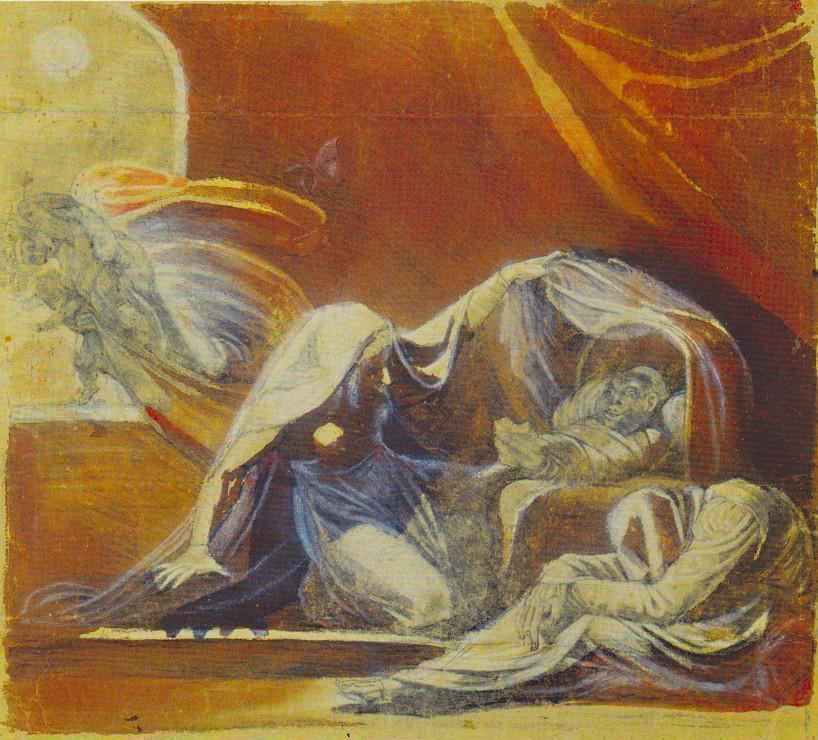
Sometimes I think about how little astonished we are by things we simply grow up with — were I to find such an original character here, I would turn into a Kielkropf from sheer excitement. [2] On foreign soil everything seems more alien to us, and we are astonished at monsters we otherwise were accustomed to seeing daily without ever considering them anything but quite normal creatures of nature.
It truly is astonishing how mechanical and even plantlike are the bonds tying us to our fatherland and place of birth, and yet how strongly and enduringly one nonetheless always feels them. Well, there I have jumped from the head-equerry’s wife to — Oberon — for you know how he says:
Thou little spot! where first I suck'd the light,
Thou witness of my earliest smile and tear!
Lov'd haunt! though distant far, how fair appear
Thy scenes in day-dreams floating on my sight!
Where'er I wander, my returning mind
Still feels itself to thee in secret join'd!
Feels without thee e'en Paradise unblest — [3]
I am suddenly feeling such an urge to read Oberon that I absolutely would insist you buy it for me did it not cost a whole guilder.
You also wrote me about a couple of new professors — they are accumulating like snow does here. You will have to indulge me this remark, since it can be made only with reference to Clausthal |109| — for where, besides Greenland, does one find this much snow? If only the bread eaters had bread, then all of you would have it quite good, my girl. It really is ridiculous — but do not hold that against me. All of you are able to go about with the professors like with a gang of young miners; [4] everywhere you go, you cross paths with one — asks for a gift — nor, given the nature of the request, can you refuse the petitioner —
But be careful! — When I read what you reported about Wangenheim, [5] I was thinking quietly to myself: this is not someone you can depend on, I doubt anything will really come of this purchase — he is a blusterer. I inquired about him here, where he once stayed, and my astuteness received one heavenly compliment after the other insofar as everyone described him the same way to me. And I now also hear from Stisser that the prince will probably be coming to Lüneburg [6] — so — poor shepherdess, your Arcadia seems doomed!
Ah, one should never trust a charming dream as long as it is still merely a dream. How often has my own — certainly not so very sanguine heart already had to calm its excited beating! Stisser will be triumphant if the prince goes to Lüneburg, he has great love for this city of bricks — in response I quite indifferently related the events in Göttingen — and his broad cheeks were already blushing, his mouth moved involuntarily, and finally, when I simply remained silent, he fell into a bit of grim staggers.
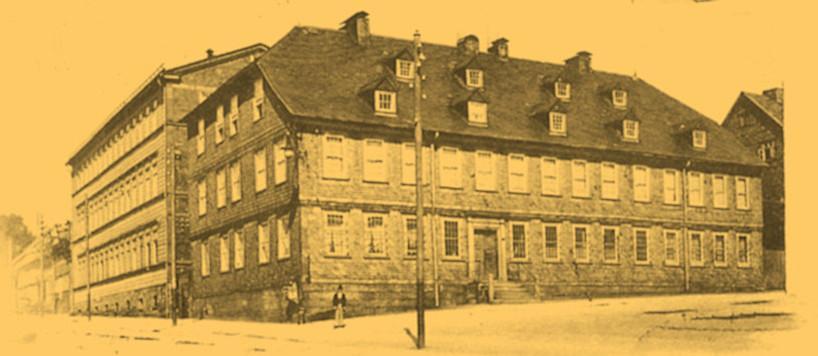
Ever since our uncle told me that he resembles a pig’s head, I have absolutely not been able to look at a single pig’s head indifferently, since it really is true. He approached me at the assembly at the Ilsemanns, and I could already see from afar that the new professors [7] were tormenting him again; it really was nothing more.
I have to praise you, Lotte, and to prove my sincerity I am including a little slice of pannetone, |110| my first successful batch since the one I ruined for Madam Less — (wait, let me add a bit for her as well so she can see how I am growing not only in years, but also in wisdom), moreover, it was baked on February 27.
But back to your praise. Do not let it bother you if anyone laughs at you because of your care and concern for my finery. Do not let yourself be led to think that for the doctor’s wife just anything is good enough, and instead put yourself in my place. I do not adorn and groom myself for the Cockaigne mountain people, I groom for myself alone and — for Böhmer — for me it is not enough simply to throw sand in their eyes; instead, unrecognized in my own elegant merit, I really do want to be what I seem, and should an outsider ever enter the company, his more refined eyes should be forced to acknowledge: “This is something more than Clausthal!”
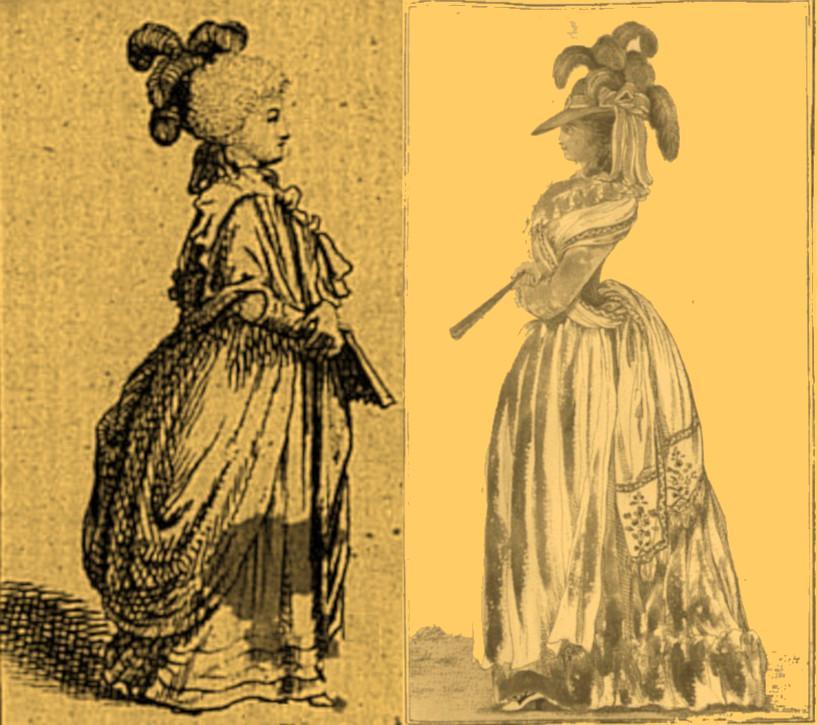
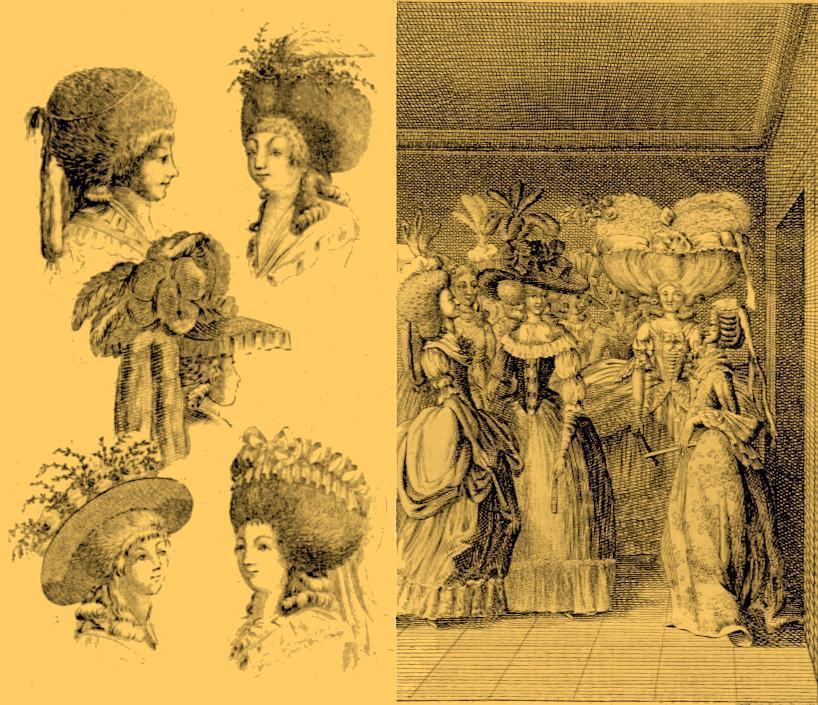
So always maintain the interest in me you are demonstrating now. And seriously, Lotte, without considering my own advantage for a moment, it is incomparably more praiseworthy than the egoistic behavior of others who are concerned only and exclusively with their own flowing sacques and caps and bonnets. [8]
Here are your books back along with considerable thanks. If you have the chance, please do not forget the English comedies. I would be surprised if L’homme sauvage [9] has been read to the end. And one more thing, children! If ever you bake a Ludwig Cake, which ends up being too heavy when I make it here because of the yeast, please do send me a piece. [10] That would be a feast . . .
Notes
[1] Unidentified woman; apparently the head-equerry’s wife in Göttingen. Back.
[2] See Goethe’s Faust: Parts I & II, 2 vols., trans. Albert G. Latham (London 1908), 2:74 (Faust part 2, line 6200; of course, this part of Faust was written long after Caroline’s letter here); the scene is “Gloomy Gallery,” with Faust and Mephistopheles; Mephistopheles is speaking:
Thou think'st 'tis done as soon as said,
But where we stand the steps grow steeper;
A realm most alien dost invade,
And wantonly in debt still plungest deeper,
And Helen to evoke thou think'st as easy
As was the paper-spectre of specie.
With hanky-panky, air spun sprites, and those all,
Or kill-crop dwarfs, I stand at your disposal,
But devils' dears, though well enough abstractly,
We can't palm off as heroines exactly.
The verse is glossed ibid., 355: “Kill-crop, German Kielkropf, an insatiate brat, popularly supposed to be a fairy changeling substituted for the genuine child (New English Dictionary).” The creature could also be understood loosely as a misshapen or mentally deficient child (or even animal) understood as deriving from the devil, dwarves, or nixies, often with a malformed throat. See John Colin Dunlop, History of Prose Fiction, rev. ed., ed. Henry Wilson, vol. 1 (London 1906), 462:
Near Halberstadt, in Saxony, lived a man who also had a Kielkropf (i.e. oaf or changeling), who was fed by the mother and five other women, and besides devoured very much. The father was advised to promise the Kielkropf to the Blessed Virgin Mary . . . as he was carrying the changeling in a basket over a bridge, another devil that was below in the river called “Kielkropf, Kielkropf!” Then the child, which had never spoken before, replied, “Ho, ho!’ The devil in the water asked further, “Whither art thou going?” and the child in the basket replied, “I am going to be rocked at Hochlestad.” Hereupon in terror the man threw the child over the bridge, and the two devils flew away together, and cried, “Ho, ho, ho,” tumbling one over another, and vanished.
Such changelings and Kielkropfs Satan substitutes in the place of true children: for he has power to change children, putting devils instead in their cradles. Such changelings feed but do not prosper, and do not live above eighteen or nineteen years. — Luther, Colloquia Mensalia.
Johann Heinrich Füssli, Der Wechselbalg (1780):
[3] Caroline loosely cites the German (apparently from memory) from Christoph Martin Wieland, Oberon, ein Gedicht in 14 Gesängen (Frankfurt, Leipzig 1780), canto 4, stanza 21 (not 22 as in Schmidt [1913], 1:683; here stanzas 20–21 in Oberon, a Poem, trans. William Sotheby, 2 vols., 2nd ed. [London 1805], 1:111):
While thus the knight, by many a danger won,
Clasps in his arms the visionary bride,
The old man from Euphrates' flowery side
Strays imperceptibly to sweet Garonne.
He sees once more those lovely plains expand,
Where the first flow'ret lur'd his infant hand:
No where, he thinks, the sun so mildly gleams
As on the banks where first he drank its beams:
So green no other mead, so smiles no other land!

Thou little spot! where first I suck'd the light,
Thou witness of my earliest smile and tear!
Lov'd haunt! though distant far, how fair appear
Thy scenes in day-dreams floating on my sight!
Where'er I wander, my returning mind
Still feels itself to thee in secret join'd!
Feels without thee e'en Paradise unblest —
Oh! be the boding true that swells my breast!
O lay me in thy lap amid my sires recline'd! Back.
[4] Caroline’s language here (Puchjunge, a young ore-miner) reflects her environment, Clausthal being an important mining town. Back.
[5] Otherwise unidentified; perhaps Friedrich Adam Julius von Wangenheim (1749–1800), a Hessian forestry official originally from Gotha who had spent several years in America with Hessian troops (as did Caroline’s brother Fritz Michaelis) and had returned to Hesse in 1784, then soon received a new position in East Prussia. Back.
[6] See Caroline’s undated letter to Lotte in 1785 (letter 53), note 7. Back.
[7] At the mining academy in Clausthal (the Technical University today), which had been established in 1775 (here in the location established in 1811 on a 1901 postcard):
[8] Concerning the understanding of “sacque” in 1785 (Germ. Schlender [Caroline’s term]; also Schleppkleid; Fr. robe traînante), see the Glossarium Germanico-Latinum votum obsoletarum primi et medii aevi, ed. Laur. de Westenrieder (Monachii [Munich] 1816), 508: “A woman’s overdress of unusual size and circumference, and with a train a certain portion of which is often pulled behind or bound up on one side.” At the same time, the term, though originally referring more specifically to the sacque as such, eventually referred to several analogous styles, including, in 1785, what was known as the robe à l’angloise (anglaise.
Illustrations from 1785 and 1786 of at least an approximation of what Caroline meant (in order): “Habillemens de l’année 1785,” Goettinger Taschen Calender im Jahr 1785 (1785), 2; engraving 12 from “Weibliche Kleidung: 1. Englische Damen-Tracht und Robe à l’Angloise; 2. Haube à l’heurese Convalescense; 3. Neuigkeiten aus Paris. Den 6ten April 1786,” Journal der Moden (1786), (in order) 141–45 with engraving 12 (shown here at right); 145–46 with engraving 11; 146–48 (source: Klassik Stiftung Weimar; cordial communication from Sabine Schierhoff):
See esp. Friedrich Wilhelm Gotter (husband of Caroline’s friend Luise Gotter), Gedichte, vol. 1 (Gotha 1787), 68–70, in the tongue-in-cheek satirical poem “Miss Calendar 1786” in the sense of a Taschenkalender with fashion plates such as the following from 1786 and 1788 (Frauenzimmer Almanach zum Nutzen und Vergnügen 1786 and 1788):
The Ninon de l'Enclos of our age: beautiful, witty "Miss Calendar,"
On her deathbed does languish, awaiting absolution,
As on Hymen's throne,
Adorned as for the Gardens of Vauxhall. A sacque
Of white crepe, half clinging, half flowing
And full of folds, like a Greek chiton,
(You will find it in the Book of Vanity,
In the thrice most fashionable of the fashionable journals)
In short, a Parisian blouse, with flowing flounce,
Deceiving cloak for withered breast.

Head-covering à la Horria
Shortens the gaunt face to oval;
And on sunken cheek does
Softly shaded blush defy e'en
Death's creeping pallor. At her beck appears
A physician of the soul. And ah, how swiftly, fearfully those gods of love,
Companions to our patient, now flee beneath her bed!

The dying woman does he seek, then, startled, sees the painted doll,
"Miss," he begins, "your alphabet of life
Omega does approach. The journey commences,
Except — your passport — ah, it comes but from the church;
And were your conscience white as snow —
'Tis issued not till bath of tears
That conscience cleanses Jezebel's years."

Poor Miss Calendar!

Such sacrifice oppresses more e'en than sin.
Hence now the maid she beckons near, "You hear the bonze's threat and din!
For God's sake" — death itself now rattles her within —
"Hasten! Ribbons anew! Ribbons anew!
For horrible are such yellow ones to view
When properly not paired with red of hue." Back.
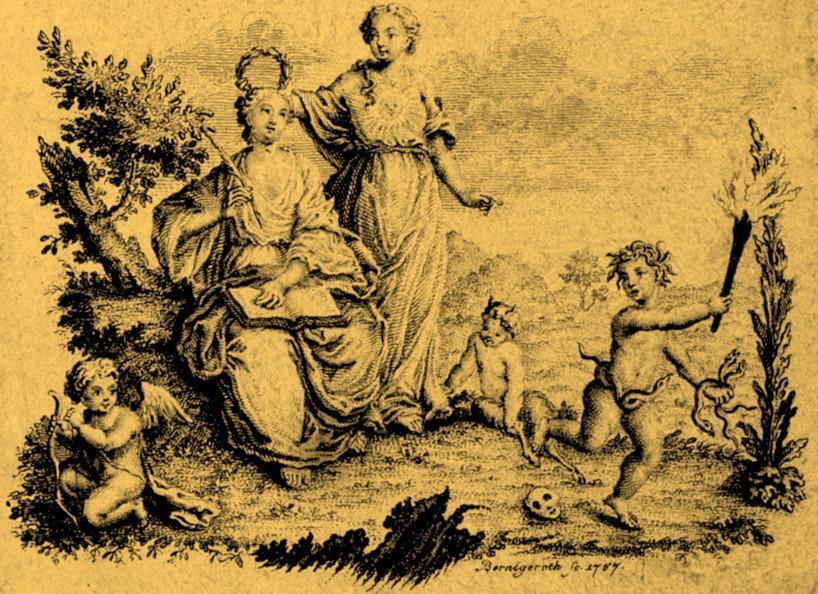
[9] Louis-Sébastien Mercier (1740-1814), L’homme sauvage (Neuchatel 1784), an essentially pirated translation and adaptation of the narrative “Der Wilde” by Johann Gottlob Benjamin Pfeil in the latter’s Versuch in moralischen Erzählungen (Leipzig 1757), 447–589, which Mercier used as a foundation for his treatment of the encounter between civilized and natural human beings. Pfeil protested publicly in 1787. Here the frontispiece to his original collection of 1757:
[10] Since Caroline was a subject of the Elector of Hannover, the version of the Ludwig Cake (Ludwigs-Kuchen) with which she was familiar was possibly similar to that found in Vollständiges hannöverisches Kochbuch, oder neueste practische Erfahrungen einer Hausmutter im Kochen, Backwerkmachen und Einkochen der Früchte, nebst einer Erklärung aller in der Kochkunst vorkommenden Kunstwörter (Hannover 1808), 179–80 (recipe see supplementary appendix 52.1). Back.
Translation © 2011 Doug Stott