
• 15. Caroline to Luise Gotter in Gotha: Göttingen, 15 May 1780
Göttingen, 15 May 1780
|26| . . . You ask whether I have read Oberon, and whether I liked it? [1] What a question, how otherwise could I live? Show me the person whose head is so warped and whose sensibility so hardened that they would not be absolutely charmed by it. —
But seriously, I liked it very much indeed and I would have a hard time thinking of something I have read like it that is more interesting. [2] . . .
Notes
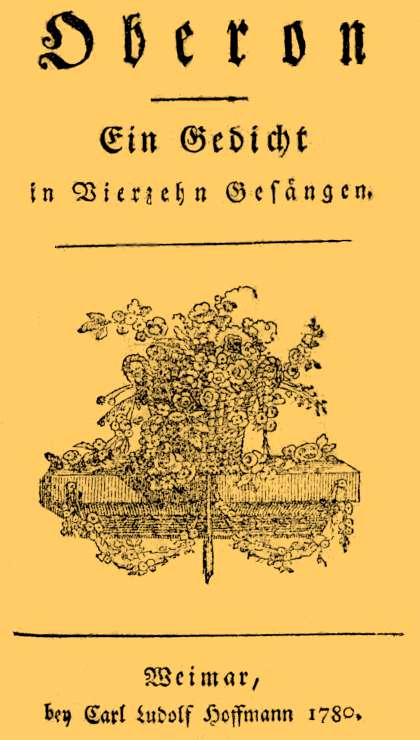
[1] Christoph Martin Wieland’s verse romance Oberon: Ein Gedicht in vierzehn Gesängen (7000 lines) filled the first-quarter volume of his journal Der Teutsche Merkur for the year 1780 (155 unpaginated pages). Published the same year in Weimar in a separate edition:
[2] See the following dramatic stanzas and accompanying in-text illustrations from the 1805 English translation, Oberon, A Poem from the German of Wieland, trans. William Sotheby, 2 vols., 2nd ed. (London 1805):
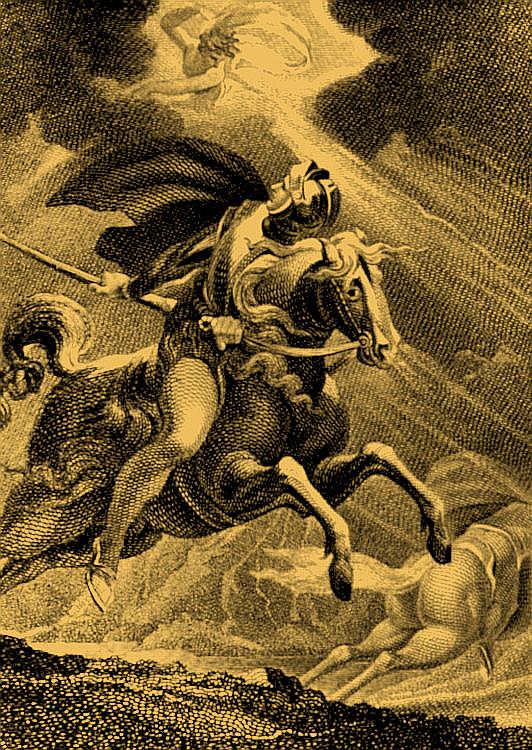
From canto 2:
A tempest, wing'd with lightning, storm, and rain,
O'ertakes our pair: around them midnight throws
Darkness that hides the world: it peals, cracks, blows,
As if the uprooted globe would split in twain:
The elements in wild confusion flung,
Each warr'd with each, as fierce from chaos sprung.
Yet heard from time to time amid the storm,
The gentle whisper of th' aërial form
Breath'd forth a lovely tone that died the gales among —

"Why does thou fly? thy happiness thou fly'st!
Come back, come Huon! dare in me confide —
Hear me! to happiness thy path I guide!" —
'If thou delay'st a moment, sir, thou dy'st!
Away! away! your finger in your ear!
He means no good — 'tis the death his voice to hear!'
Onward, through thick and thin, they dash again,
Beat by the blast, and flooded by the rain —
When lo! a cloister wall impedes their rash career.
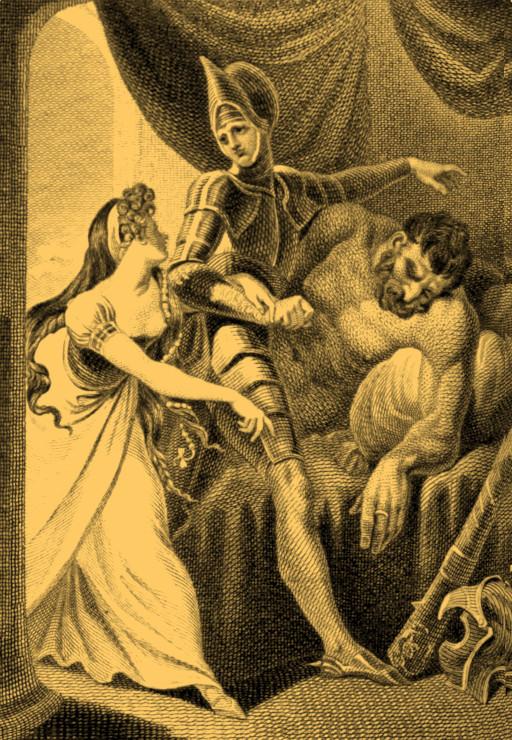
From canto 3:
A Hercules, by leaden sleep opprest,
When ceaseless labour thro’ the live-long day
Had cleans'd at last th’ Augean heap away;
Thus spread his back, thus rose his brawny chest;
The same in figure, and in garb the same;
Yet to our knight, this man of giant frame
Seem’d, in the day's chaste beam, not slightly mad,
Thus to repose, like Grecian hero clad:
Mere heathenism, sure! devoid of grace and shame!
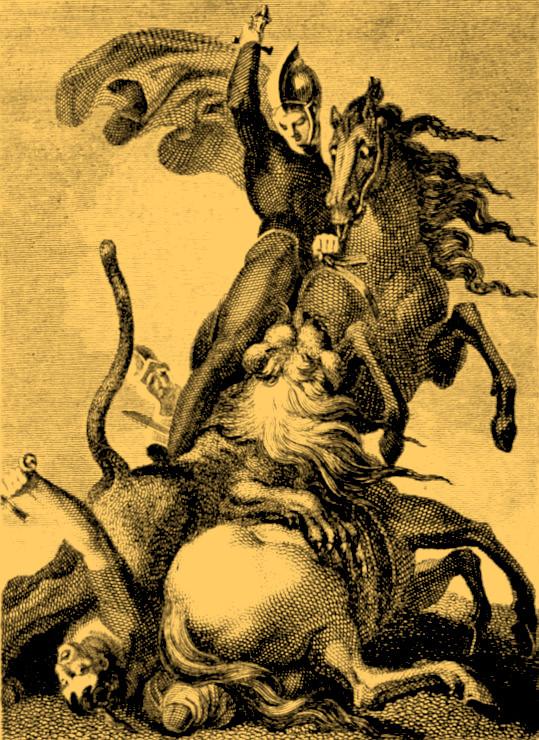
From canto 4:
Sir Huon summons his remaining strength,
And tho' death glar'd before him, undismay’d
Darts in the monster's neck his vengeful blade —
In vain, high rais'd, his tail's enormous length
Swings in the air, and curling to and fro
Had crush'd in instant death his prostrate foe,
If active Huon had not leap'd aside —
In vain his claws gigantic open wide;
Bold Sherasmin draws near, and fells him at a blow.
From canto 5:
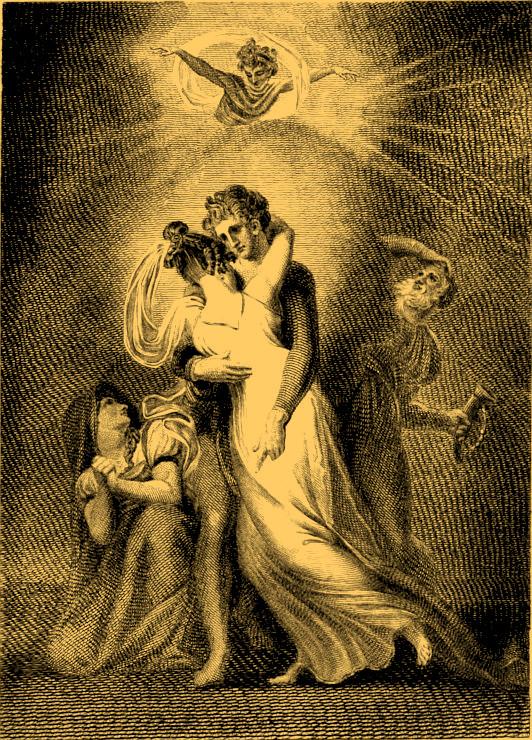
Yet, his first kiss, still thrilling in her heart,
Requires no other aid to swell the flame:
Wealth, glory, splendor, all an empty name:
From these it little seems at once to part,
So the enchanted maid her Huon keeps:
With shame and love o'empower'd she fondly weeps,
And hides her burning face on Huon's breast;
While raised to meet his heart, with rapture press,
High swells her glowing heart, and 'against his bosom leaps.
From canto 6:
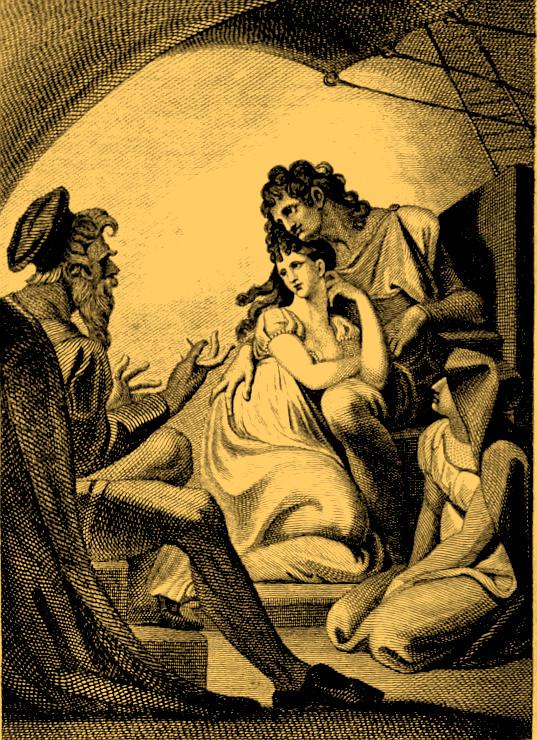
Of in this speechless language, glance on glance,
When mute the tongue, how voluble the heart!
And oft retiring from the rest apart,
Silent they sit in fascinating trance:
Or standing arm in arm, as soul in soul,
View far around the world of waters roll:
Yet not without a witness — Fatma came,
At once the friend, and soother of their flame:
E'en Huon begg'd her stay, and own'd her kind control.
Translation © 2011 Doug Stott