
• 193. Caroline to Georg Joachim Göschen in Leipzig: Jena, 16 December 1797
Jena, [Saturday] 16 Dec[ember 17]97
|444| Dearest friend, I am still sick — but let us not talk about that, for I would prefer to pass silently over the mezereum, which at this moment genuinely is resting on my arm and steeping after having seemed for three days to move over to the side of my obstinacy and to be intent on having no effect at all. [1] I am also drinking a preparation of Icelandic moss, and your celanien powder arrived too late. [2]
How often did I walk over to the window that morning and think and hope that you already would have turned around in the wretched rain that started pouring down just after you left. [3] But you are even more obstinate than I myself. We had no peace until we were able to imagine you having gotten at least as far as perhaps Naumburg, and it was a good thing you sent us news. [4] Never again will we allow you to depart from us in that fashion.
I should have the reinettes in question by tomorrow and believe I can still get them to you before Christmas. [5] But you, you naughty one, have surely lost your Memorandum book, [6] your little Herrmann und Dorothea, [7] since I have not yet received any basting thread for Gustel’s dress, which I absolutely must have. Dearest Madam Göschen, do please help me in this matter — it is the most integral part of Gustel’s Christmas. — It should have arrived by Wednesday or today [8] if your husband had remembered us for even a moment. [9]
Am I not always saying that all the barons will be turning to you? [10] Just this afternoon, Cammerherr Einsiedel sat here and gossiped that — over time — he would so like to send you his complete theory of the theater arts, which |445| he is writing alone, without Jean Paul [11] — is it to be complemented by copper engravings, but only outlines, for example, like the attitudes of Lady Hamilton? [12] Are you determined to give him no reason to hope? He is basically worth ten times what your other barons are. Schlegel intends to announce the modest attempt in a review and has been simultaneously charged by him with explicating the infringement with Jean Paul. Einsiedel will be going to Leipzig during the Michaelmas book fair — at least it seems to me he mentioned that.
I have received no font characters from Madam Griesbach. For Christmas she will allegedly be baking you a completely new alfabeto. [13]
Stay well, good friend — please accept our warmest regards for you and your dear ones; come again soon, very soon, and remain favorably disposed toward us.
C. S.
I was certainly not so malicious as to gloat at your misfortune, quite the contrary, we all felt very sorry for you; but it is a modest punishment for your not having stayed here longer; the goose was very good. In the meantime, regards to your entire family and to you yourself from your
Auguste
Enclosed are the Klopstock odes, which you forgot. [14]
Notes
[1] Daphne mezereum, also “spurge-olive, spurge-laurel,” with its bright red berries, though otherwise extremely toxic to human beings, was used as a vesicant or blistering agent (John Stephenson, James Morss Churchill, Medical Botany, Or, Illustrations and Descriptions of the Medicinal Plants of the London, Edinburgh, and Dublin Pharmacopœias Comprising a Popular and Scientific Account of All Those Poisonous Vegetables that are Indigenous to Great Britain, vol. 2 [London 1831], plate 65):
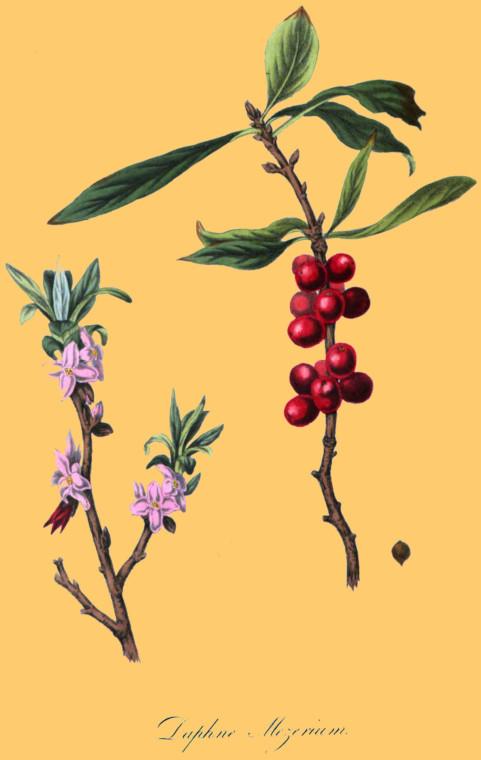
See ibid., unpaginated gloss to the illustration above:
Several species of Daphne are poisonous, and the berries of this plant prove so to man, dogs, wolves, and foxes. Linneus reports, that a young lady, laboring under intermittent fever, died from hæmoptysis, in consequence of having taken twelve berries of the Daphne Mezereum, which had been given with the intention of purging her; and Vicat states, that an hydronic patient having taken the wood of Mezereon, was suddenly attacked with diarrhœa, which was continual, and accompanied with insupportable pains. He had beside, for six weeks, vomitings, which returned every day with extreme violence; although, during the whole time, proper remedies were employed in order to quiet them. . . .
It is very generally allowed that Mezereon is a stimulating diaphoretic, useful in chronic rheumatism; but Dr. Donald Monro, Dr. Russel, Dr. Fothergill, and several other eminent men, have described it as capable of curing venereal nodes, scirrhus tumors, obstinate ulcers, and severe affections of the skin. . . . From all that I have been able to collect, I feel myself authorized to assert, unequivocally, that the Mezereon has not the power of curing the venereal disease in any one stage, or under any form. . . .
It has been asserted by some of our English authors, that the bark of the Daphne Mezereum is used in France to produce visitation, and to keep up the formation of pus from issues. Back.
[2] Celanien uncertain, presumably celandine, which allegedly had cathartic and diuretic properties that promoted perspiration; it was also used as an expectorant and externally for warts, corns, and some skin diseases. — Concerning Icelandic Moss, see English Botany; or, Coloured Figures of British Plants with their Essential characters, synonyms, and places of growth, with “occasional remarks by James Edward Smith,” vol. 20 (London 1805), 1330:
Native of mountainous heaths and woods in the alpine parts of Britain. We have gathered it on the Pentland hills near Edinburgh, Ben Lomond, &c. and have received it from Durham, but have been obliged to draw the fructification from foreign specimens. On the Alps the shields more frequently occur, and the whole plant is more luxuriant, than with us. The fronds form loose elastic tufts, often intermixed with moss and other plants. They are channelled in the lower part, dilated and elegantly divided and lobed above; the margin regularly fringed. Colour a rich chesnut brown, rather shining, with a green tinge when wet: the under side paler, and the whole plant pale in the shade. The bottom sometimes turns very red; perhaps from some alkaline substance falling on it. The shields are dark chesnut, polished, flat, without any border, growing close to the upper surface of the frond near the summit. This Lichen abounds with nutritious mucilage, and is become a fashionable medicine in coughs and consumptions. It is previously infused in water to extract its purgative bitter quality.
For illustrations and a more thorough description of the pharmacological use of Icelandic Moss and celandine at the time, see supplementary appendix 193.1. Back.
[3] Concerning Göschen’s visit, see Caroline’s letter to him on 17 November 1797 (letter 191c) with note 1. Back.
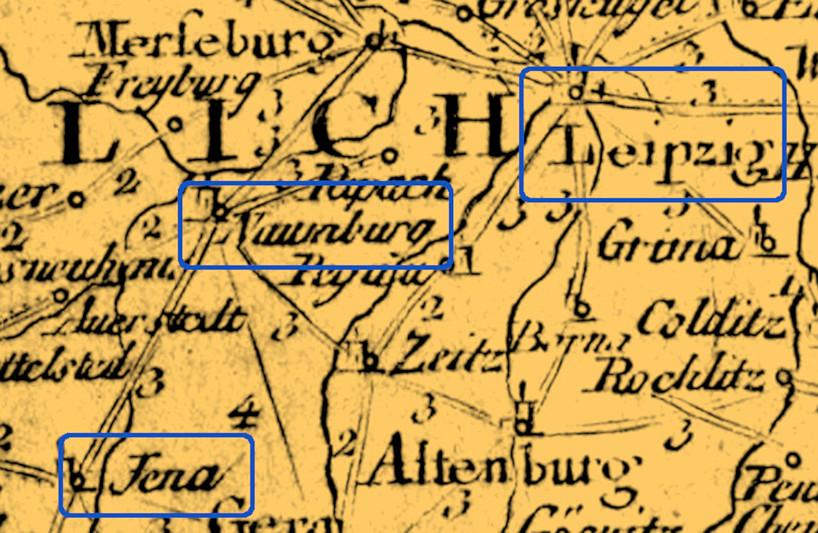
[4] Naumburg is located approx. 30 km north of Jena on the way to Leipzig (Post Karte Durch ganz Deutschland, ed. J. Walch [Augsburg 1795]):
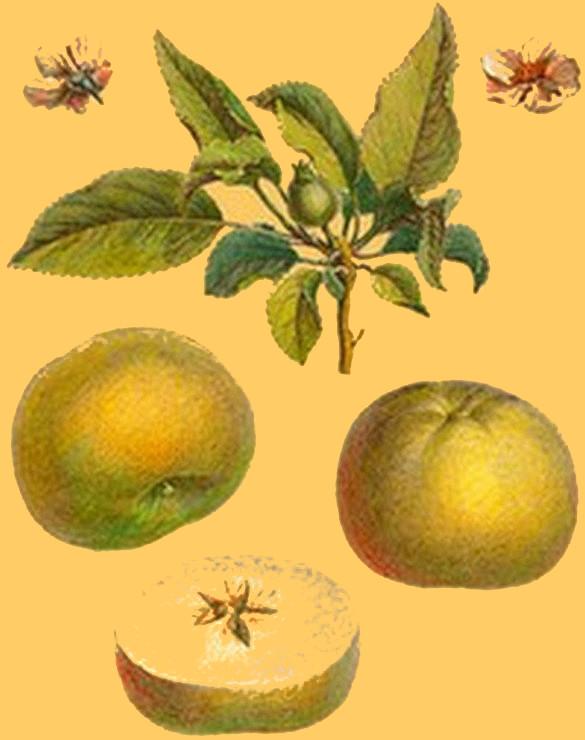
[5] Presumably the reinette grise apple variety (anonymous illustration):
[6] Memorandum book in English in original. Back.
[7] A small calendar (and “memorandum book”) edition of Goethe’s play published by Johann Friedrich Vieweg: J. W. v. Göthe, Herrmann und Dorothea. Taschenbuch für 1798 (appeared October 1797, Berlin 1798), 174 pages with a calendar, title-page copper engraving by Daniel Nikolaus Chodowiecki, one fashion engraving, and six landscape engravings, with a colored silken binding (here the frontispiece group engraving [Friedrich Wilhelm II of Prussia with his family]; the engravings for February, April, June, and August; the silken binding; and the fashion plate):
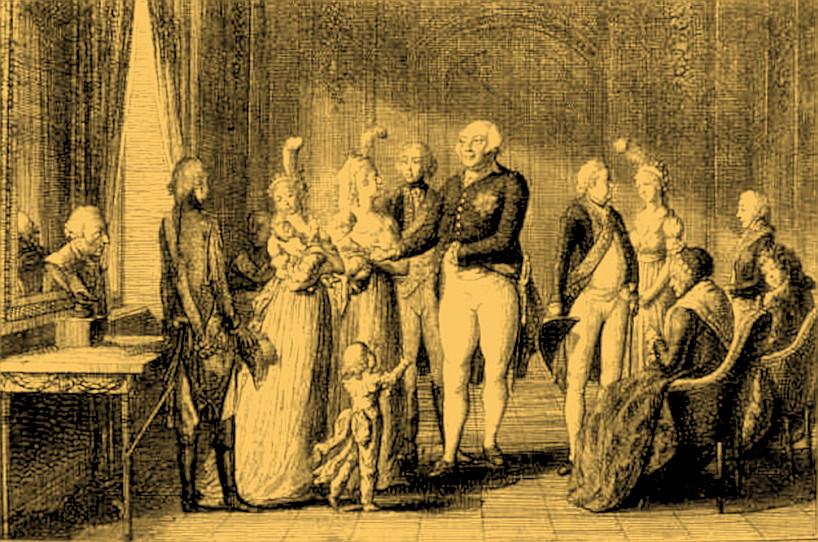
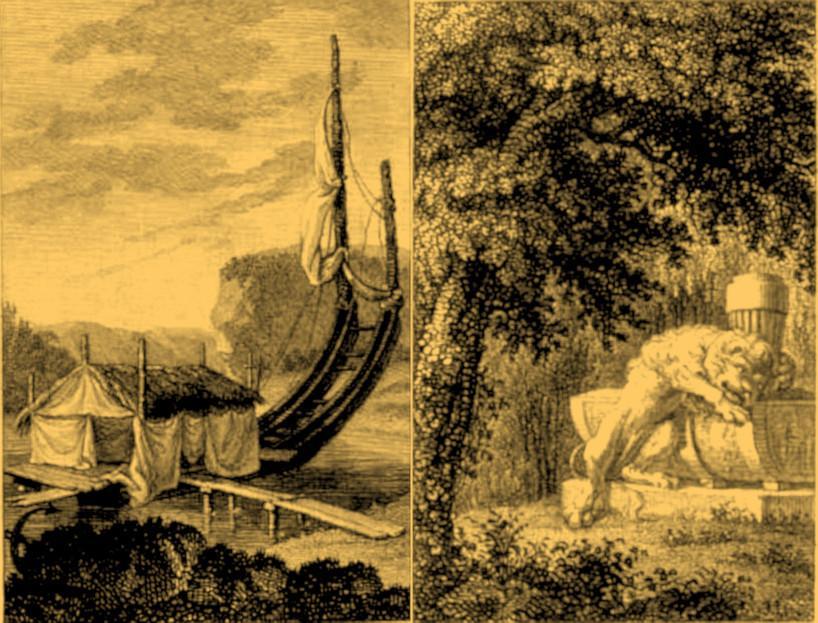
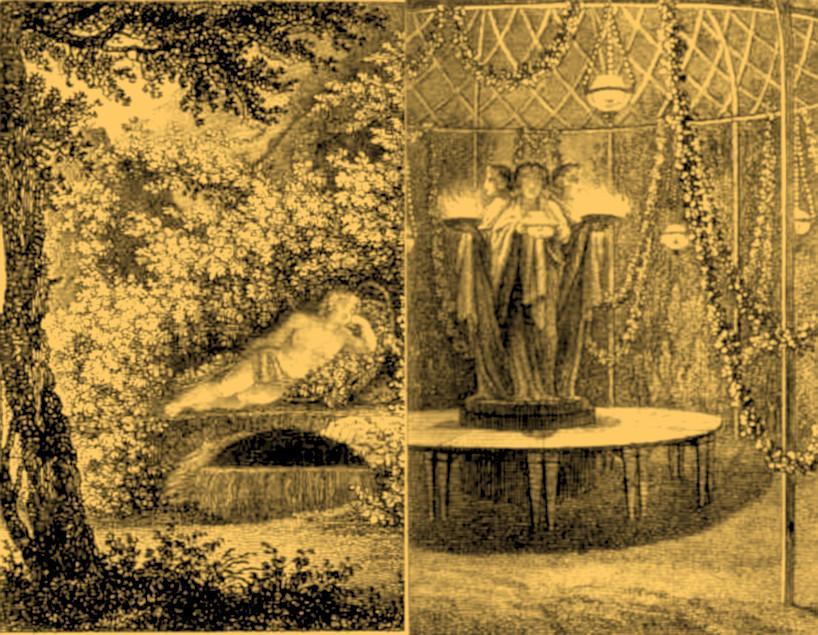
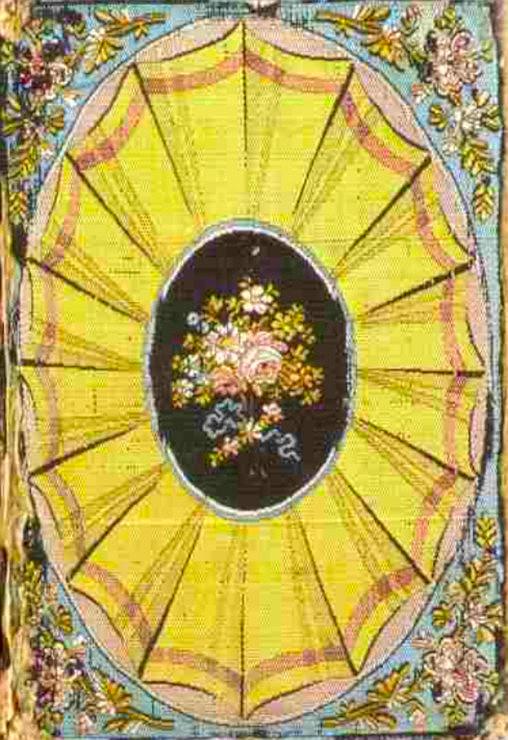
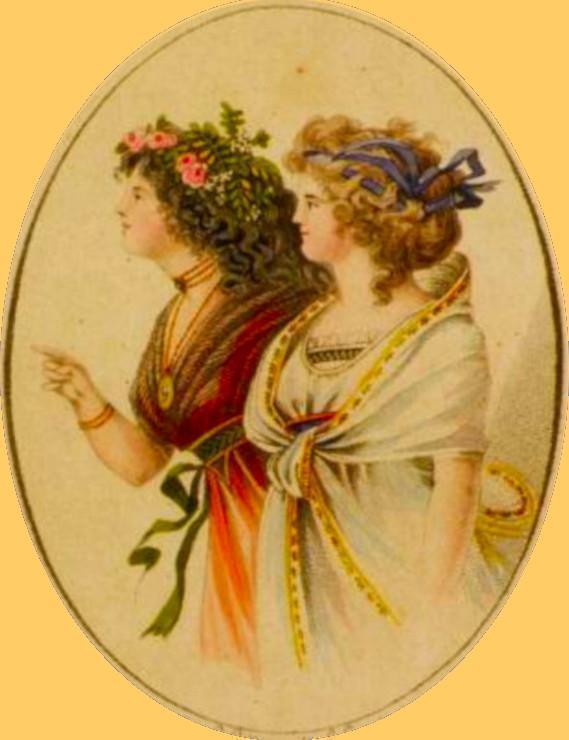
Less expensive editions were available with different bindings and without the engravings. Back.
[8] The preceding Wednesday was 13 December; Caroline is writing on Saturday, 16 December. Back.
[9] On 7 February 1799 Wilhelm Schlegel, who was anticipating working quite closely with Göschen and even considering placing his Gedichte (ultimately Tübingen 1800) and an Almanach with him, writes similarly to Göschen (Karl Goedeke, “Kleine Mitteilungen: 12. Vier Briefe A. W. Schlegels an Göschen,” Weimarisches Jahrbuch für deutsche Sprache, Literatur und Kunst, ed. Hoffmann von Fallersleben and Oskar Schade, 4:1 (1856), 26–30, here 27; entire letter text, see letter 219b):
Enclosed is a note from my wife to your sister-in-law — I suspect she is yet again coming with this or that request. Incorrigible. Back.
[10] Baron Friedrich Wilhelm Basilius von Ramdohr, and the Dresden art writer Baron Joseph Friedrich von Racknitz. Back.
[11] Concerning Friedrich Hildebrand von Einsiedel’s piece, Grundlinien zu einer Theorie der Schauspielkunst (Leipzig 1797), see Caroline’s letter to Luise Gotter on 15 October 1797 (letter 188) and to Einsiedel himself on 18 October 1797 (letter 188a).
Concerning Caroline’s reference to Jean Paul and, toward the end of this paragraph, to “infringement”: In his review of Einsiedel’s piece, Wilhelm Schlegel clarifies the concurrence between several passages in Einsiedel’s piece and Jean Paul’s prose idyll Der Jubelsenior (Leipzig 1797) that resulted from personal correspondence and an exchange of manuscripts between the two writers (Allgemeine Literatur-Zeitung [1798] 46 [Friday, 9 February 1798] 361–67 [here 367]; Sämmtliche Werke 11:245–52, here 252; additional remarks from that review in supplementary appendix 188a.1):
The conspicuous concurrence between several passages in this piece (though none of those discussed above falls under this rubric) and several in Jean Paul’s Der Jubelsenior came about as follows. Herr von Einsiedel currently maintains a cordial correspondence with the author of the latter work, Herr Richter, from whom he received a letter regarding these matters after sending Herr Richter his manuscript just as he was engaged in proofing that manuscript for the press and writing its preface. He then incorporated some of Herr Richter’s remarks from that letter, and the present reviewer is now acknowledging in his name their otherwise uncredited author. Since the present piece was not immediately published, the same ideas appeared even earlier in Der Jubelsenior, where Herr Richter, as their initiator, similarly made use of them. Back.
[12] Emma Hamilton’s “attitudes” were essentially conceived as portrayals of mythological figures and scenes; Caroline seems here to be thinking more about their punctiliar nature as “sketches” as opposed to more elaborate scenes; here as Ariadne in a painting by Louise-Elisabeth Vigée-Lebrun:
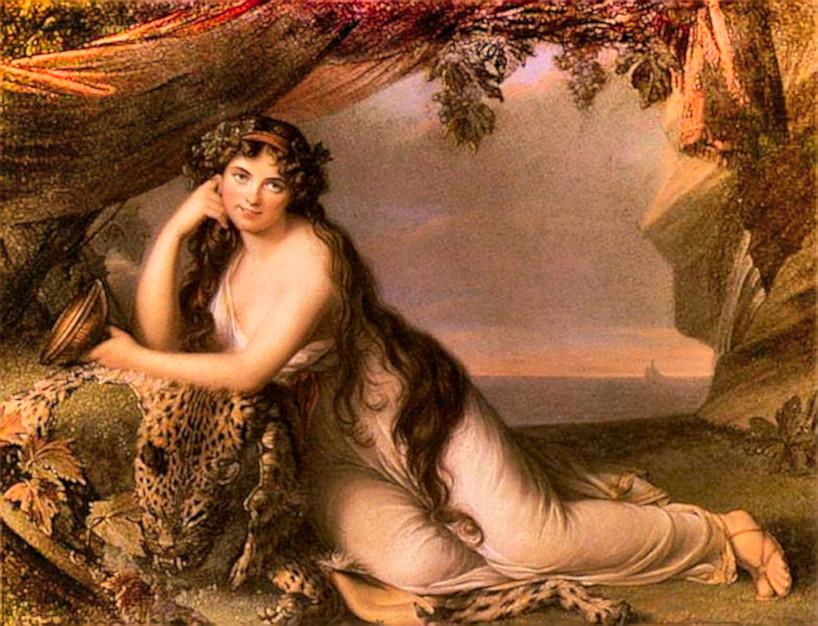
and as a Bacchante in a painting by George Romney:
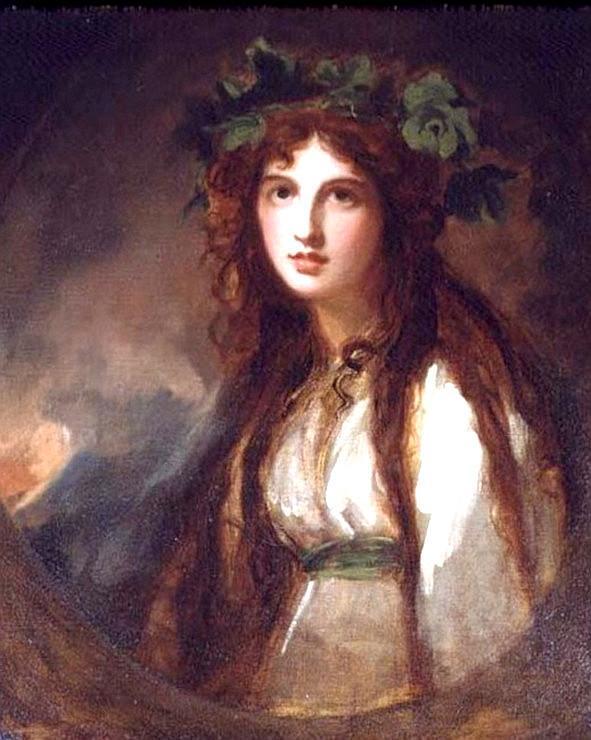
[13] A tongue-in-cheek allusion to Göschen’s recent visit to Jena, during which he attended a presentation of a new Greek publishing font to be used in the new edition of the New Testament published by Madam Griesbach’s husband, Johann Jakob Griesbach; see Caroline’s letter to him on 17 November 1797 (letter 191c) with note 1. Back.
[14] Göschen was publishing a deluxe edition of Klopstock’s works, Klopstocks Werke (Leipzig 1798–1817); the odes appeared in the spring of 1798, Oden, 2 vols. (Leipzig 1798) (here the two frontispieces):

Translation © 2012 Doug Stott