
• 95. Caroline to Lotte Michaelis in Göttingen: Marburg Sunday morning 1789 [*]
[Marburg] Sunday morning [1789]
|192| I spoke once more with Frau von Roche at departure — I sooner do not believe we really need her, for if you can see Frau Reck yourself, everything can be done without an intermediary unless your face scares her off — something for which, considering your description, I would be unwilling to vouch if the element of goodness did not seem to be its most prominent feature.
I find this particular prospect to be by far the best among those I can envision. It seems to be painful for our parents to give their consent — and here your own steps would be least likely to exhibit the particular appearance to which they seem to be so averse. You are going along with her because you would “really like to travel.” Would not Fräulein Schlözer consider herself extremely fortunate to find such an opportunity? When I read Madam Roche the passages from your letter, her eyes showed her approval, something she later expressed verbally as well.
I was sorry I did not see her alone again apart from the first and this last time — the crowd simply engulfed her. From morning till evening the most good-for-nothing, undistinguished people are in her parlor — she said something to each of them [1] — She paid a few visits to houses where her son has been received, the rest of the ladies paid their addresses to her. |193| I find that gesture extremely gracious and not at all proud — people still have enough sense after all to recognize merit.
I could not refrain from telling her that I found the entire behavior ridiculous and foolish — even Madam Jung told me it is nothing more than an example of absolutely worthless curiosity. “You bear the curse of celebrity,” I added, and that really was my honest opinion, for it is truly a curse to be unable to ride unnoticed through the street, never to be able to present one’s true, inner, private personality, to be the target of demands by the general public, to arouse tiresome expectations, unable to remain concealed within oneself and then emerge to the eye of the connoisseur like the sun from gloomy clouds, no surprise, no unprepared joy — I find it a thousand times more flattering and interesting not to be famous. Perhaps it would flatter me for a day, but then on the very next one ennui would predominate.
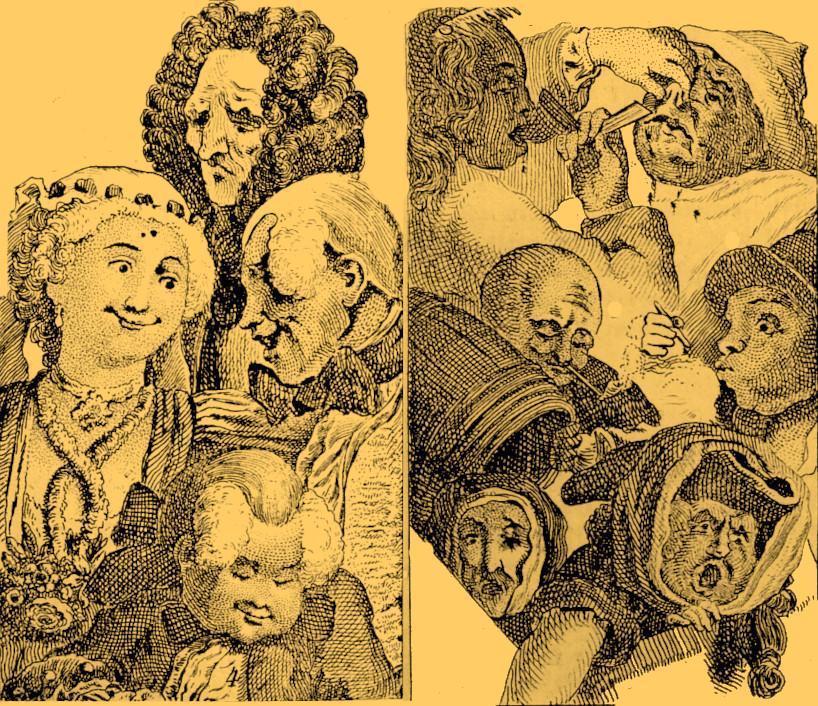
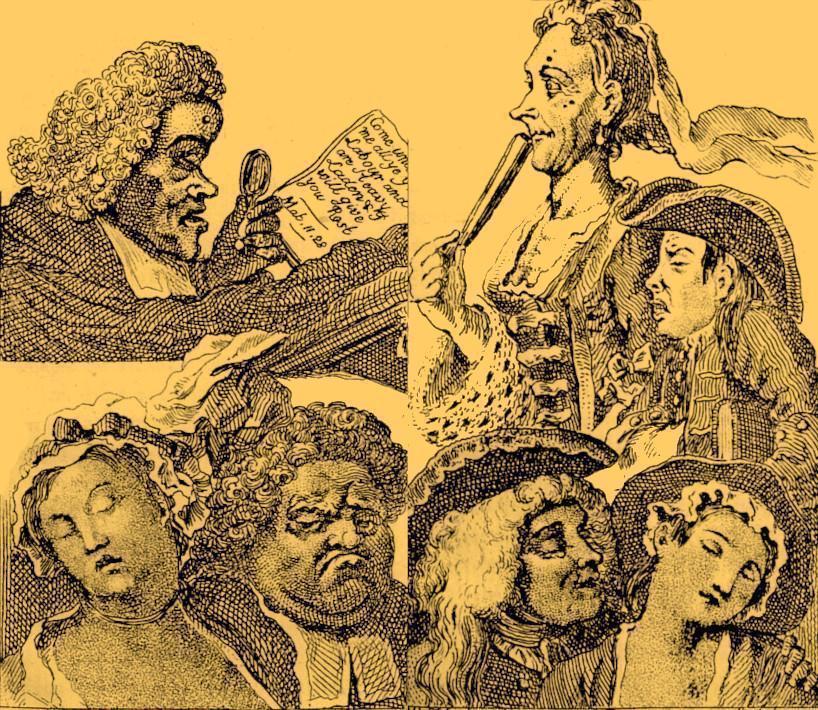
She held forth and made dozens of sentimental compliments, often guiding the conversation quite well, with wit and quick repartees. When she returns at Michaelmas, she intends to establish a completely different entourage, seeing no one except those whom she pleases and who please her. I encountered some truly abominable faces there. [1a] There is an excess of people here, and among so many there must also be at least some who are fairly tolerable and pleasant.
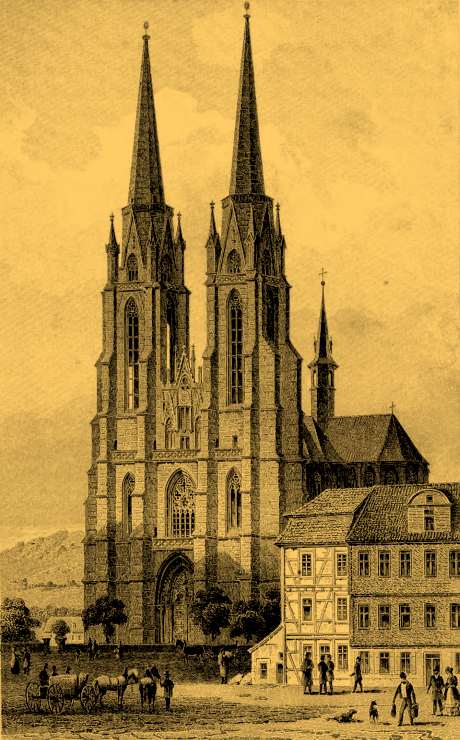
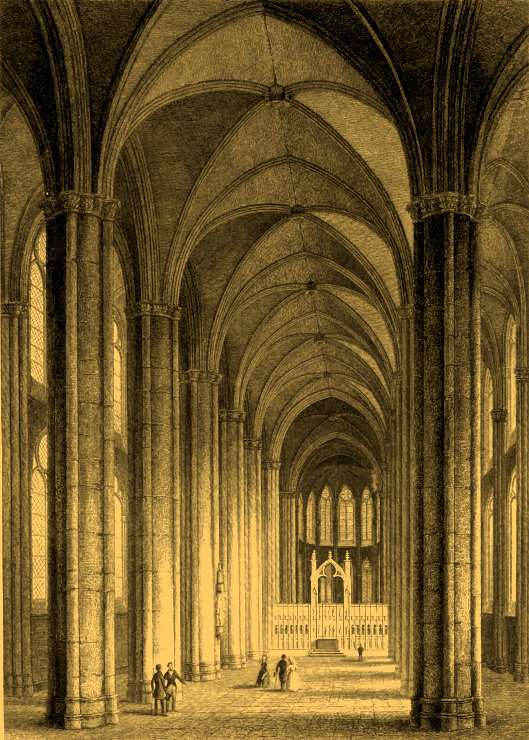
Yesterday evening the Schulers and Hansteins had tea with us, [2] and we made arrangements for several outings, one to the Church of St. Elisabeth, and St. Elisabeth’s washing fountain, and to the Frauenberg, [3] and are also embroidering hats together; I have one already half done, with grape leaves and grapes, for which a painter here did a very nice dessein for me. The grapes are purple, and it looks quite lively. Philipp has the painter in a course of treatment, and he must paint something for me in return.
“Behold, my parlor |194| has the fragrance of spiced cloves, with which my admirers from the lower classes supply me — no counts, no lords — the people must also serve me, the table waiters, apothecaries, and woodcutters all bring gifts to my Fairness. I have a laurel shrub I am cultivating for a poet — tell that to Schlegel — and a heavenly small reseda bush — a remembrance — tell that to Tatter — ah, cloves are my favorite flowers.” Have I not thrown myself completely into the voice of Madam Roche?
12:00. Your letter just arrived, which I can hardly read through calmly before finishing this.
I know not which way to turn, for the newspapers today contain such great, unprecedented, splendid things that I have gotten all worked up just reading them. [4] I am happy about your visit — strange that I should not be seeing him [Tatter].
I have not yet considered it advisable to ask Madam Roche to write to Madam Recke. Let us wait at least until she is in Pyrmont — preferably until after receiving additional explanatory letters from B. [5] I can always write whatever I want to Madam Roche — she asked me to write, something I will only do in matters of business and such.
Now something else. At the next opportunity, please send me all the essays, particularly your own, which I do not have. Write and tell me whether the beheaded Launay is a relative of the real, living one. [6]
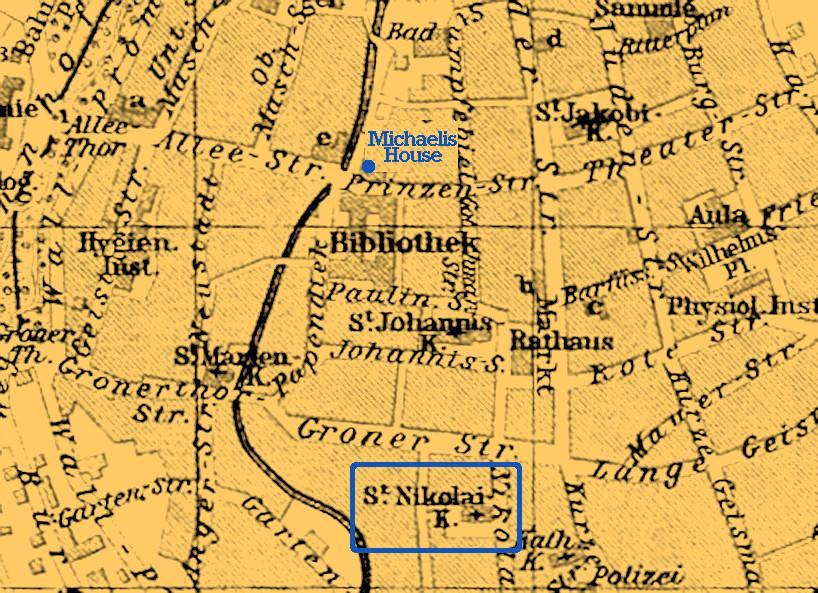
Volborth! I thought he would at least be smart enough to take a wife who did not have a mother in her life, and now, behold: he has acquired such an arch-mother-in-law. [7] He said he would take a wife for the sake of his St. Nicolas congregation. [8] The brothers think, for the sake of the common good, what will the . . .
[End of letter is missing.]
Notes
[*] Dating: Caroline is writing after 14 July 1789, for she references the beheading of Bernard-René Jourdan de Launay after the storming of the Bastille on 14 July 1789.
Concerning the possibility of Lotte Michaelis being in Elisabeth Charlotte von Reck’s employ as a traveling companion, a topic Caroline picks up in this letter, see Caroline’s previous letters to Lotte (letters 93, 94). Lotte was already almost twenty-three years old, unmarried, and without prospects. Back.
[1] Representative illustration from Goettinger Taschen Calendar vom Jahr 1790; Inhaltsverzeichnis deutscher Almanache, Theodor Springmann Stiftung):

[1a] Coincidentally or not, an odd tradition is documented for a time in the Goettinger Taschen Calendar beginning in the mid-1780s; to wit, several pastiche engravings of just such “abominable faces” — or intentionally stylized faces — were included in each issue. Caroline was almost certainly familiar with these illustrations. Here several from the issue for 1790, Goettinger Taschen Calendar vom Jahr 1790 (Inhaltsverzeichnis deutscher Almanache, Theodor Springmann Stiftung):
[2] The Marburg Hansteins are as difficult to identify with certainty as are the Marburg Schulers. See, however, Pauline Gotter from Schleusingen (on the southern slope of the Thuringian Forest, ca. 10 km von Hildburghausen, on which see below) to Schelling in Munich on 5 December 1811 (Plitt, 2:275):
Let me also thank you for every single word you write to us concerning our Caroline, dear Schelling; I can assure you that her memory has remained warm and living for all of us [Pauline, her mother, and her sisters] here as well; the love and gratitude for her we feel in our hearts can never be extinguished, and if in her present, transfigured condition she is in any way conscious of us, then surely she rejoices in the loyal souls here that still cling to her.
We found Joh. Müller’s remarks [acknowledging Caroline’s deft (anonymous) review in Athenaeum (1799) 313–16 of his “Fragmente aus den Briefen eines jungen Gelehrten an seinen Freund”] profoundly moving; indeed one might wish that they could but reach her as well.
On my journey I spent a day with the Hanstein family [presumably in Hildburghausen], whom Caroline saw virtually on a daily basis during her stay in Marburg and who were still able to relate so much to me about her, and about her dear little Therese, at whose death they were so helpful to Caroline back then. They spoke with so much genuine enthusiasm about Caroline that I wanted to take away every word that came from their lips; indeed, I could feel quite vividly how the magic of her spirit, even after so many years, was still there, and how that magic could still bestow significance on even the most insignificant things.
These people were never more dear to me, and never seemed so interesting. They had also known Philipp quite well [Philipp studied medicine for a time in Marburg] and were shocked to hear of his death [in 1811].
As is turns out, Caroline quite by chance would encounter two of the Hanstein daughters in Munich in 1807 (see her letter to Luise Wiedemann on 31 January 1807 [letter 421]). Those two sisters were Karoline Henriette von Hanstein and Antoinette Charlotte Wilhelmine Friederike von Hanstein, the latter married to the Württemberg envoy Karl Heinrich Ernst Friedrich von Bothmer in Munich; during the conversation, these two sisters related to Caroline that a third sister, Minette, had in the meantime settled in a convent in Westphalia.
Their father was Generalmajor von Hanstein in Marburg, and although they seem to have had several brothers, none are identified specifically. They mention to Caroline, however, that in Marburg they were at the Schulers’, and although Carl von Schuler in Marburg had married a woman by the name of Sophia Caroline von Hanstein (1766[?]–1831), her precise relationship with this present family is uncertain, though his sister-in-law Louise — also a Hanstein, but not Minna — from the same convent, Obernkirchen, in Westphalia, seems to have died in Hildburghausen, where he moved after living in Marburg, a move Caroline mentions in her letter to Luise Wiedemann in 1807 (there were several von Hansteins in that convent during the early nineteenth century).
See the “Marburger Sippenbuch 1500–1850,” ed. Kurt Stahr, 23 vols., (Marburg 1950–66), typewritten manuscript (copies in the Hessisches Staatsarchiv Marburg, the Stadtarchiv Marburg, the Universitätsmuseum Marburg, and with the Familienkundliche Vereinigung Kassel); also the Kurhessischer Staats- und Adress-Kalender auf das Jahr 1818 (Cassel 1818), 77, 235; R. A. Human, Chronik der Stadt, der Diözese und des Herzogtums Hildburghausen (Hildburghausen 1886), 227. Back.
[3] The Church of St. Elisabeth, begun in 1235 over the tomb of Elizabeth of Thuringia, is the largest and most prominent church in Marburg (Aloys Henninger, Marburg und seine Umgebungen [Marburg 1856], following pp. 12, 14):
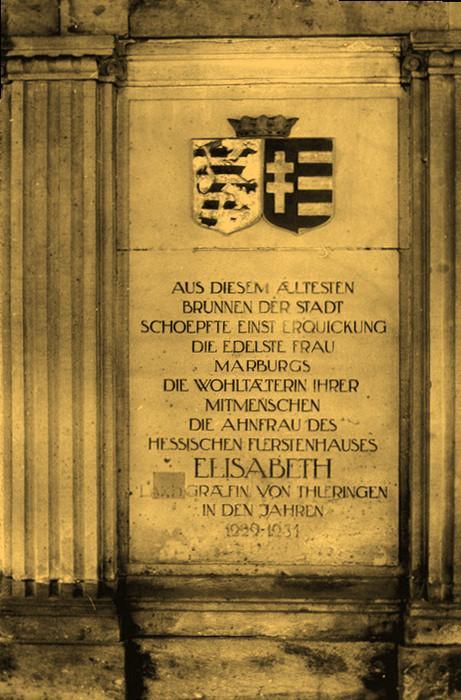
Two fountains in Marburg are associated with St. Elisabeth (personal communication from Ulrich Hussong at the Stadtarchiv Marburg; see esp. his Im Namen der heiligen Elisabeth. Nachleben und Jubiläumsfeiern in Marburg, Marburger Stadtschriften zur Geschichte und Kultur 87 [Marburg 2007], 216–22): One, whose waters a late-eighteenth-century text say St. Elisabeth used for washing, is located about 100m from the church at the corner of what is today Bahnhofsstrasse, Elisabethstrasse, and Wehrdaer Weg:
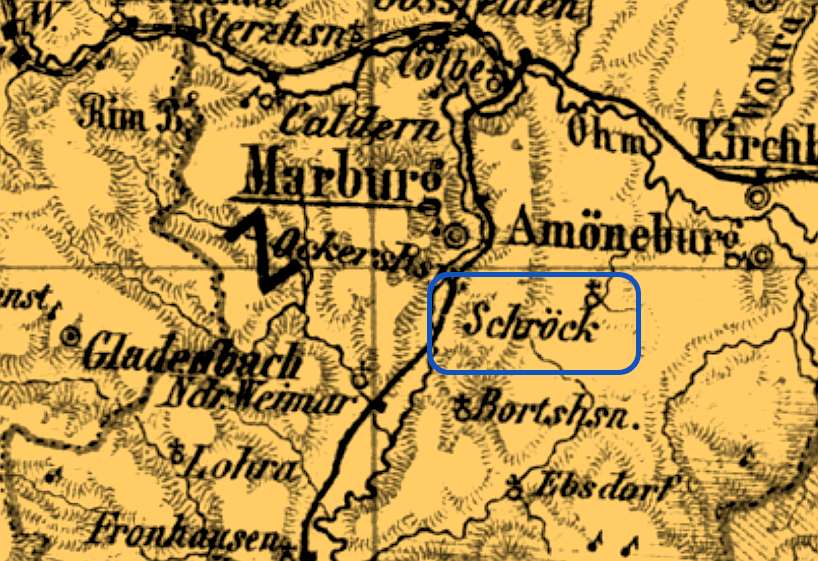
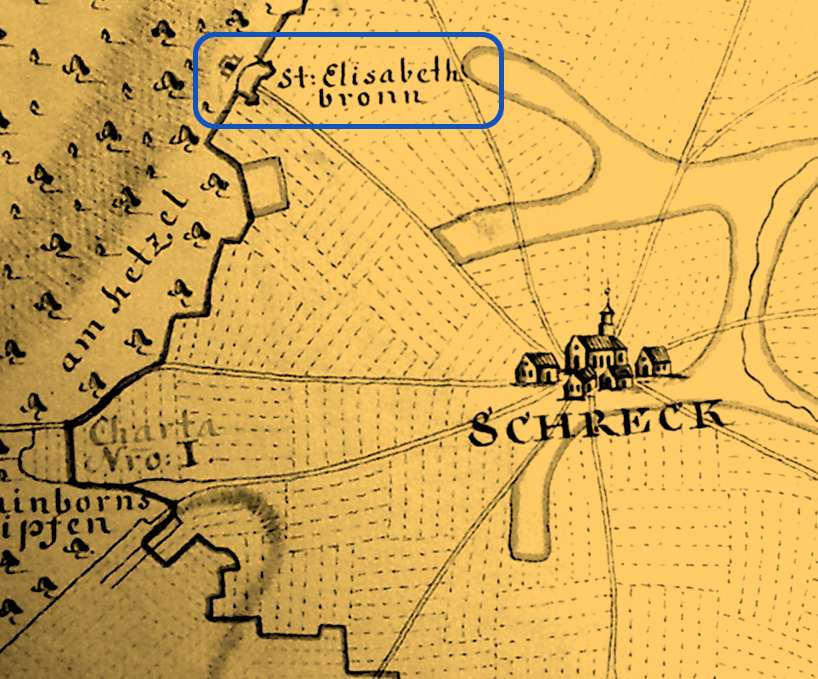
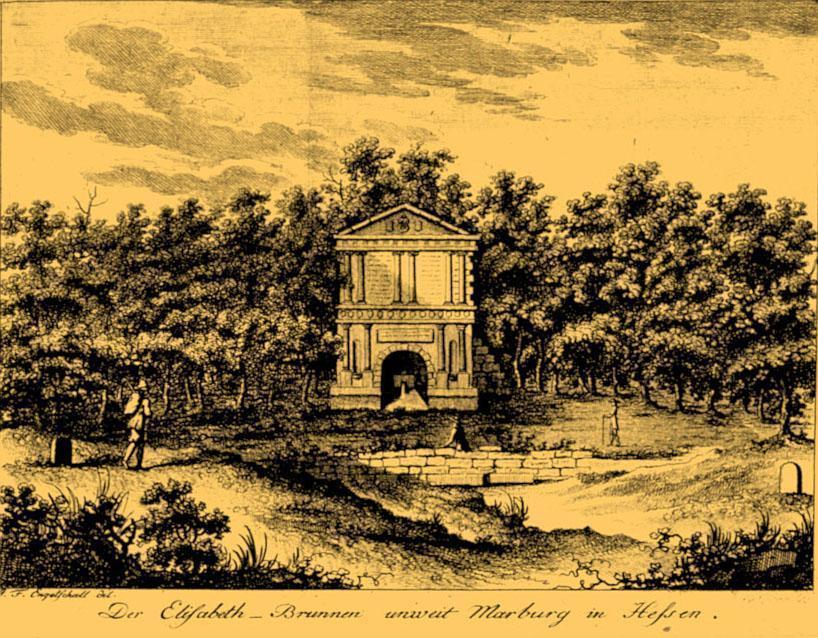
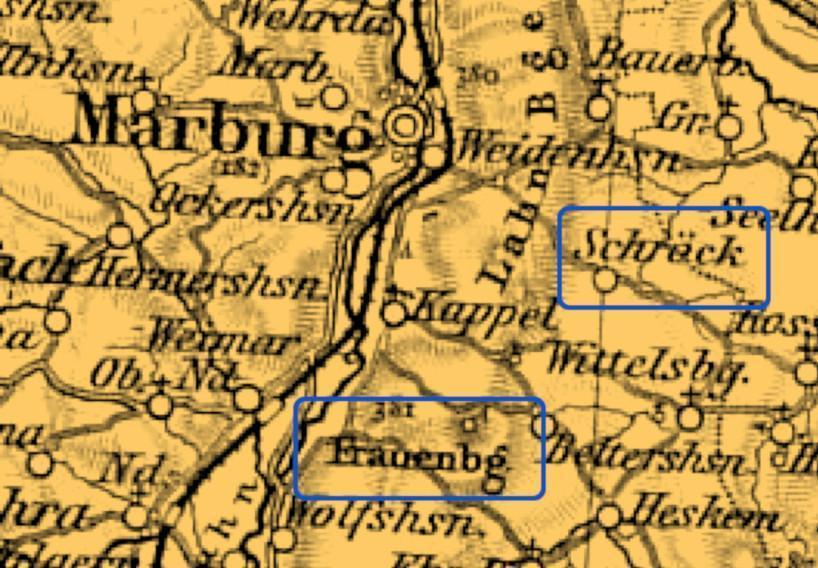
Another is located in the formerly primarily wooded area outside town on the Lahnberg and just outside the village of Schröck, here on maps and in a late-eighteenth century illustration by Joseph Friedrich Engelschall (1739–97), a poet, instructor in drawing, and literature professor in Marburg (see also his article “Der Elisabethbrunnen ohnweit Marburg,” Journal von und für Deutschland 3 [1786] no. 9, 189–94); map 1: Ludwig Ravenstein, Atlas des Deutschen Reichs [Leipzig 1883], no. 4; map 2: 1757, excerpt from the Hessisches Staatsarchiv Marburg, Karten A II Nr. 1625/1, supplement; engraving: Christian Gottlieb Geyser, Universitätsbibliothek Marburg, Sig. VIII A 129a, [2] # K[A], Bl. 40):
Caroline’s original statement is somewhat ambiguous. Is she referring to one excursion to the Church of St. Elisabeth and the washing fountain of St. Elisabeth around the corner, or one to the church and another to the fountain on the Lahnberg? Ulrich Hussong (see above) concurs that Caroline’s remarks here do not allow a determination.
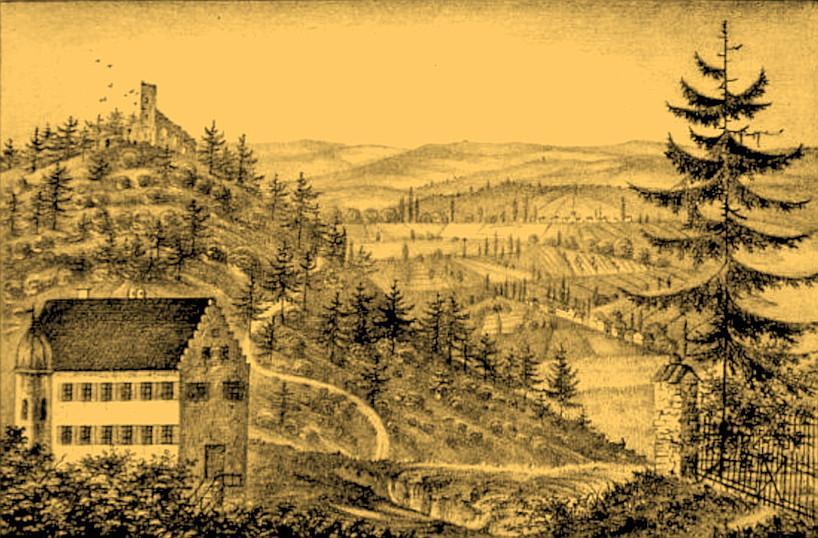
The castle was built ca. 1250 by Duchess Sophie von Brabant, daughter of St. Elisabeth. Here the Frauenberg ruins in an illustration ca. 1850 (lithography by Bommer); the successor of the building in the picture has been the Seebode Hotel since 1903; this illustration also gives a sample of the view at the time:
Caroline recounts a communal outing to Frauenberg in a letter to Lotte on 18 August 1790 (letter 98). Back.
[4] Presumably concerning the incipient French Revolution. Back.
[5] Uncertain identify; perhaps Johann Friedrich Blumenbach? Back.
[6] See the account in Thomas Henry Dyer, Modern Europe, from the Fall of Constantinople to the Establishment of the German Empire A. D. 1453–1871, 5 vols., 2nd ed. (London 1877), 4:345–47 (illustrations: [1] excerpt from Jacques Rigaud, Vuë de la Bastille de Paris, de la Porte St. Antoine, et d’une partie du Fauxbourg [ca. 1701–54]; Herzog Anton Ulrich-Museum; Museums./Signatur JRigaud AB 3.18; [2] Pierre-Gabriel Berthault, Arrestation de Mr Bernard-René Jordan de Launay, gouverneur de la Bastille le 14 juillet 1789; [3] Taschenbuch der Franken enthaltend die Geschichte der französischen Revolution [1792]; Inhaltsverzeichnis deutscher Almanache, Theodor Springmann Stiftung):
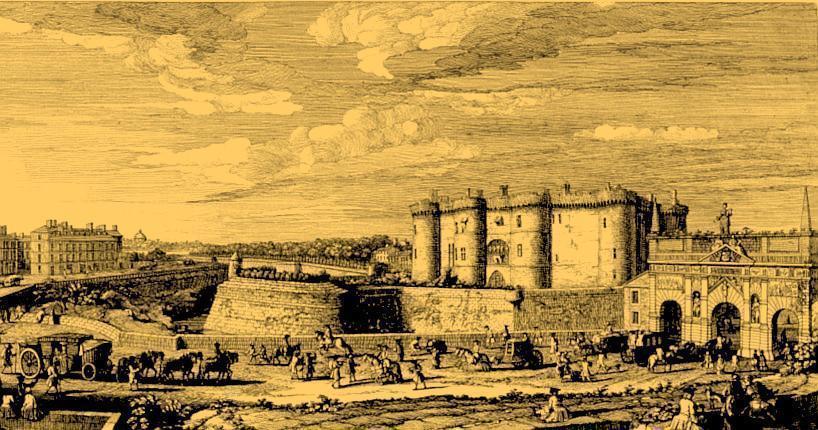
Next day, July 14th, the insurrection assumed a still more violent and decided character. A vast crowd repaired to the Hôtel des Invalides, which they entered without resistance, although six battalions of Swiss and 800 horse were encamped in the immediate neighbourhood. Here the people seized 28,000 muskets and several cannon. Arms and ammunition had also been procured at the Hôtel de Ville. Shouts of “To the Bastille!” were now raised, and the armed multitude directed themselves upon that fortress.
Its garrison consisted of only eighty-two Invalides, and thirty-two Swiss, and these were destitute of provisions for a siege; but the place was strongly fortified, and well supplied with cannon and ammunition. The Governor, M. de Launay, had made preparations for defence, and a determined commander might have held the place against an undisciplined mob till succour should arrive. But De Launay was not a regular soldier. He was weak enough to admit Thuriot, the Elector already mentioned, into the fortress, and to parley with him. Although Thuriot assured the people of the pacific intentions of the Governor, he could not persuade them to desist from the siege.
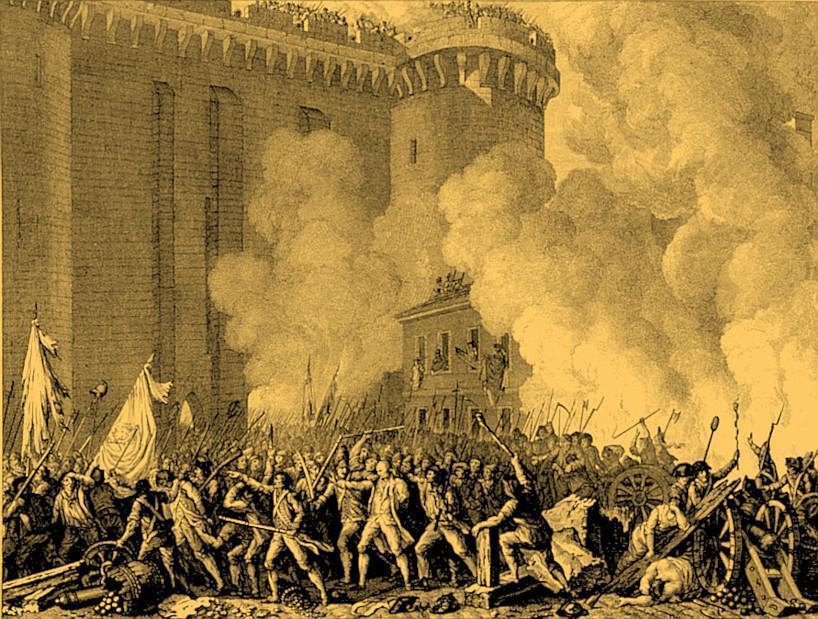
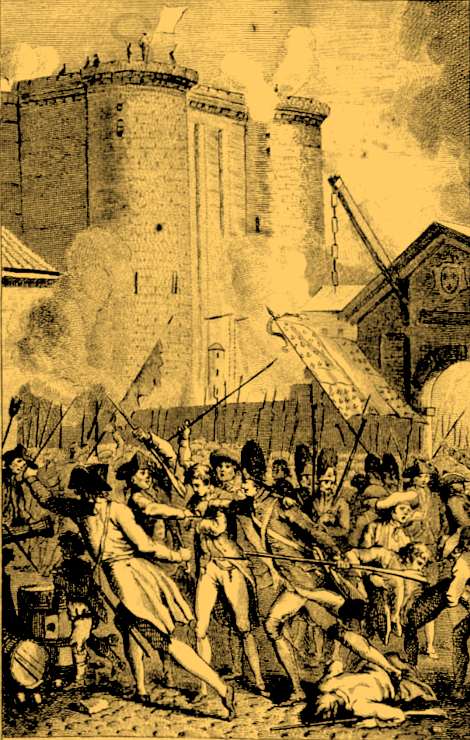
Many of the assailants displayed remarkable instances of valour, especially Elie and Hullin, belonging to the Guards, who had joined the mob, and a man named Maillard, whom we shall meet again in other scenes of the Revolution. The curé of St. Estéphe was one of the leaders. After a siege of a few hours, when the garrison had lost only three or four men, and the people nearly two hundred, De Launay, urged by his French troops, offered to capitulate, in spite of the remonstrances of the Swiss commander. The capitulation stipulated that the lives of the garrison should be spared; but when the populace burst into the fortress they slew many of the Invalides as well as the Swiss, their fury being especially directed against the officers.
De Launay, and his second in command, Major de Losme, were conducted towards the Hôtel de Ville, but were barbarously massacred in the Place de Grève, in spite of the efforts of Elie and Hullin to save them.
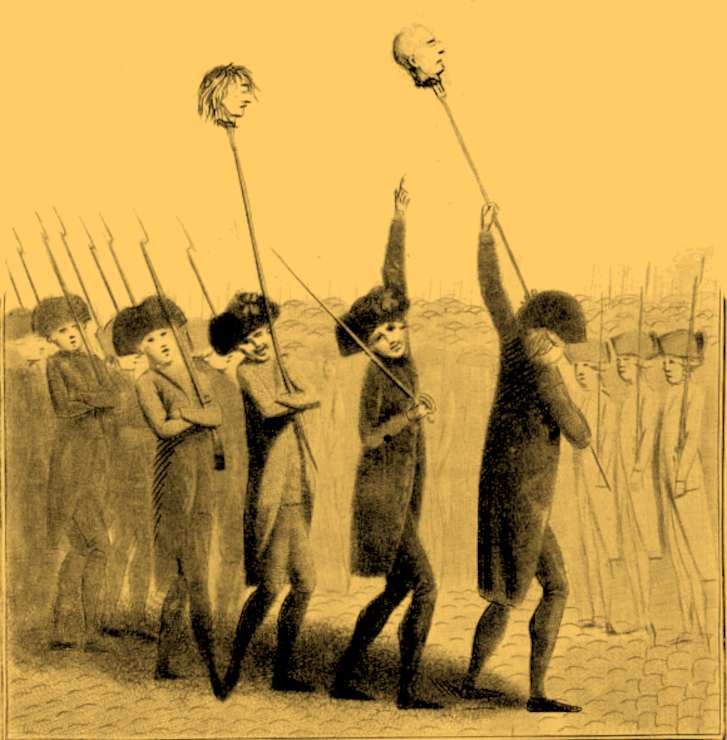
([1] representative illustration, “Septembrisirung,” plate xi, Almanach der Revolutions Opfer für das Jahr 1795; Inhaltsverzeichnis deutscher Almanache, Theodor Springmann Stiftung; [2] 1789 engraving of the heads of Jacques de Flesselles and Marquis de Launay on pikes; Library of Congress Prints and Photographs Division cph 3g12944):
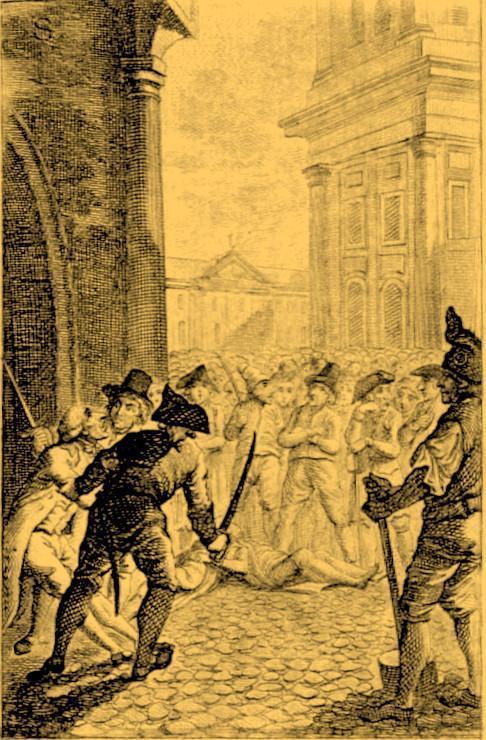
These murders were immediately followed by that of M. de Flesselles, Prévôt des Marchands, or Provost of Paris, who was accused of having misled the people in their search for arms. The bleeding heads of De Launay and the Provost were hacked off, stuck upon pikes, and paraded through the streets in a sort of triumphal procession of the conquerors of the Bastille, and the bearers of them appear to have been paid by the civic authorities for their revolting services.
When the Bastille was invaded, only seven prisoners were found, the greater part confined for forgery, and not a single one for a political offence. The fortress was soon after demolished to the foundations, by order of the National Assembly. Back.
[7] Although such may not be Caroline’s immediate allusion, it seems the mother of Volborth’s new wife, namely, Madam Becke, née Kounzen, widow of the late university legal administrator Johann Becke (or Becké), had been involved in a bitter legal battle in Göttingen during much of 1775 with a certain tailor Friedrich Wilhelm Röder.
The dispute arose because Röder had blocked the windows and otherwise blocked the view in parts of Madam Becke’s residence that looked out onto his courtyard by constructing a stall and by nailing shut and otherwise blocking with boards other windows in her residence looking out onto the courtyard. Although she won, it was an excruciatingly tedious, prolonged exercise in legal wrangling that may or may not attest something about her personality; she was in any case not a woman who backed down readily.
For documentation, see Justus Claproth, “Acten in Sachen weyl. Synd. Becke nachgel. Wittwe gebohrne Kounz, Implorantin, wider den Schneidermeister Friedrich Wilhelm Röder, Imploraten,” in Samlung verschiedener gerichtlichen vollständigen Acten zum Gebrauch practischer Vorlesungen (Göttingen 1781), 34 pages of files (book is not through paginated). Back.
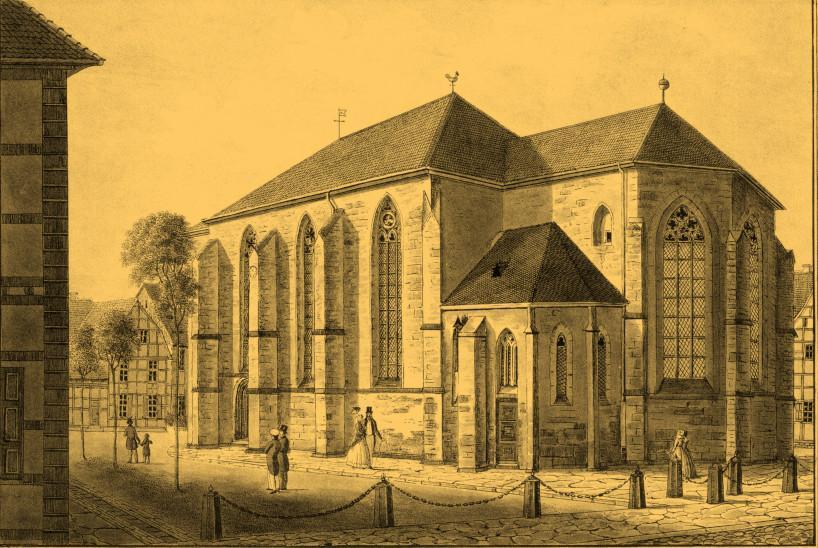
[8] The Church of St. Nicolas (or Nikolai) was secularized in 1802 and used by the French military as a powder magazine. After the earlier university church — St. Paul — was transitioned wholly into the edifice for the growing university library, and the university’s use of the Church of St. John encountered problems, the university acquired St. Nicolaus in 1819 and consecrated it in 1822 as its official church (map: Karl Baedeker, Northern Germany as far as the Bavarian and Austrian Frontiers; Handbook for Travellers, 15th ed. [Leipzig 1910]; illustration: presumably by Friedrich Besemann, repr. in Göttingen: Das Bild der Stadt in historischen Ansichten, ed. Städtisches Museum Göttingen [Göttingen 1996], 169):
Translation © 2011 Doug Stott