
• 33. Caroline to Luise Gotter in Gotha: Göttingen, 5 October 1782 [*]
Göttingen, 5 October 1782
|65| . . . I do not even have a keen quill today, since my supplier, the ludimagister, [1] has been away for eight days now at the kermis [2] with the son and heir of our illustrious ruling house. [3]
. . . Your interest and empathy merely increase my own happiness, and your wishes are so beautiful that I can but hope they do indeed come to fulfillment. Whatever my destiny may be, however, never will I forget the friendship that consecrated my heart — from the very first moment it was capable of true feeling — to you forever. My affection for you will remain as warm and tender as always; no love can ever weaken it, no new ties ever sunder that first, sacred one. I do not have a narrow heart, for what would I do with all of you if I did? It is difficult for me to determine who is most precious to me. I have always maintained, and still think it true, that although I can live without love, whoever takes friendship away from me is taking away everything that makes life dear to me. . . .
|66| The Bendas will also be coming to Gotha. [4] Although he plays the violin like I have never heard, the general consensus is that she is not Mara, as people initially claimed. [5] But if you want a living illustration of what the poetess Mademoiselle Gatterer [6] looks like, have a look at Madam Benda — except that the latter is uglier; otherwise everything is exactly the same, even down to the dimples. . . .
Notes
[*] The sequence including “Whatever my destiny may be . . . ” presumably refers to Caroline’s engagement to Franz Wilhelm Böhmer. See also the editorial note to Caroline’s letter to Luise Gotter on 23 October 1782 (letter 34). Back.
[1] Latin, ludi magister: “schoolmaster.” Back.
[2] Kermis, Kirmis, or Kirmesse, abbreviated form of Kirchmesse, the annual celebration of the founding of a local church along with the concomitant festivities, often connected with an annual market (title vignette to August Heinrich Julius Lafontaine, Leben eines armen Landpredigers [Berlin 1810]):
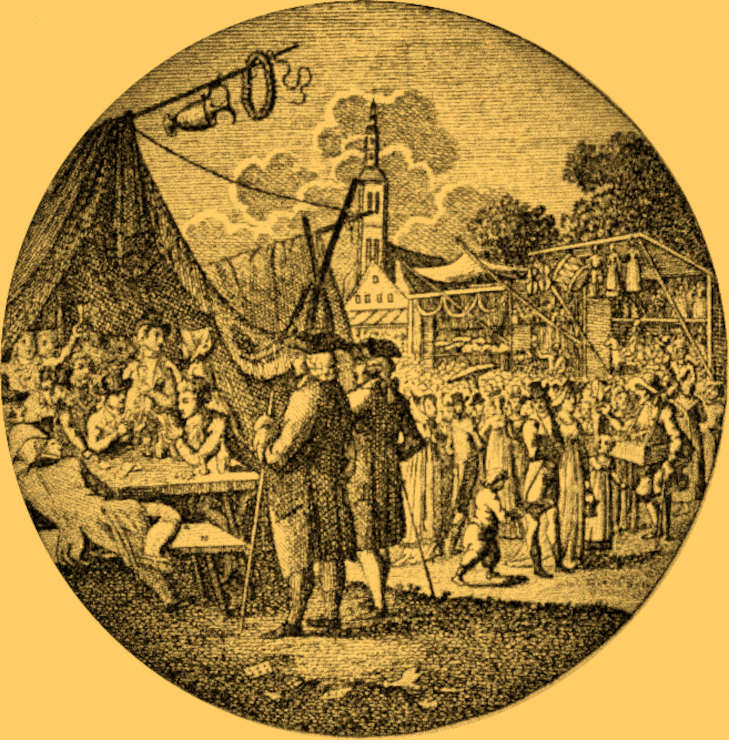
This celebration was often the most important annual celebration in a given locale ([1] Kupfersammlung zu J[ohann] B[ernhard] Basedows Elementarwerke für die Jugend und ihre Freunde: Erste Lieferung in 53 Tafeln. Zweyte Lieferung in 47 Tafeln von L bis XCVI [Leipzig, Dessau, Berlin 1774], plate xxx; [2] Jahrmarkt Taschenbuch der Liebe und Freundschaft gewidmet 1811; Inhaltsverzeichnis deutscher Almanache, Theodor Springmann Stiftung; [3] Der Kinderfreund: Ein Wochenblatt, ed. Christian Felix Weiße, vol. 4 [1778], 76):
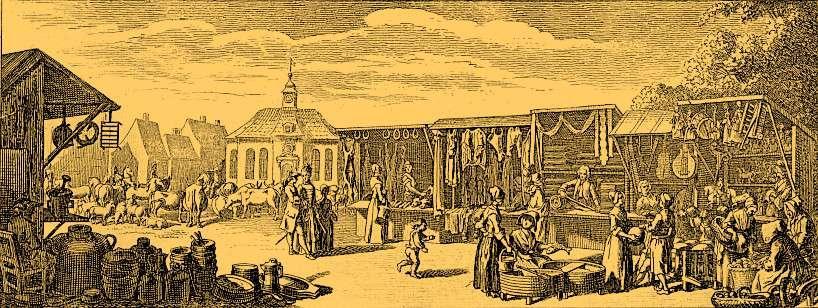
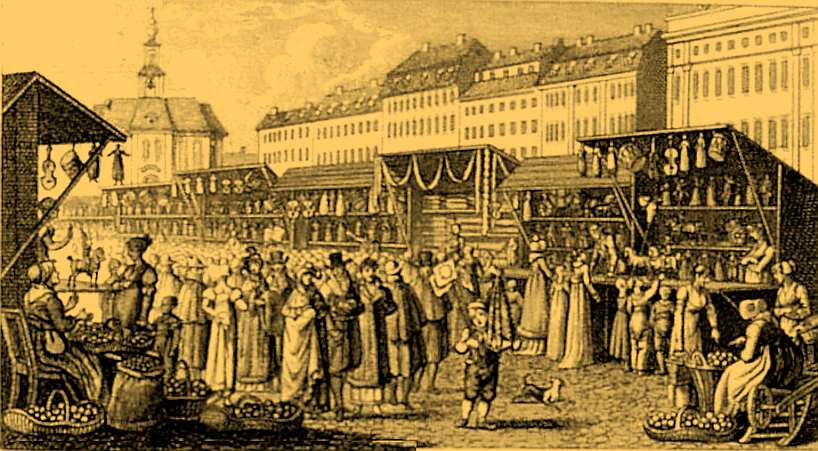
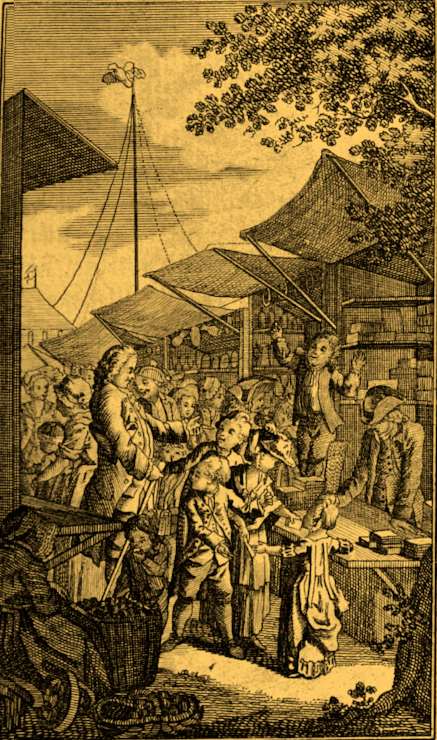
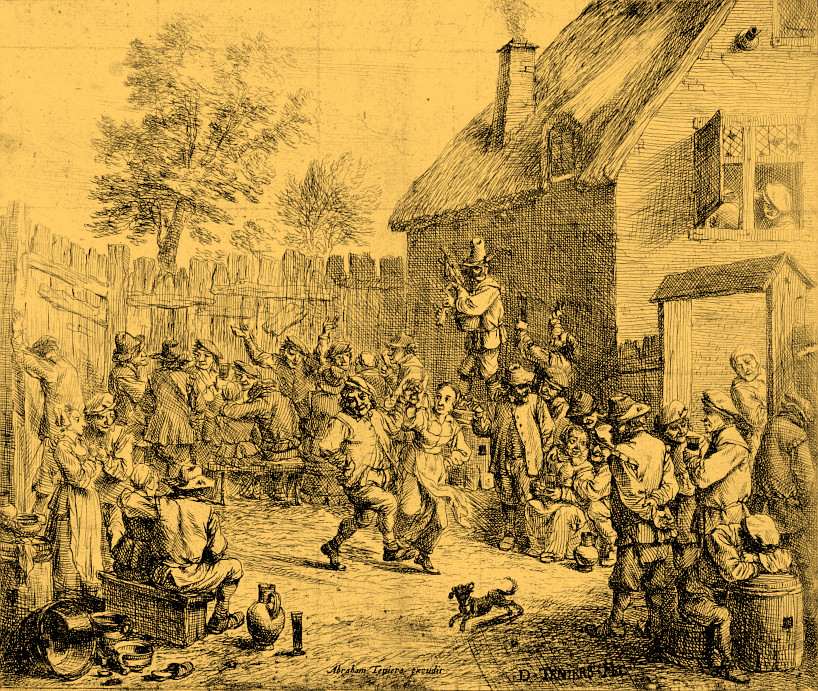
The ecclesiastical orientation receded early and in part even disappeared, the celebration then becoming something unequivocally “unsacred” (Grimm, Deutsches Wörterbuch, 11:822:6), emphasizing instead primarily the drinking, feasting, and other festivities, and held almost exclusively only in villages (David Teniers, Kirmes [ca. 1630–90]; Herzog Anton Ulrich-Museum; Museums./Signatur DTeniers V 3.5748):
[3] Presumably George III’s second son, heir presumptive Frederick Duke of York. Back.
[4] Presumably the violinist Franz Benda and his second wife, Caroline, née Stepheni, though this conjecture remains uncertain because some evidence suggests that Caroline Benda died in 1769. Back.
[5] Concerning the singer Elisabeth Mara, née Schmehling, who had performed in Göttingen with her husband, the cellist Johann Mara, see Caroline’s letter to Julie von Studnitz on 7 October 1778 (letter 3). Back.
[6] Concerning Philippine Gatterer (including her appearance), see Caroline’s letter to Luise Gotter on 8 September 1780 (letter 18). Back.
Translation © 2011 Doug Stott