
• 215. Caroline to Luise Gotter in Gotha: Jena, early 1799
[Jena, early 1799]
|489| Tell Wilhelmine that Die Piccolomini will be performed on January 30, the birthday of the reigning duchess. Unfortunately, because that is also the birthday of your reigning duke, she will probably not want to be absent from Gotha at that time. We, however, would very much like to be present for the premiere, since a premiere is always inspiring, like the first glass from a bottle of champagne. [1] She should, however, let me know whether she has seriously considered my latest suggestions. [2] . . .
Notes
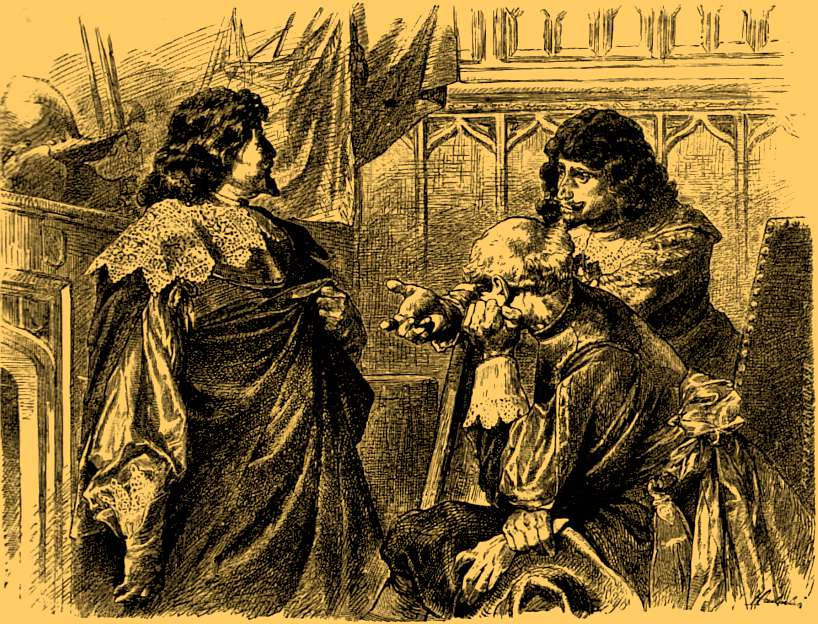
[1] As it turned out, Caroline did not attend the premiere of the second part of the trilogy of Wallenstein in the Weimar theater, namely, Die Piccolomini. She, Wilhelm Schlegel, and Auguste did, however, attend the second performance, on 2 February 1799 (see her letter to Friedrich von Hardenberg on 4 February 1799 [letter 219] and Wilhelm’s to Goethe on 4 February 1799 [letter 219a]) (Piccolomini, act 1, scene 1; illustration from Schiller’s Works, ed. J. G. Fischer, vol. 2 [Philadelphia 1883], 135):
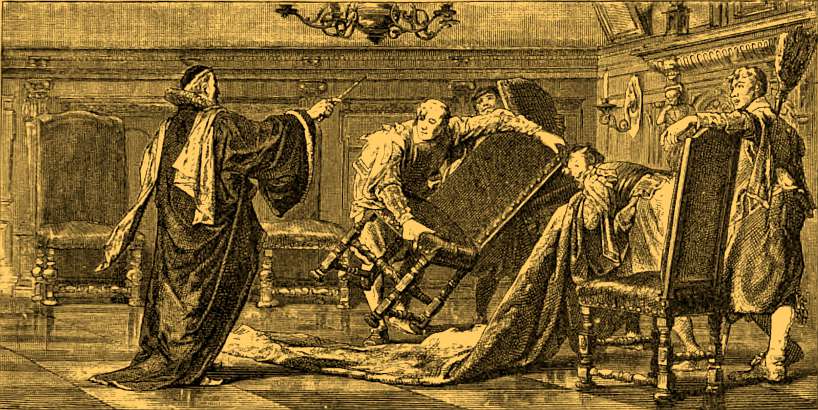
Her later account to Friedrich Schlegel has been lost (Friedrich to Wilhelm Schlegel on 19 February 1799 [Walzel, 407; KFSA 24:234]: “If it is not too touchy to ask, perhaps Caroline could contribute a few words [for Athenaeum] from that which she recently wrote to me about Die Piccolomini and Weimar”). See also Auguste’s account of the performance on 2 February in her letter to Cäcilie Gotter (letter 220) (Piccolomini, act 2, scene 1; illustration: ibid., 145):
Concerning the first part of the play, Wallensteins Lager, see Caroline’s letters to Friedrich on 14–15 October 1798 (letter 204), to Luise Gotter on 24 October 1798 (letter 206), Friedrich to Caroline on 29 October 1798 (letter 207), and Caroline to Friedrich von Hardenberg on 15 November 1798 (letter 208).
See esp. Henrik Steffens, Was ich erlebte, 4:106–14, who recalls that an enormous number of people from Jena attended:
Schiller had been working for years on his grand dramatic piece Wallenstein. Wallensteins Lager had already been performed, and it is common knowledge how intensely Goethe participated in the performance. If I am not mistaken, this was the first, beautiful fruit of the cordial alliance between these two great poets to be presented to the public.
Goethe found in the colorful, ever-changing scenes of this prologue a propitious opportunity to present what we might call a “dramatic composition” similar to a musical composition, and the prologue did indeed make a quite favorable and clear impression. The tragic moment intimating the demise of the protagonist of the grand drama can be discerned in a fateful manner in the performance of these characters. It was indeed a perfected portrayal in its own way.
(Wallenstein’s Camp from Schiller’s Works, ed. J. G. Fischer, vol. 2 [Philadelphia 1883], 115):

Considerable effort was expended in the stage setting as well; indeed, the decorations were not only quite respectable, but beautiful as well. The time had not yet arrived however, when the frame devoured the picture itself. A serene accord reigned, and families in Jena were not easily prompted to miss such a performance.
Indeed, its cultured inhabitants viewed this particular dramatic undertaking as a significant event originating from their own midst, which, moreover, could not but bestow higher meaning on the dramatic arts as such, an event through which both the town and the university would be elevated and transfigured.
Now Die Piccolomini, the first part of the grand drama [although Wallenstein is usually understood as a trilogy, technically (and in the Weimar repertoire) the Piccolomini was known as the first part following the prologue, namely, Wallensteins Lager], was finished, rehearsed, and was to be performed for the first time. The tension created by the anticipation of this performance was remarkable.
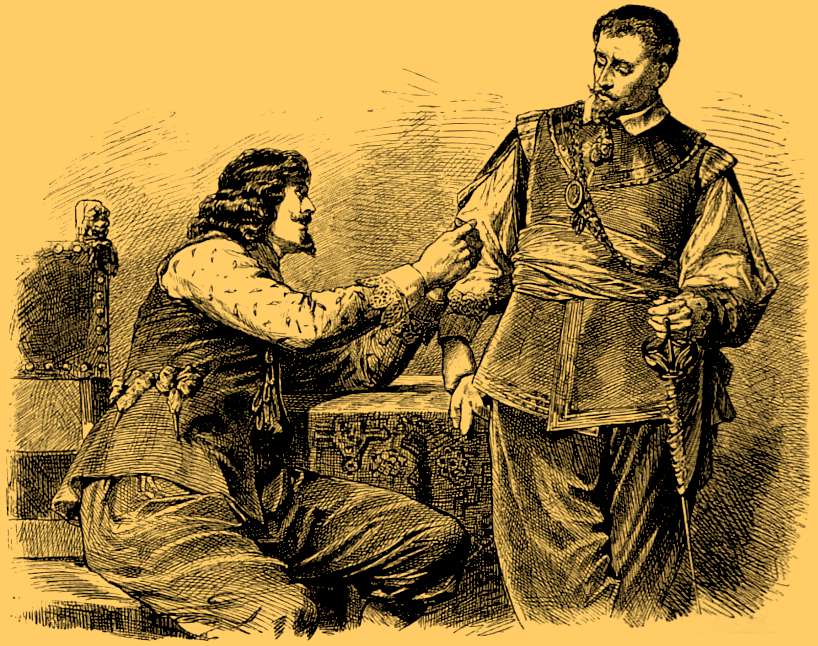
[Piccolomini, act 3, scene 1, illustration from Schiller’s Works, ed. J. G. Fischer, vol. 2 [Philadelphia 1883], 158:]
At the very first news, professors’ families went to enormous trouble to ensure they would have seats for the coming performance. The entire town spoke of nothing else. Women and daughters intrigued against each other, each trying to get the upper hand and push the other aside; those who had actually gotten tickets considered themselves fortunate. But hostilities also arose that were not without consequences later.
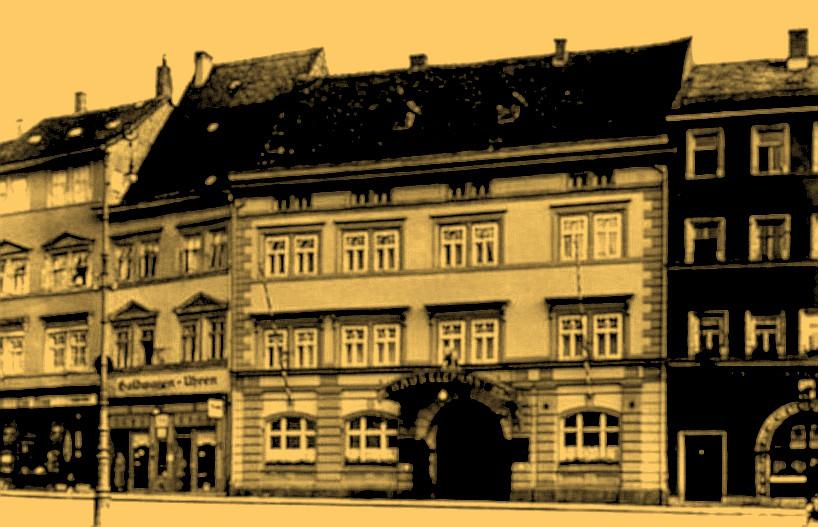
I myself went with Justizrath Hufeland and Loder; both wives accompanied us along with Loder’s handsome daughter [Johanne Helene Antonie Loder, from Loder’s first marriage]. Hence there were six of us squashed into the coach. We got out at the Gasthof zum Elephanten and hastened to the theater.
[Here the Gasthof zum Elephanten on the market square in Weimar in a postcard from the 1920s; the hotel went through several iterations over the years:]
Schlegel’s witty, intelligent wife had stayed at home, as did Schelling, who at the time was perpetually occupied with his lectures. I myself had secured a seat in Schiller’s loge and was able to make his personal acquaintance there amid what were obviously extraordinarily interesting circumstances.
It would be superfluous to try to speak about this play here. The mood of the public infected everyone. This long-winded play, in which nothing is ever concluded and everything remains more or less intimation, with it lengthy discourses, nonetheless captivated the audience’s attention in the most animated fashion. Enormous effort was put into the performance, and the ensemble acting was superb, with not the slightest disruption in that respect. All the actors clearly gave their utmost effort in their roles; even the longest discourses were recited effortlessly; each and every actor wanted to garner praise.
[Piccolomini, act 4, scene 1, illustration from Schiller’s Works, ed. J. G. Fischer, vol. 2 [Philadelphia 1883], 168:]
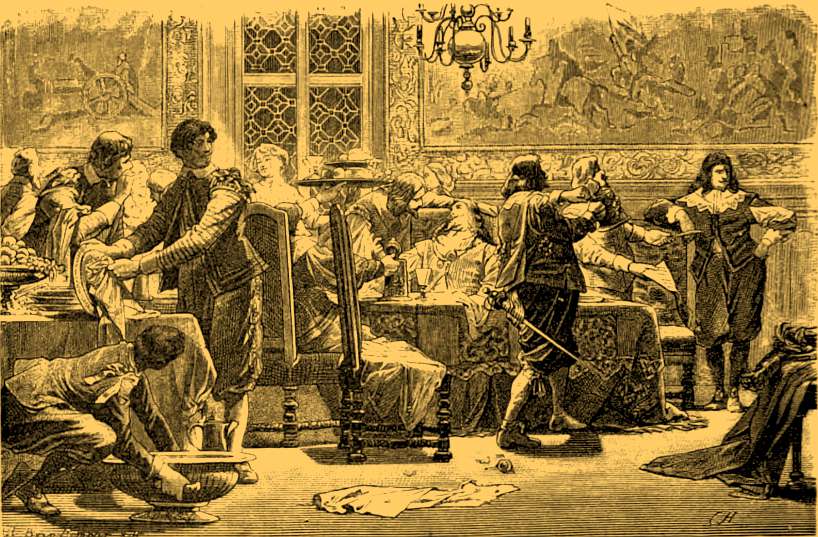
And indeed, in this respect the circumstances could not have been more favorable. The great poet [Goethe], for whom the dramatic arts were an important business, stood at the helm, and though his respected status in the land gave him a certain power over the theater personnel, rarely if ever was it used. The actors themselves, however, feared not only this powerful man, they also respected the connoisseur . . .
The enthusiasm of the public, the tension among the spectators also had a salutary effect on the performance. Indeed, this entire situation vividly reminded me of the evening in Wilhelm Meister when Hamlet is performed for the first time [book 5, chapters 4–10] [see supplementary appendix 215.1]. . . .
[Piccolomini, act 5, scene 1; illustration ibid., 176:]
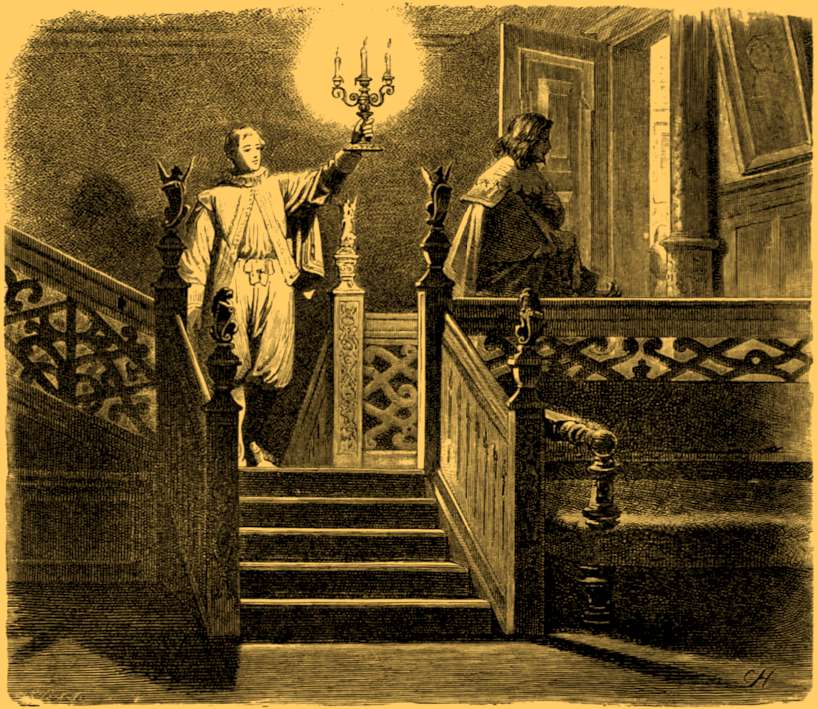
[Steffens discusses certain problems with the performance, including with the actors – in part deriving from his own expectations and experiences with the excellent theater especially in Copenhagen – problems which apparently Goethe but not Schiller noticed. In any event, he concludes: “Mademoiselle Jagemann alone, young, beaming, animated as she was, delighted me in the role of Thekla.”]
We returned to Jena immediately after the performance, and even though it was very late, several of us did nonetheless assemble at the home of Madam Schlegel, who had remained behind in Jena. She now demanded a specific assessment of the drama, and did so with her characteristic resoluteness; and here one could see how the first impressions immediately elicited by a new piece of this sort, a piece conceived and executed in as grand a fashion as this one, could not be so quickly dispelled even by the most incisive criticism. . . .
[illustration to Goethe’s novelle Die guten Weiber (1801), Goethe’s Works, trans. George Barrie [Philadelphia, New York, Boston 1885], vol. 3, 242:]
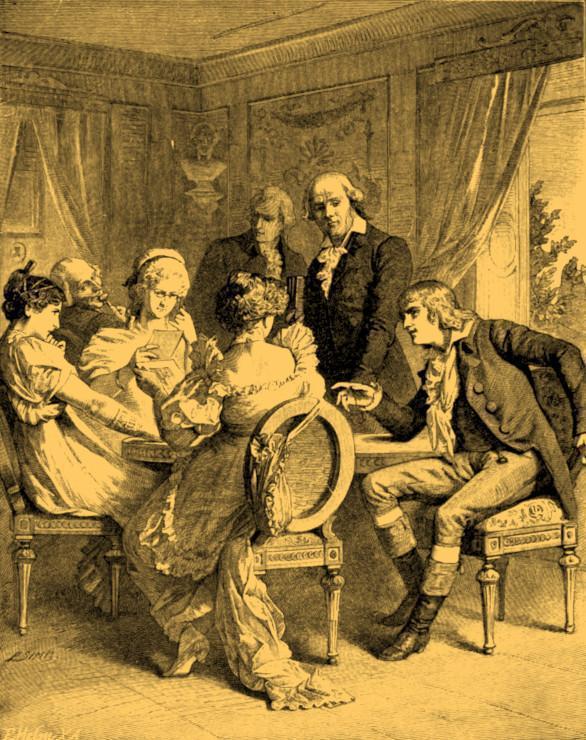
No one in our circle was particularly inclined the judge Schiller favorably [with the exception perhaps of Johann Diederich Gries]; and even though we did not really tend to judge him fairly, the powerful impression the play had made emerged almost on its own initiative. I can remember how, after we had discussed various aspects of the piece back and forth and since the others had been so reticent in expressing any genuinely resolute opinion, Madam Schlegel finally turned to me and said: “Well, you certainly also have an opinion, do you not?”
[Goettinger Taschen Kalender vom Jahr 1790; Inhaltsverzeichnis deutscher Almanache, Theodor Springmann Stiftung:]
Wilhelm Schlegel, the most reflective among us, remained silent.

Steffens offers an extensive comparison between this piece and Schiller’s earlier piece Don Karlos, Infant von Spanien, von Friedrich Schiller (Leipzig 1787). Back.
[2] Uncertain allusion. Back.
Translation © 2013 Doug Stott