
• 73. Caroline to Lotte Michaelis in Göttingen: Clausthal, before Christmas 1786
[Clausthal, before Christmas 1786]
|155| It is pure instinct, my dear Lotte, that you are not angry, for you will find that I am as innocent regarding the delay of the Ruinen as the child who will not be born until Easter. [1] Ah, but that thunder-and-lightning-hail-and-storm of a messenger woman! “Messenger woman and no end to it,” I said when she came yesterday, and she was completely terrified. I immediately thought she would not say that I knew nothing about her departure, and now what a disgrace for me — I am wailing — to the point of sobbing — please do not hold it against me. And if you still have anything and want to brighten my holidays, then send it to me for Christmas. I would rather send it back through the mail.
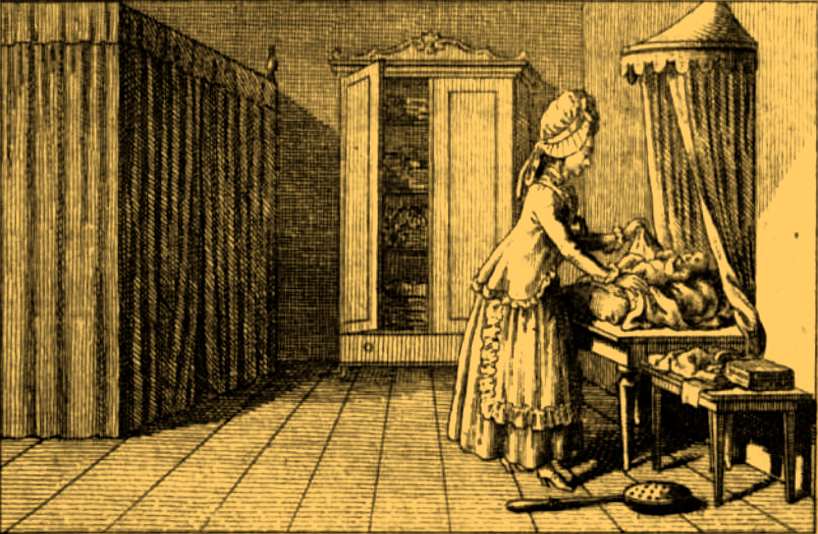
So the good-for-nothing is departing and leaving me in the lurch? Oh, what a poor, abandoned child would I be did I not have you, my gently smiling Auta, and your sweet conversations! She presents not a few offerings to your silhouette, the dear little one, for she always makes poo-poo on the table over which it hangs. [2]
This thing with Mother and Louise is just too much. [3] Yes, I do now see that you are by far the most reasonable, cold blooded, and well behaved. [Ball outfit.]
When I was reading the Intelligenzblatt, [4] I was vividly imagining what would happen next. She is enjoying her 16 years, [5] a good and fun activity in her heart, and dancing for her feet, nourishment for her vanity — roses on her dress [6] . . .
One more reflection as an aside. The more things change |156| the more they stay the same! A scant 3 or 4 years ago, Lotte would never have expected to hear someone say that people wanted to be engagé with her parce qu’elqu’un a dit qu’elle avoit de l’esprit — but rather parce qu’elle étoit jolie. [7] “Behold how one becomes wiser,” says the mentor in Peter Miller’s moral portrayals. [8] One claim displaces the other — in Paris they would say in 10 years that elle est trés devote. [9]
My claims are enclosed within my heart.
Ah, have you read the arabesque in the Intelligenzblatt? [10] My goodness, he thinks — he thinks it is a wit. [11] . . .
Notes
[1] Die Ruinen. Eine Geschichte aus den vorigen Zeiten. Aus dem Englischen, 3 vols., trans. Benedikte Naubert (Leipzig 1786); original, Sophia Lee, The Recess, or, A Tale of Other Times, 3 vols. (London 1783–85). April Alliston introduces a 2000 edition of the book (Sophia Lee, The Recess; or, A Tale of Other Times, Eighteenth-Century Novels by Women, ed. April Alliston ([Lexington 2000], ix) after mentioning its “central themes of inheritance and madness”:
The Recess enjoyed enormous popularity for well over twenty years after its first publication in 1783, not only in the English-speaking world, but all over Europe. Its success was important in establishing both Gothic and historical fiction, of which it is one of the earliest examples, as modes that were predominant in England for decades afterward and remain popular to this day. Sophia Lee sets her “tale of other times” in the reign of Elizabeth I, and weaves its romance plot around the tragic history of Mary, Queen of Scots. Its twin heroines and narrators are raised in a mysterious subterranean chamber, linked to the outside world by secret passages. One of the keys to Lee’s success with her experiments in historical Gothic fiction was her skill in using the form of the novel to elicit strong emotional responses in her readers, a skill she developed in part through her lifelong association with the theater.
Here the frontispiece and title vignette to the English edition of 1802; the frontispiece (“Rash girl,” cried Father Anthony with sternness, “could no human prudence save thee?”) and title vignette to the edition of 1825; and the title vignette to the edition of 1826:
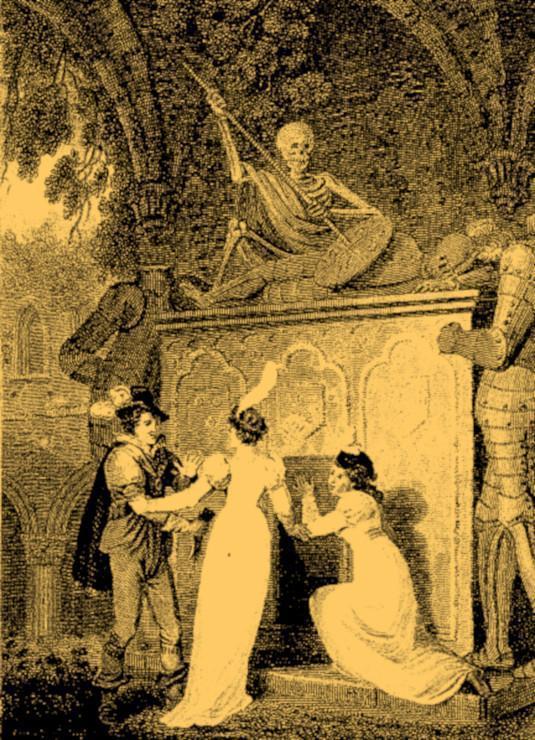
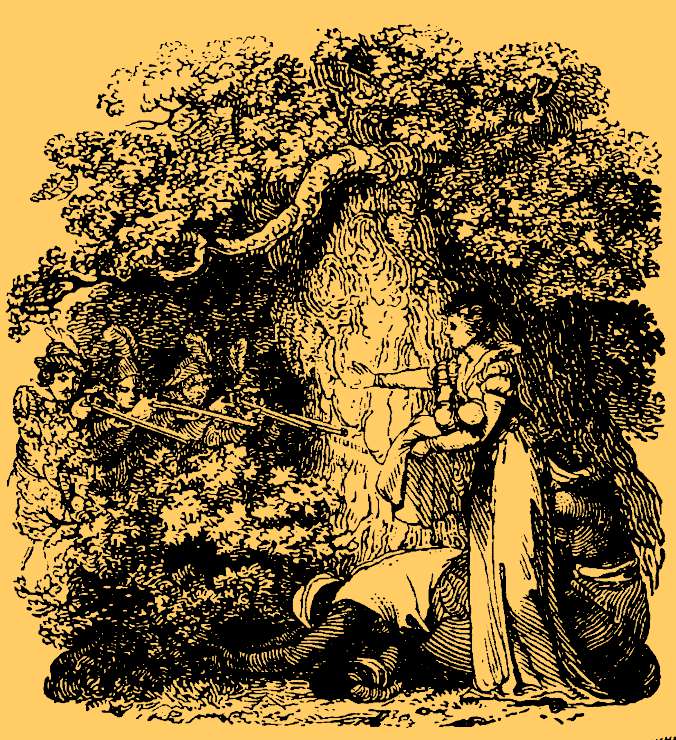
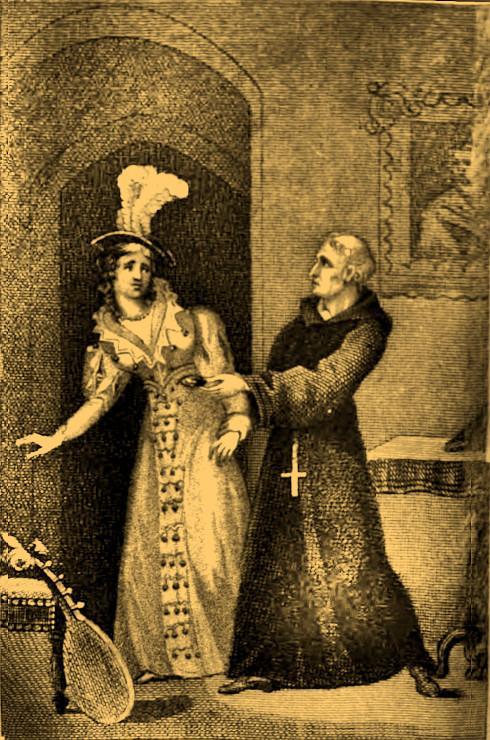
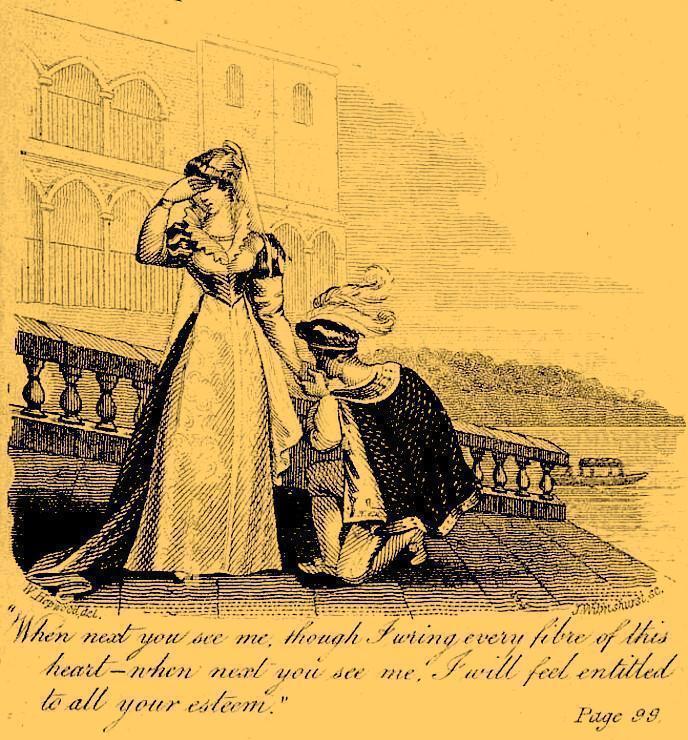
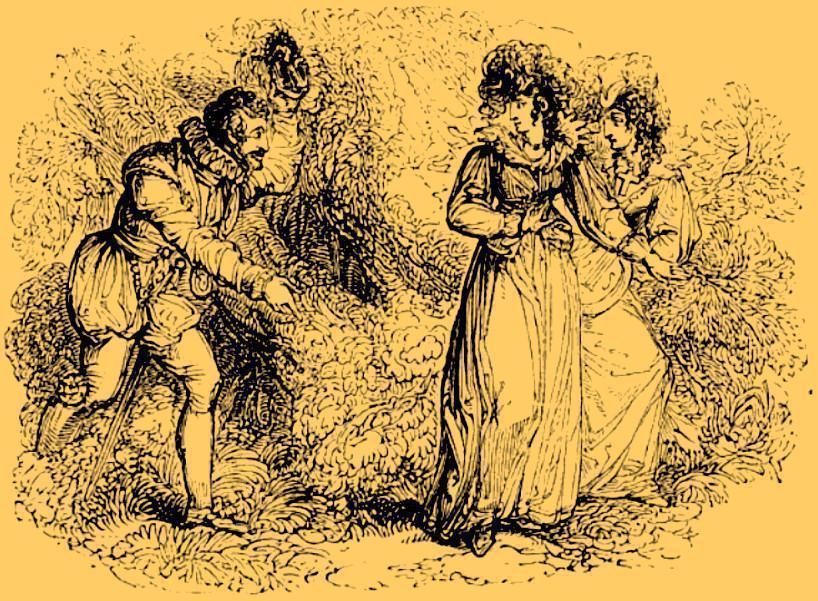
The anticipated child is Caroline’ second daughter, Sophie Therese, born on 23 April 1787; Easter Sunday fell on 8 April in 1787. Back.
[2] The reference, of course, is to a diaper-changing table; here an illustration from 1791 (Raphael Johann Steidele, Verhaltungsregeln für Schwangere, Gebährende und Kindbetterinnen in der Stadt und auf dem Lande [Vienna 1787]):
Here Lotte’s undated silhouette (from the silhouette album of Gregorius Franz von Berzeviczy; by permission, Erika Wagner and Ulrich Joost, Göttinger Profile zwischen Aufklärung und Romantik [Neustadt: Dosse 2011], 74):

[3] Obscure reference, though see Caroline’s concerns regarding Louise (Luise) in her letter to Lotte in late 1786 (letter 72a). Back.
[4] A reference presumably to the weekly Göttingische Anzeigen von verschiedenen dem Gemeinen Wesen bekannt zu machenden nöthigen und nützlichen Sachen, ed. J. C. Röder (Göttingen 1768ff.). Back.
[5] Luise Michaelis was born on 12 September 1770. Back.
[6] Luise Michaelis herself admits to her youthful vanity on several occasions in the autobiographical portion of her Erinnerungen, passim. Back.
[7] Fr., “because someone said she was spirited [or bright],” rather than “because she was pretty.” Back.
[8] Unspecified passage from Johann Peter Miller, Historisch-moralische Schilderungen zur Bildung eines edlen Herzens in der Jugend, 5 vols. (Helmstädt, Halle 1753–63), though the author makes countless references to becoming wiser (including in connection with age). See, e.g., the following passage in vol. 3 (1759), 637–38: “‘My son,’ the old man responded, ‘this magnificent boaster who receives strangers out of vanity and solely that they might admire his wealth, will eventually become wiser.'” Here the volume’s stylized frontispiece:

[9] Fr., “she is very devout, devoted.” Back.
[10] Uncertain reference. Back.
[11] In English in original; uncertain provenance. Back.
Translation © 2011 Doug Stott