
230d. Henriette Mendelssohn to Dorothea Veit in Berlin: Dresden, 18 April 1799 [*]
Dresden, [Thursday] 18 April [1799], evening
I have seen Hardenberg, my dear Veit; and since there is nothing I find more interesting, let me also begin with that. He arrived here at midday and came to visit Madam Ernst, who had already spoken to me about him with the warmest interest this morning. Unfortunately, because the Neumanns were there, [1] we were not at all really able to enjoy his company. Charlotte had just gone out for a moment when, suddenly, we heard her in the anteroom with someone who was speaking very loudly. Just imagine how I felt when Ernst said, “My God, that is Hardenberg!” — Although she remained quite a while out there with him, once he finally came in I was done for.
This subtle figure, these transfigured eyes — (smaller but even more transfigured than Schlegel’s [2]) — and the charming amiability in all his features is truly enchanting. — If the Neumanns ever get to where Charlotte and I wished them along, they will enjoy an interesting spectacle at the very least during the night of 1 May! [3] —
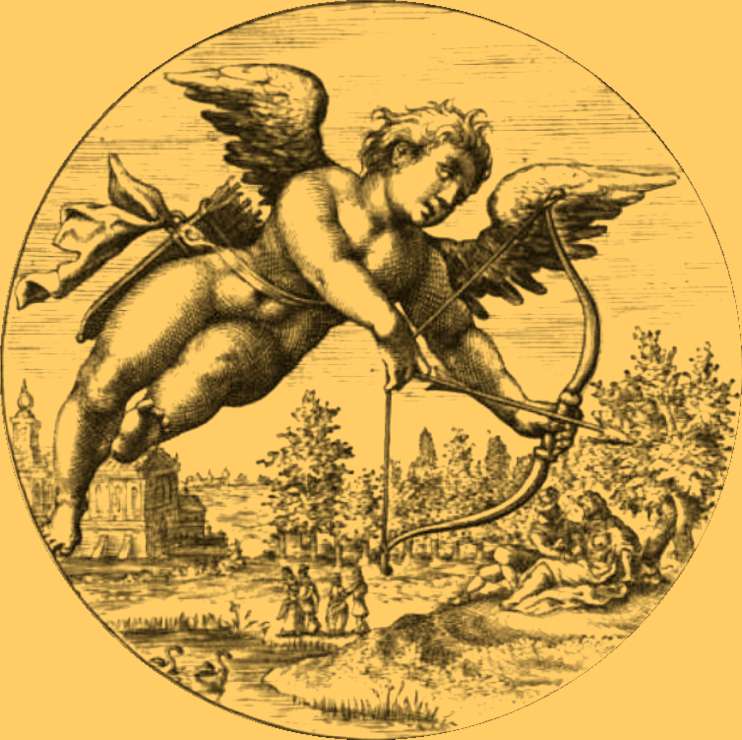
He was unable to remain at Charlotte’s that evening because he had to pay a visit to a certain court preacher here, and tomorrow morning he will be departing quite early. [4] So, once again I must endure a broken arrow in my heart, for I am in love! [5] —
Notes
[*] Source: Dreihundert Briefe 1:2:175; reprinted in KFSA 24:272–73. — Concerning the background to this letter, see the editorial note to Henriette’s letter to Dorothea on 16 April 1799 (letter 230c).
This letter documents Henriette’s touching reaction to her first meeting with Friedrich von Hardenberg (portrait ca. 1799 by Franz Gareis; illustration: Göttinger Taschen Calender Für das Iahr 1796; Inhaltsverzeichnis deutscher Almanache, Theodor Springmann Stiftung):

[1] Apparently the same Neumann, a postal secretary in Dresden and family friend of the Ernsts, in whose house Charlotte Ernst had earlier arranged for Friedrich to find living accommodations; see Friedrich’s letter to Wilhelm from Dresden on 21 January 1794, i.e., shortly after Friedrich moved there, in which he relates that his address was now “on Moritzstrasse at the house of Postal Secretary Neumann, on the fourth floor.” He may have been a brother of Johann Leopold Neumann (see Caroline’s letter Dorothea Marie Campe on 6 May 1798 [letter 200b], with note 10; and to Friedrich Schlegel on 14–15 October 1798 [letter 204], note 19). Back.
[2] Although Henriette compares specifically Friedrich’s eyes to those of Charlotte Ernst in her letter to Dorothea on 19 April 1799 (letter 230e), it might be pointed out that Wilhelm was also known for his expressive eyes; see, among others, Madame de Staël (cited in Alfred Götze, Ein fremder Gast. Frau von Staël in Deutschland, 1803/04, nach Briefen und Dokumenten [Jena 1928], 129): “He is 36 years old, small, and rather ugly, though he does have extremely expressive eyes.” See also Sophie Bernhardi’s to Wilhelm on ca. 20 August 1801 (letter 327e), with note 4. Back.
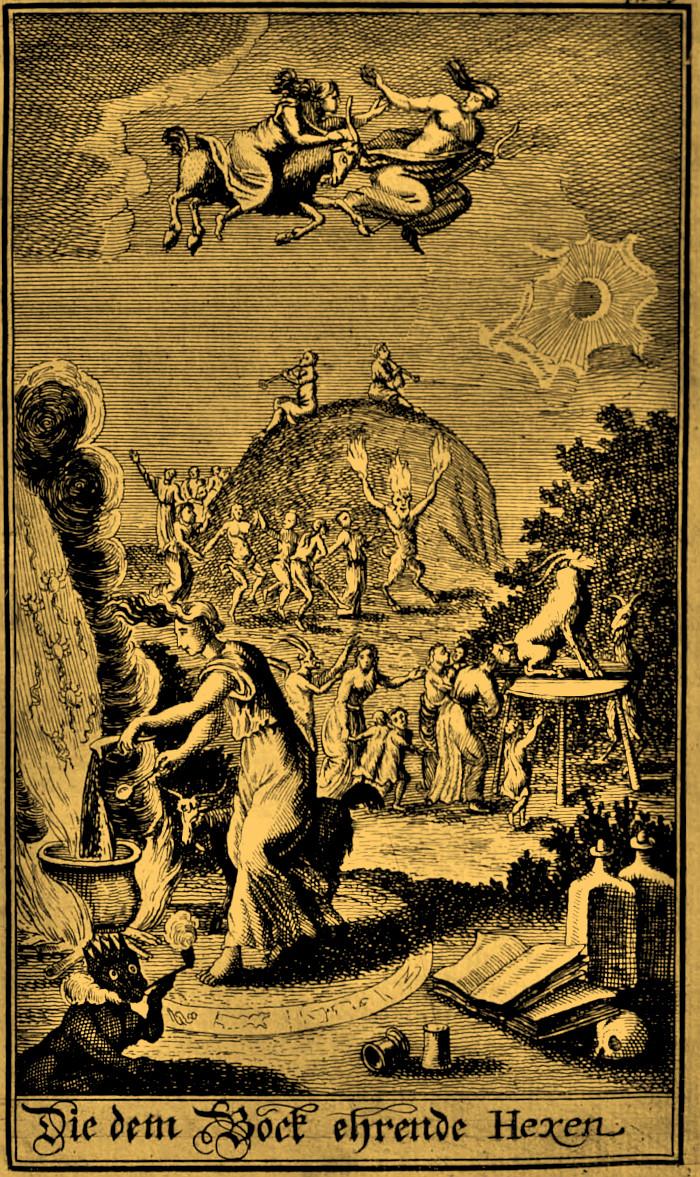
[3] A tongue-in-cheek allusion to Walpurgis Night, the witches’ sabbath during the night of 30 April–1 May (1 May being the day of St. Walpurga [† 779]), during which spring makes its entrance while spirits and witches spook about and, on the other hand, bells are rung nine days prior to thwart that same activity. Traditionally these witches were said to celebrate a grand festival on the Blocksberg (Brocken) in the Harz Mountains, near where Caroline lived when she was first married (see Caroline to Luise Gotter on 3 April 1784, with note 2).
The name of the festival was popularized by its appearance in part one of Goethe’s Faust.
Concerning the “interesting spectacle” to which Henriette wryly alludes, a book Goethe consulted in preparation for his Walpurgis-Night scene, Nicolas Remi (Remigius), Dæmonolatria, Oder Beschreibung von Zauberern und Zauberinnen, 3 vols. (Hamburg 1693), here 2:325–26, describes a scene commensurate with the following illustration of that night; illustration ibid., plate following 2:324:
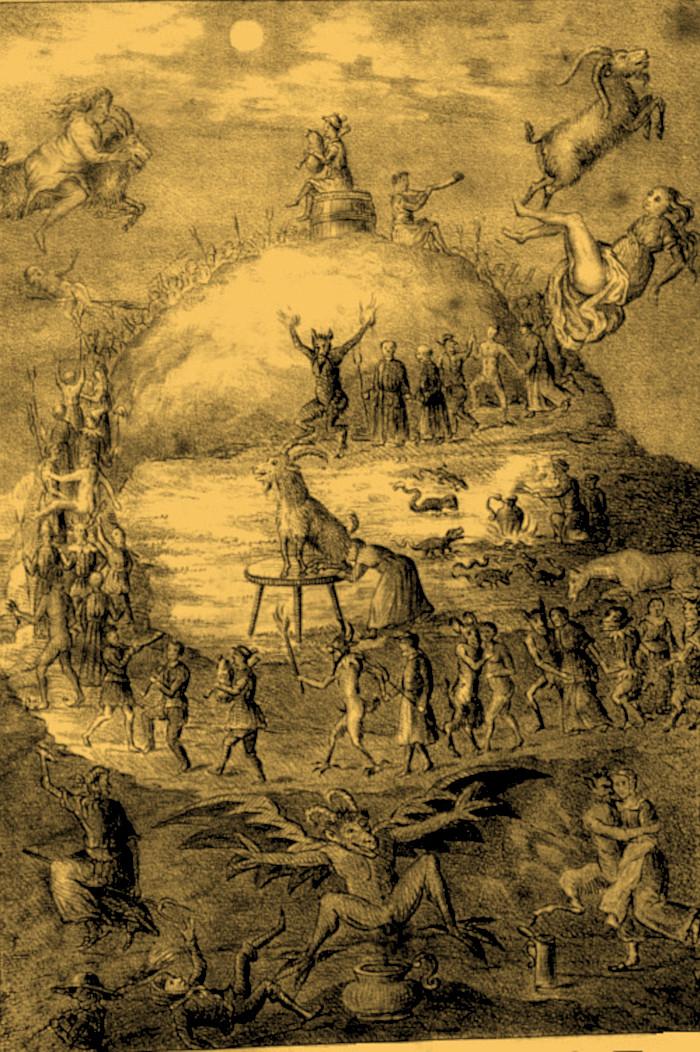
Here another version of the “witches’ dance,” Hexentanz auf dem Brocken, frontispiece to Johannes Praetorius, Blockes-Berges Verrichtung (Leipzig 1688), reproduced in Georg Witkowski, Die Walpurgisnacht im ersten Teile von Goethes Faust (Leipzig 1894), 28:
[4] See Hardenberg to Franz Volkmar Reinhard on 20 May 1799 (Novalis Schriften 4:282–85, here 282, where Hardenberg is about, in effect, to ask Reinhard’s blessing on his engagement with Julie von Charpentier): “At my last visit in Dresden, where I was fortunate enough to spend a pleasant evening at your home, I never found the opportunity to speak with you in private about a matter that will doubtless interest you most ardently . . . ” Back.
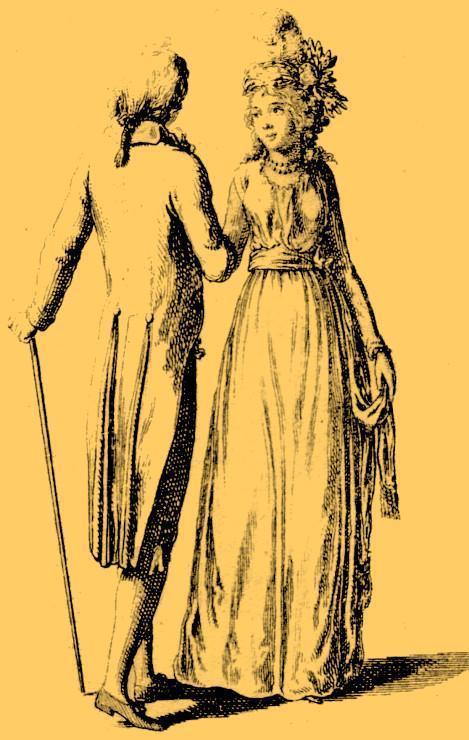
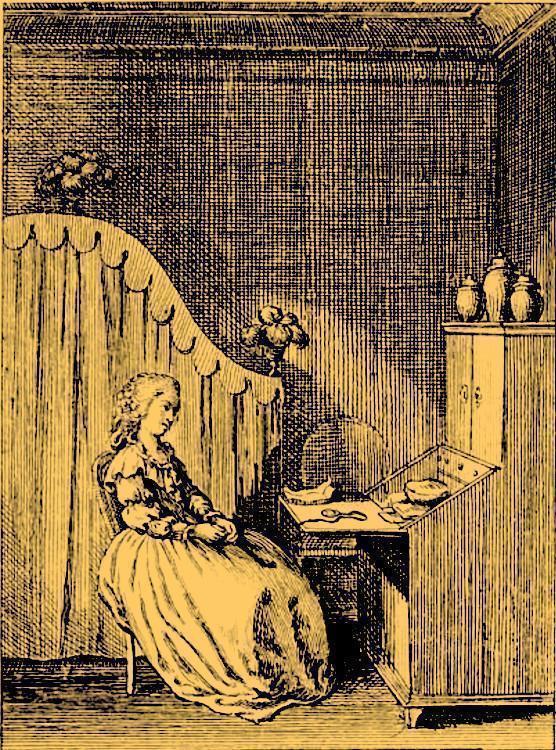
[5] Illustrations: (1) Gabriel Rollenhagen and Giuseppe Carpani, Nucleus emblematum selectissimorum, vol. 2 (Arnheim, Utrecht 1613), plate 69; (2) Daniel Nikolaus Chodowiecki, Wie er mich würde geliebt haben (“Ah, how he would have loved me”) (1786) (Herzog Anton Ulrich-Museum; Museums./Signatur DChodowiecki AB 3.709):
Translation © 2013 Doug Stott