
• 37. Caroline to Luise Gotter in Gotha: Göttingen, 17 June 1783
Göttingen, 17 Jun[e] 1783
|74| . . . For four weeks now we have had a new pastime, namely, the Abt theater company. Although our theater is certainly reasonably enough equipped, it is still way too small for pieces as expansive as Agnes, Lanasse, and Johann von Schwaben; moreover Madam Abt is half again too old to play the heroines in those pieces. [1] This group is far and away more successful when it performs comedies, for whenever an itinerant theater company performs high tragedies, one cannot help thinking of beggars’ majesty.
A certain |75| Herr Ratje plays the marriage procurator quite excellently. [2] I will send your good husband the actual theater bill from Lanasse; he may admire Herr Abt’s wit in it. It was performed while half the students were in Kassel, so he had to commend the ladies, and behold — they did indeed come! Never before were there so many ladies there. —
But I confess that I, too, was there — even though I otherwise cannot really stand this piece. The whole piece is performed in the tone of “Lanassa! blaze! up! in! flames!!!” You can imagine how my lungs strained when I read it aloud. And from time to time also lofty aphorisms lest one forget that it was translated from the French. Abt will not, however, take on Die Räuber, nor likely rehearse Fiesko, which Herr Dieterich has just sent me. [3]
Yesterday we had a delightful little festival. The Böhmers’ eldest son built himself a little hermitage and invited family and friends over to celebrate his final farewell from everyone and from the world, a farewell we tried to make as unpleasant as possible for him . . .
Notes
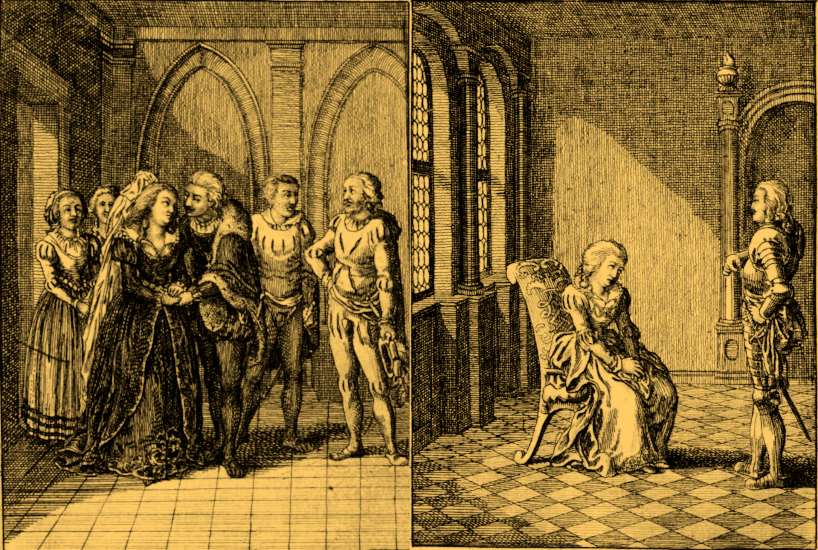
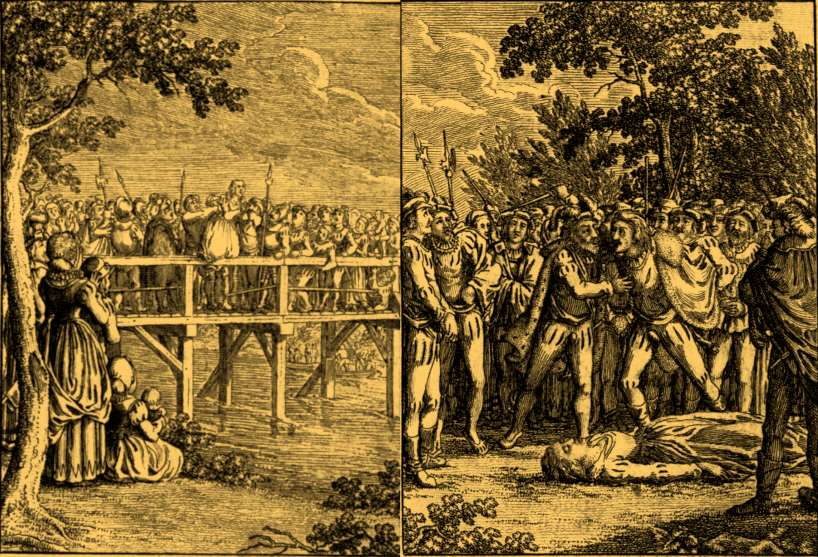
[1] Caroline’s iniitial reference is to Count Joseph August von Törring, Agnes Bernauerin: Ein vaterländisches Trauerspiel (Munich 1780). The indeed expansive tragedy, which continued the chivalric style of of Goethe’s Götz von Berlichingen (1773), premiered in Mannheim in 1781 and “drew tears from the eyes of all the sentimental among the fairer part of the audience” (O. L. B. Wolff, ,Historical Sketch of Modern German Literature 1785–1835 [Weimar 1837], 50). It relates the historical episode of a ducal son who wants to marry beneath his social standing; the unfortunate eponymous protagonist is ultimately executed by drowning in the Danube River (illustrations in the Almanach auf das Iahr 1788 [Nürnberg]; Inhaltsverzeichnis deutscher Almanache, Theodor Springmann Stiftung):
Right: act 1, scene 1: “You are mine, I yours.” — Left: act 3, scene 3: “Behold this weapon; what more can I do for you?”
Right: act 4, scene 8: “That bell peals no good news for you.” — Left: act 4, scene 11: “Thus pronounce my sentence, Almighty.”

Right: act 5, scene 6: “My God!” — Left: act 5, final scene: “But you, in your rogue’s blood, shall you drown me!”
Her second reference is to Karl Martin Plümicke, the Berlin theater playwright (who brazenly “adapted” Schiller’s Die Räuber. Ein Schauspiel [Frankfurt, Leipzig 1781] and Die Verschwörung des Fiesko zu Genua: Republikanisches Trauerspiel [Mannheim 1783]). Plümicke himself authored the exotic Lanassa. Trauerspiel in fünf Akten (Berlin 1782), a tragedy after Antoine-Marie Lemierre, La veuve du Malabar, ou, L’empire des coutumes; tragédie (Paris 1780), a (according to Erich Schmidt [1913], 1:679) much-praised hack work drawing from Indian material.
The conflict in Lanassa, an extremely popular and sometimes opulently produced play at the time all over Germany, derives from the custom according to which the widow of an Indian Brahmin was required to die willingly on the funeral pyre (Historisch-Genealogischer Calender oder Jahrbuch der merkwürdigsten neuen Welt-Begebenheiten für 1786; Inhaltsverzeichnis deutscher Almanache, Theodor Springmann Stiftung):
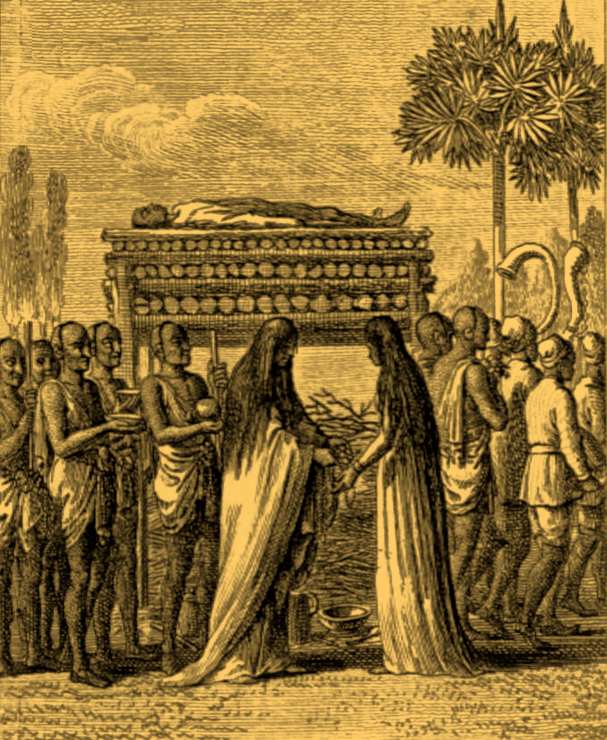
The role of Lanassa herself was among the starring roles for tragic ingenues at the time, which may be one of Caroline’s objections to an older woman playing the role.
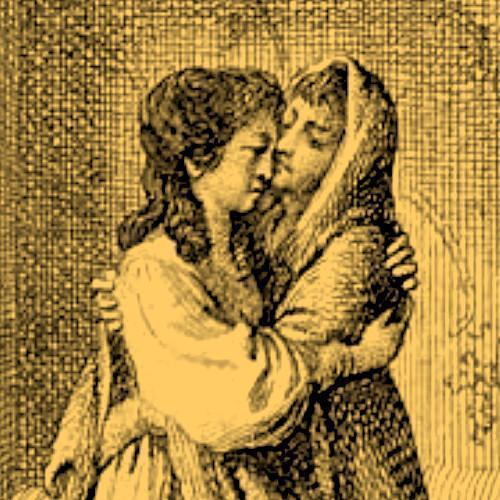
Here the frontispiece and title page; the frontispiece, from act 4, reads: “My tear that moistens your cheek tells you that — he is no more!”:

Click on the image below to open a gallery of Daniel Nikolaus Chodowiecki’s illustrations to the play:
Plümicke also freely adapted August Gottlieb Meissner, Johann von Schwaben. Ein Schauspiel (Leipzig 1780) for the stage; here (1) the frontispiece to Meissner’s edition of 1781 and (2) the frontispiece to the adaptation Berlin 1783:
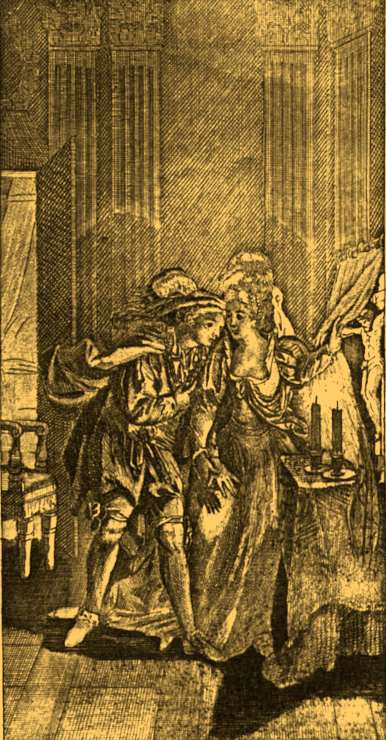
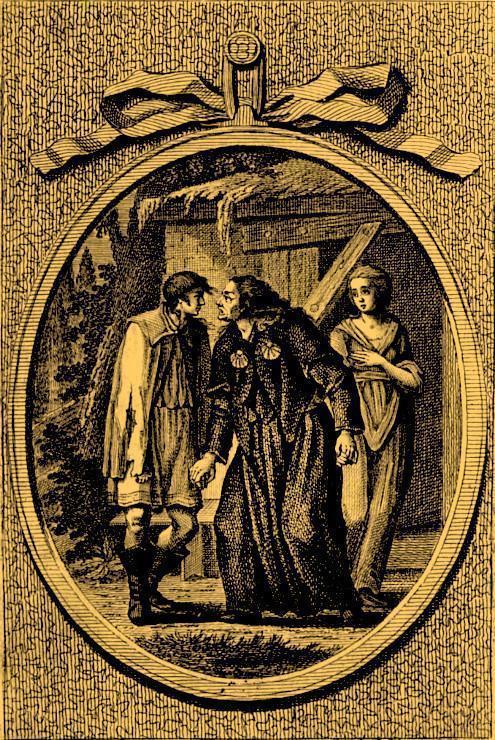
[2] Christoph Friedrich Bretzner’s play about a matchmaker, “love after the current fashion,” Liebe nach der Mode, oder: Der Eheprocurator. Ein Lustspiel in fünf Akten (Leipzig 1781). Click on the image below to open a gallery of twelve illustrations to the play by Daniel Nikolaus Chodowiecki in the Lauenburg Genealogischer Kalender auf das Jahr 1785:

[3] Schiller, Die Räuber: Ein Schauspiel (Frankfurt, Leipzig 1781); Die Verschwörung des Fiesko zu Genua: Republikanisches Trauerspiel (Mannheim 1783).

Translation © 2011 Doug Stott