
260e. Mother (Johanna Christiane Erdmuthe) Schlegel to Wilhelm Schlegel in Jena: Hannover, 1 June 1800 [*]
[Hannover] 1 June 1800
My dear Willhelm, how can you bring yourself not to send me any news about your dear wife’s health? She was not at all better the last time you wrote me. [1] You know how sincerely concerned I am for her. — — I entreat you to send me news very soon about all of you, also about Fritz, to whom I send my warmest regards along with your dear wife. — —
A lot of people have died here recently. — — Also Rath Kästner, who has the famous Lotte, he leaves behind 11 children, some of whom have already been placed, [2] but there will be as much support as possible, she has already long had a good friend in Ruthlof. — —
Notes
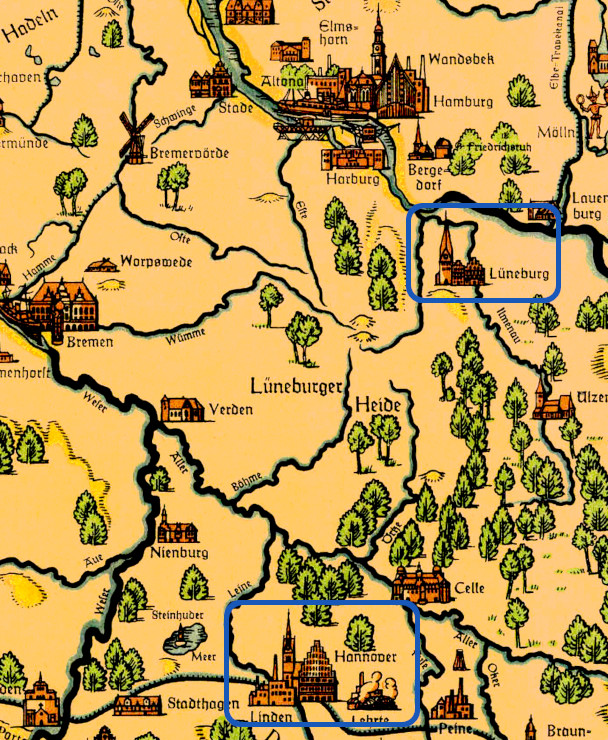
[*] Source: Waitz (1882), 78. Passages Waitz did not include are indicated by “—”. (Rudolf Koch and Fritz Kredel, Deutschland und angrenzende Gebiete [Leipzig 1937]):

[1] Wilhelm’s letters to his mother do not seem to have been preserved. Her previous letter to him, in which she expresses her horror at the news that Caroline was ill, seems to have been that on 18 April 1800 (letter 259g). Back.
[2] Johann Georg Christian Kestner had died on 24 May 1800 in Lüneburg while on a business trip (Rudolf Koch and Fritz Kredel, Deutschland und angrenzende Gebiete [Leipzig 1937]):
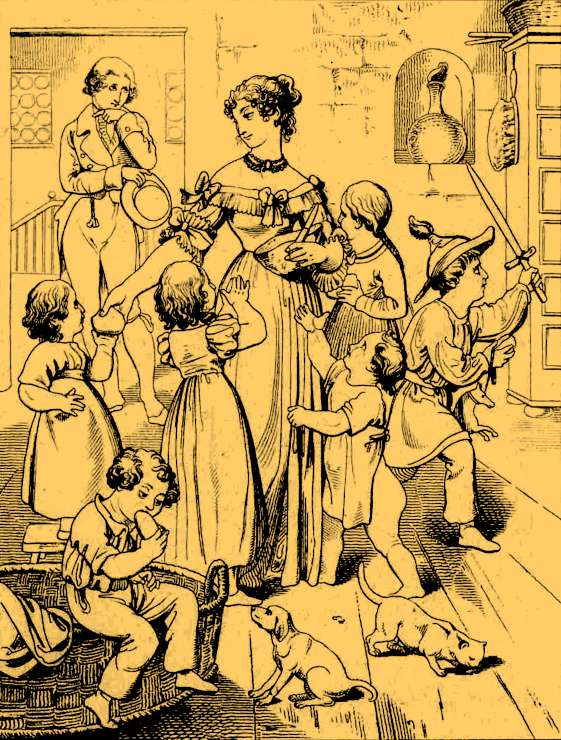
His wife, Charlotte, née Buff, was the prototype for Lotte in Goethe’s Die Leiden des jungen Werthers (“The sorrows of young Werther”). Here an illustration from a classic scene in the book (Lotte distributes bread to the children; Göthe-Gallerie: Stahlstiche zu Göthe’s Meisterwerken nach Zeichnungen von Julius Nisle, Artistischer Supplementband zu Göthe’s Werken, vol. 6 [Stuttgart n.d.], plate 2 for Werther):
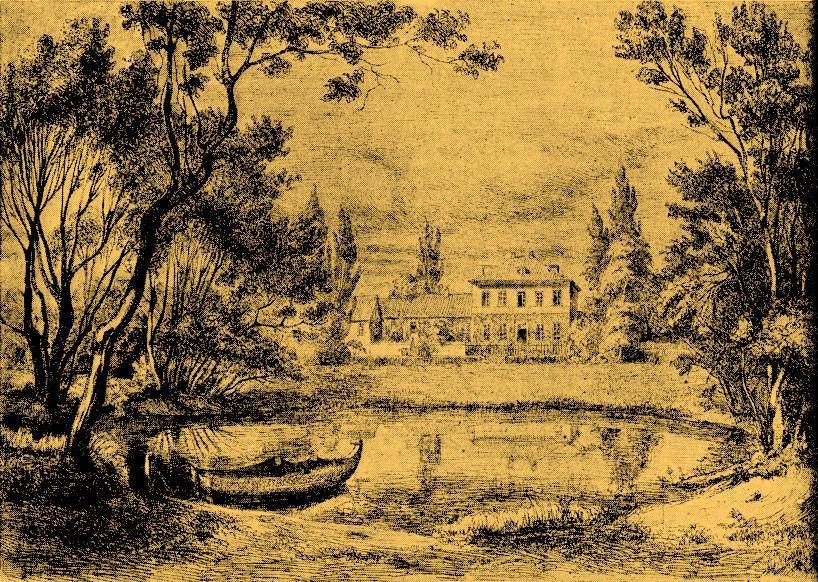
She managed to keep the family close despite the children having been placed. Here the Kestner house just outside the Aegiedien Gate in Hannover (Georg Laves [1845]; source: Allgemeine Hannoversche Biographie, vol. 2 [Hannover 1914], 276):
Translation © 2014 Doug Stott