
• 17. Caroline to Julie von Studnitz in Gotha: Göttingen, 8 August 1780 (Fr.) [*]
Göttingen, 8 August 1780
|28| . . . I know not if I already informed you that our plan was to go pick up my father in Pyrmont, where he was taking the waters. This modest journey greatly delighted me, and we undertook it with great gaiety, my mother, my sister, and I, but it was fated that our joy was not to be complete. For while we were in the small town of Eimbeck [Einbeck], four miles [1] from Göttingen, my mother, who is of a generally weak constitution, felt so sick that she quite despaired of being able to continue; we stayed there for one evening after dinner and one night, and then my mother decided to remain in that town with a relative who lives there with his family and let us continue the journey with my uncle, who had accompanied us. —
I knew her illness would not be really dangerous, for she has often had such attacks, and since she herself so desired and since I knew she was in good hands in the house where she was staying, I accepted the proposal, and we departed, albeit with hearts not nearly as light as on the previous day.
We came upon the most horrible road imaginable; although I had heard about it beforehand, what we actually encountered surpassed even my worst expectations. Niebuhr, who took that grand journey to Egypt, remarked one day to my father that between Göttingen and Arabia there was no worse road than the road from here to Heiligenstadt and Gotha; but that good man has never been to Pyrmont.
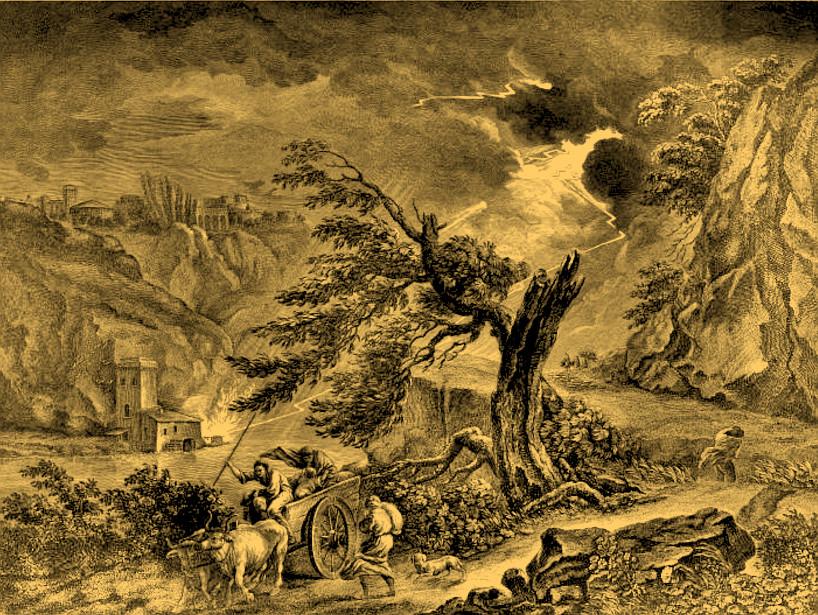
We also had a storm along the way, and lightning struck only about fifty paces from us. Our horses bolted and quickly carried us so far that we did not have time to |29| recover from our fright. [1a] Nonetheless (please, appreciate my courage) I was prepared for anything and was even resolved to die. Fortunately I did not have occasion after all to execute such beautiful resolutions, for the storm passed.
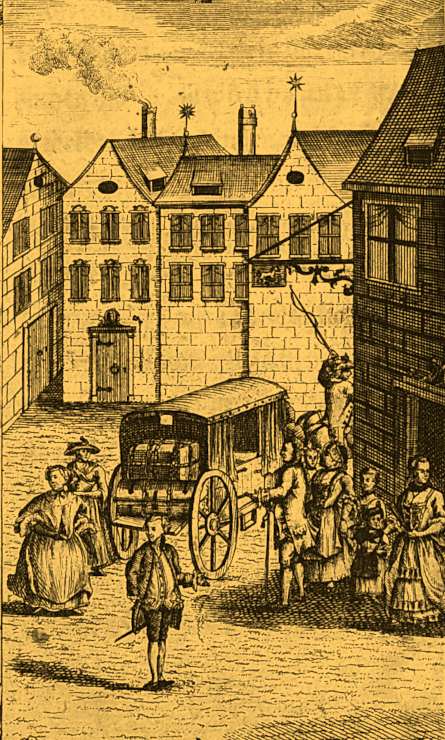
At a village an hour from Pyrmont, we met my father’s valet, who told us my father was waiting for us there. I straightaway gave the valet a letter from my mother to take to my father to prepare him, since naturally he would otherwise be shocked not to see her arrive at all. My father had scarcely finished reading it when we arrived. Then he took us along in his carriage, and an hour later we were in Pyrmont. [1b] —
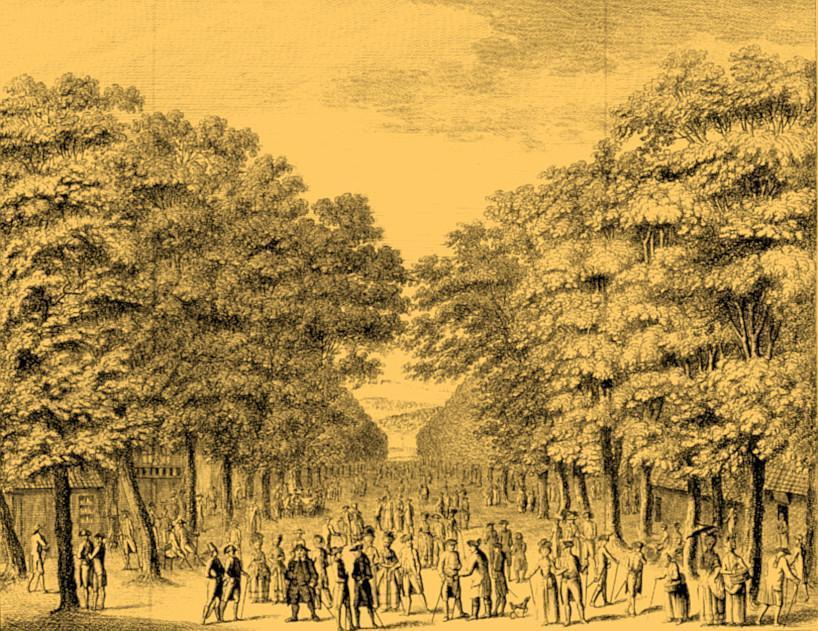
I was impressed more than I can tell you by the beauty of the place and by the multitude of foreigners. It is impossible for me to describe it for you. The street was illuminated that same evening; there was a ball, and we saw Pyrmont in all its brilliance. [1c] The next day we were introduced and received with the greatest politeness and graciousness, and I made the most enjoyable acquaintances there.
The Count de Werthern, son-in-law of Madame de Buchwald, was also there with his spouse, whom he married a long time after the death of his first wife but who is the most pleasing woman in the world; [2] I am almost enthusiastic about her, and you would surely share my sentiments had you seen her. There were many beauties at Pyrmont. The Countess de Werthern is not really among them, but after having seen her once, you do not want to lose sight of her; you cannot but gaze on her and love her. —
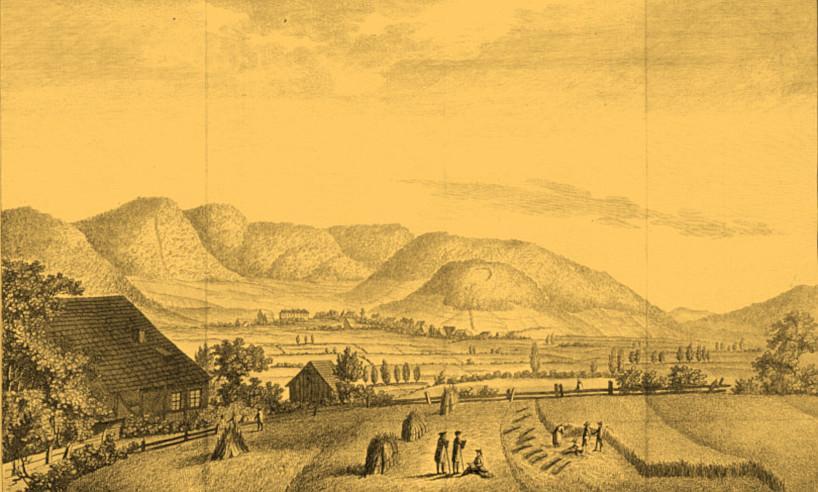
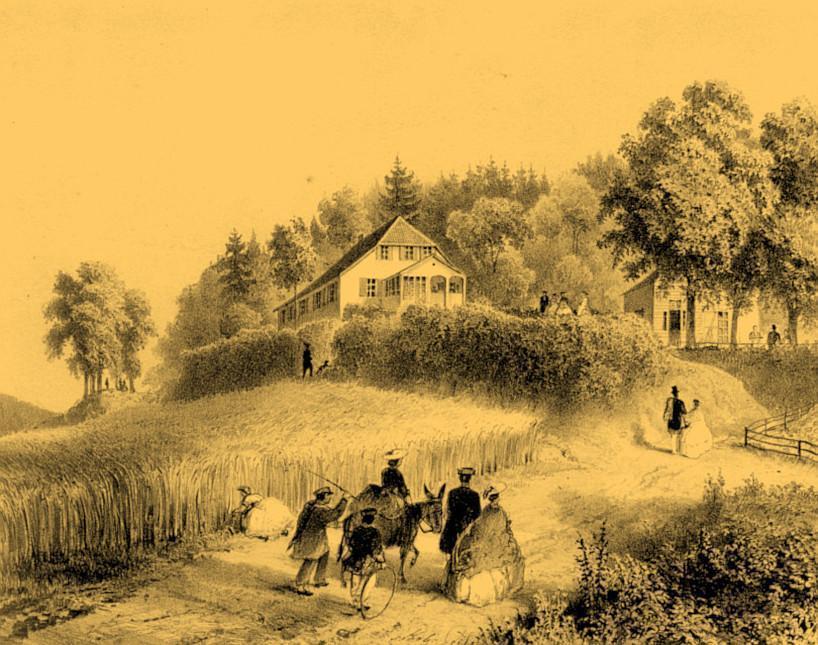
We took a carriage tour to Königsberg, which owes its name to the king of Prussia, whose favorite outing it was during his own stay at Pyrmont; [3] they have also marked the place where he was accustomed to sit. [4] |30| How could I describe for you the charming and varied environs that presented themselves to my gaze there, [5] or the pleasure I felt, a pleasure so pure and sensitive, one surpassing all the vivid and radiant pleasures to which one becomes so easily accustomed, and which nonetheless are so little suited to filling the emptiness of a heart that was born so sensitive. Ah, that I was not able to share them with you, my dear Julie! —
The following day there was yet another ball, but as we were to leave the next day, we were unable to attend despite all the invitations. I was quite vexed at not being able to make the acquaintance of Zimmermann, who was not there on that occasion. He is with Prince d’Orlow at the mineral-springs in Ems. [6] Baron de Senckenberg, who was so involved in the latest war between the king of Prussia and the emperor, was almost always with us, and he also dined at my father’s apartment. He is a man of the most excellent character one could wish for, with an extremely lively mind, but who nonetheless does not possess the air of an important man, which in fact he truly is. His company is entertaining and enjoyable to the highest degree. He is still quite young.
On the appointed day, we departed quite satisfied from Pyrmont and its residents. We dined in the village of Halle [7] at the house of the superintendent, with whom my father is acquainted. The company was most enjoyable, since by chance I met an interesting acquaintance I had met in Pyrmont. That evening at eleven o’clock we arrived in Eimbeck, impatient to see my mother again. Although she was doing better, she was still quite weak. The next day, during the journey and to our great joy, she gradually but continually began to improve.
|31| At Northeim, [8] a man on horseback met us. He had been charged with finding us wherever we may be, since a rumor had been circulating concerning the death of my father and a dangerous illness contracted by my mother. How we laughed! —
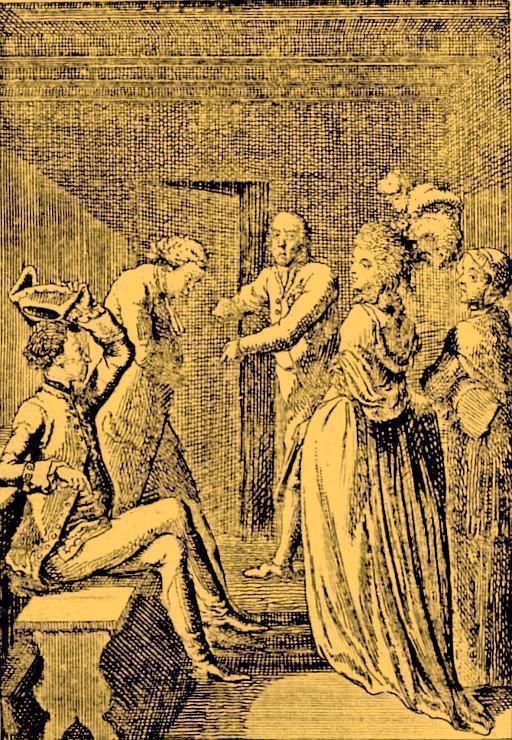
At a resort area between Göttingen and Northeim, a number of people were awaiting us in case we were still alive. We entertained ourselves there as well for a time and finally returned home to contradict the rumor of our death. [9] —
So, that is my description of that famous journey! Ah, why can I not describe to one of my acquaintances here the journey to Gotha? But I do not despair, and never less than at present. . . .
Notes
[*] Here a map of several of the locales Caroline mentions in this letter (Karte des deutschen Reichs, ed. C. Vogel [Gotha 1907], no. 13):
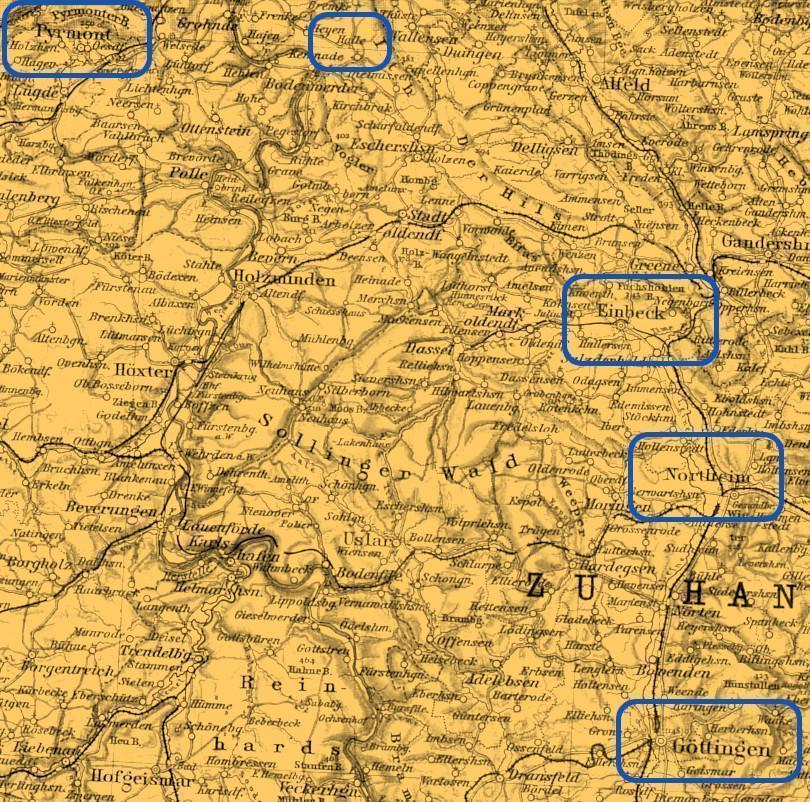
[1] Four German miles, approx. 32 km. Back.
[1a] Claude Joseph Vernet, and Jean Jacques Avril d. Ä., engraver, Les Voyageurs effrayés par le Coup de Tonnere (ca. 1764–1831); Herzog Anton Ulrich-Museum; Museums./Signatur JJAvril AB 2.5:
[1b] Frontispiece to Emilia, oder, Die belohnte Jugend in der Geschichte der Fräulein von Melvile: Aus dem Englischen übersetzt, vol. 1 (Nürnberg 1768):
[1c] Here an illustration of Pyrmont’s “Grand Allée” contemporaneous with Caroline’s visit, illustrating as well the convivial and social character of such mineral-spring spas at the time of which Caroline here speaks (Heinrich Matthias Marcard, Beschreibung von Pyrmont, 2 vols. [Leipzig 1784], plate 1 following p. 323):
[2] Schauplatz der Natur und der Künste, vol. 4 (Vienna 1776), no. 32:
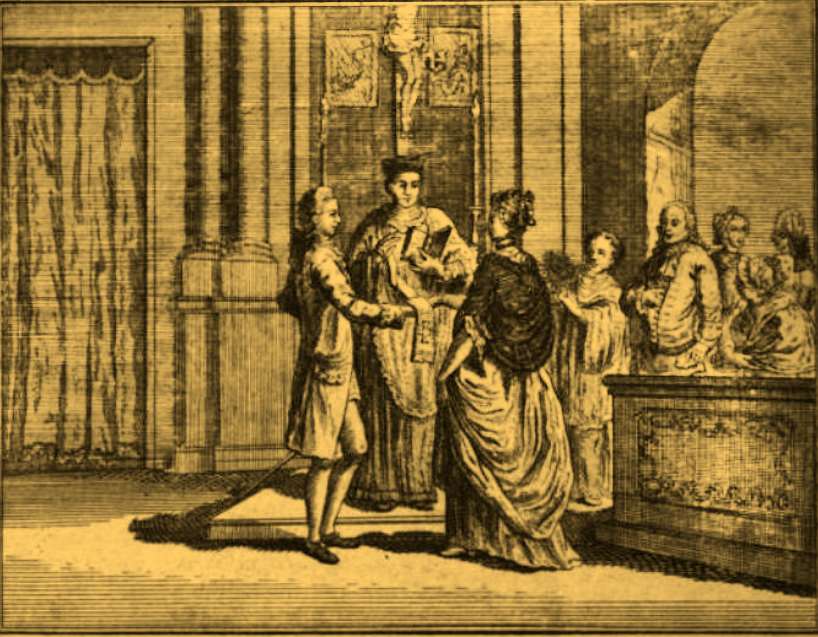
Briefly, the characters here are: (1) Count Johann Georg Heinrich von Werthern; (2) his former mother-in-law, Juliane Franziska von Buchwald; (3) his second wife, Christiane, née von Globig; and (4) his first wife, Luise, née von Buchwald. See their biograms for background. Back.
[3] The mountain Königsberg (formerly Oesberg), located east of the castle in Pyrmont and named after Friedrich II of Prussia, it being his favorite retreat (1744, 1746) (illustration contemporaneous with Caroline’s visit, from Heinrich Matthias Marcard, Beschreibung von Pyrmont, 2 vols. [Leipzig 1784], plate 7 following p. 323; the Königsberg is at the very center of the scene):
[4] A marble monument was erected on the southern slope of the Königsberg honoring Friedrich II and bearing the inscription Fridericus Magnus / fonte salutifero / vires restauraturus / hoc secessu / gaudebat (“When Friedrich the Great sought to restore his strength by means of our salutary spring, he was wont to linger at this solitary place”). It was at this place that Friedrich generally drank from the spring, and here, too, he allegedly planned the second Silesian War (Karl Theodor Menke, Pyrmont und seine Umgebungen mit besonderer Hinsicht auf seine Mineralquellen; historisch, geographisch, physikalisch und medicinisch dargestellt [Hameln, Pyrmont 1840], 84–85; illustration by R. Geissler, Der Königsberg bei Pyrmont, lithograph [Göttingen, ca. 1850]):
[5] Christian Felix Weiße, “Der” Kinderfreund: Ein Wochenblatt 8 (1778), following p. 52:
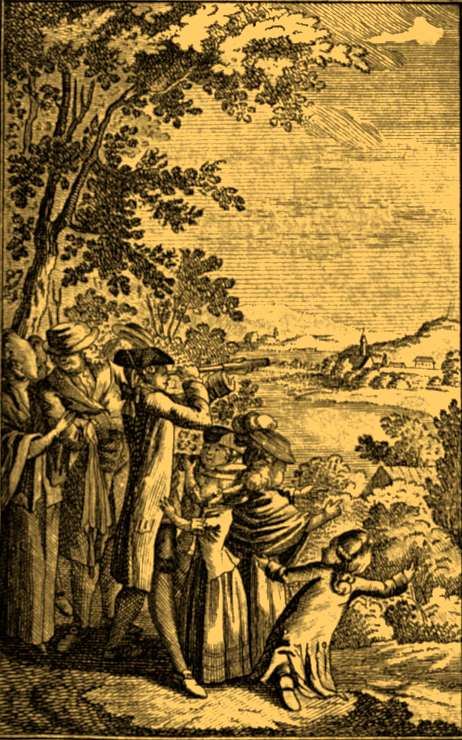
Because of its location out in the open in the valley around Pyrmont, with no physical connection to any other elevations, the Königsberg offers impressive vistas of the surrounding area. Concerning these environs, see Menke, Pyrmont und seine Umgebungen, 83–88, esp. 87, §59:
On the northern slope of Königsberg, just by the side of the road, there is a shady grove offering a place of rest that is quite comfortable for the weary and equally inviting to those who might be feeling a bit melancholy. From this vantage point one can enjoy a charming view of the increasingly narrow valley between the Königsberg itself, the Schellenberg, the Nienburg, and the Grävensberg, a valley whose dark ravines present a pleasing prospect to the eye.
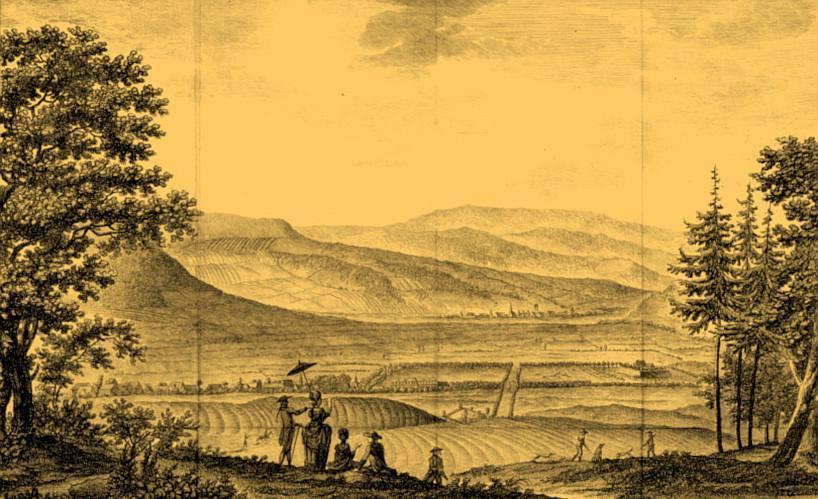
Although not the view to which Caroline here refers, the following does show the castle (to the right) and (moving to the left) various parts of the mineral-springs, spa facilities, and promenades at center, the large bathhouse, and part of newer part of the town of Pyrmont itself (Heinrich Matthias Marcard, Beschreibung von Pyrmont, 2 vols. [Leipzig 1784], plate 8 following p. 323):
[6] See Eduard Bodemann, Johann Georg Zimmermann. Sein Leben und bisher ungedruckte Briefe an denselben von . . . (Hannover 1878), 111–12:
In June 1780, the well-known Russian Prince Orlov came to Hannover with his ill spouse in order to consult Zimmermann [Orlov’s spouse died in 1782]. . . . The prince spent three days in Hannover and then, on Zimmermann’s advice, departed on 13 June with his spouse for Ems [on the lower Lahn River, one of the most popular mineral-spring spas in Germany in the seventeenth and eighteenth centuries]. Zimmermann had to follow at his request, then spending four weeks there in the prince’s company. We learn about what magnificent offers the prince made to him from a letter Zimmermann wrote to his friend in Brugge, where he recounts:
I was treated as pleasantly by Prince and Princess Orlov in Ems from 26 June till 23 July as I ever have been in my entire life. But their love almost suffocated me. Every day, all the arts that a generous prince and a charming, beautiful princess were able to engage were indeed applied in Ems to try to pull me away from service to the king of England. Prince Orlov asked that I henceforth accompany him and his spouse to Aachen and Spaa, then spend the coming autumn with them in Paris, winter in Rome and Naples, next spring in Switzerland, the following summer in Pyrmont and England, and then journey with them back to Petersburg, where I might live quite according to my own wishes and remain as long as I thought appropriate. —
In return, the prince promised to double whatever pay the king of England was giving me, i.e., 2560 Thaler, — accommodations and board in his Petersburg palace, — my own coach and horses along with the necessary domestics, — my daughter was to receive a rich marriage estate were she of a mind to return from Hannover to Switzerland, — freedom to return from Petersburg to Germany or Switzerland whenever I felt it necessary, — after my departure from Petersburg an annual, lifelong pension of 1280 Thaler, — and all this by way of a formal obligation attested by a notary and witnesses, — the capital (of which the aforementioned 2560 and 1280 Thaler are the interest) would henceforth be deposited in the Bank of Amsterdam or London as security. After considerable disquiet, I very courteously — rejected the offer.
Whereupon Zimmermann was offered a position in the service of the Empress of Russia, which he also rejected. ‘The reason is quite simple,’ he wrote, ‘I am completely satisfied with my circumstances in Hannover’. Back.
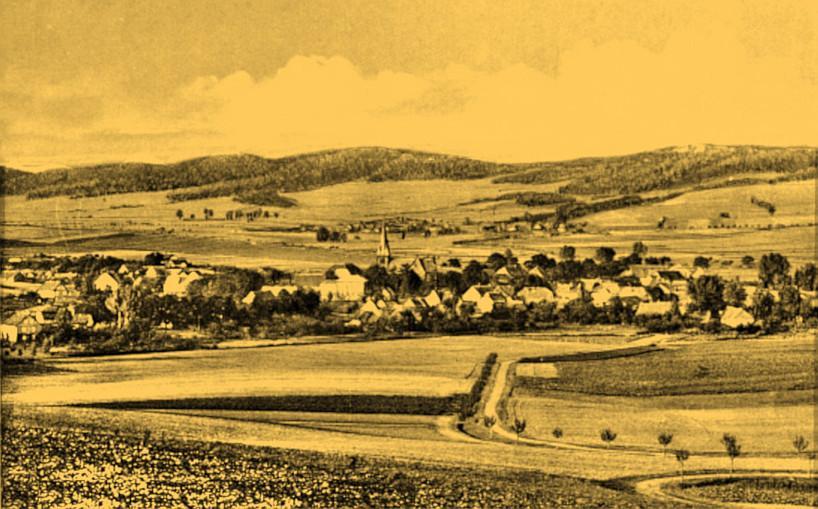
[7] Not the university town Halle an der Saale, but the small village of Halle due east of Pyrmont and southwest of Hildesheim, in the district of Holzminden in the contemporary state of Lower Saxony (see the map above; photograph: 1930s postcard):
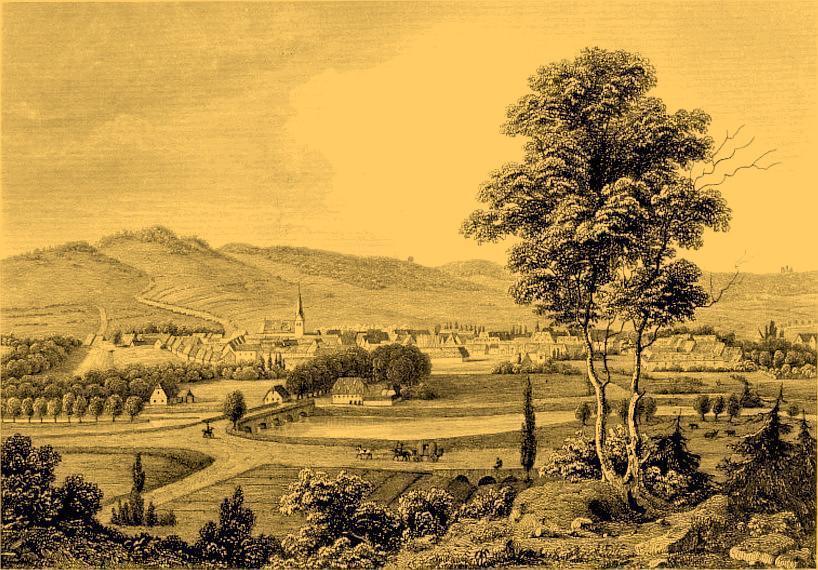
[8] Twenty kilometers north of Göttingen (Julius Umbach, after Friedrich Adolf Hornemann, Nordheim von der Nord West Seite: Historische Ortsansicht [1850]):
[9] Goettinger Taschen Calender vom Jahr 1784; Inhaltsverzeichnis deutscher Almanache, Theodor Springmann Stiftung:
Translation © 2011 Doug Stott