I. Biographical Essays; — II. Background Materials; — III. Recent Biographies in German
I. Classic Earlier Biographical Essays

The following classic biographical essays provide overviews of Caroline’s life and letters from various angles of vision. I present them here in chronological order and include the introductions to the editions of 1871 and 1913 as well as Luise Wiedemann’s memoirs (Caroline’s sister), which were composed during the 1840s but not published until 1929.
Readers wholly unfamiliar with Caroline and the period may want to begin, after reading the project introduction, with the pieces by Cecily Sidgwick and Karl Hillebrand, both of which, significantly perhaps, were originally published in English and both of which provide fairly detailed overviews.
- Georg Waitz’s Preface to the Edition of 1871
- Georg Waitz’s Self-Review of the Edition of 1871
- Rudolf Gottschall’s Biographical Essay and Review of Waitz’s 1871 Edition (1871)
- Rudolf Gottschall, The Coeurdame of the Romantic School (September 1871; lengthier than preceding)
- Wilhelm Scherer’s Biographical Essay and Review of Waitz’s 1871 Edition (1871/74)
- Rudolf Haym’s Biographical Essay and Review of Waitz’s 1871 Edition (1871)
- Michael Bernays’s Biographical Essay and Review of Waitz’s 1871 Edition (1871)
- Karl Hillebrand’s Biographical Essay (1872)
- Cecily Sidgwick’s Biography (1889)
- Thomas William Lyster’s Review of Cecily Sidgwick’s Biography
- Franz Muncker’s Entry in the Allgemeine Deutsche Biographie (1890)
- Ricarda Huch’s Biographical Essay (1899)
- Erich Schmidt’s Introduction to the Edition of 1913
See also the information concerning Caroline’s gravesite in Maulbronn and the commemorative program in Maulbronn in 2009.
♦ Luise Wiedemann’s Memoirs
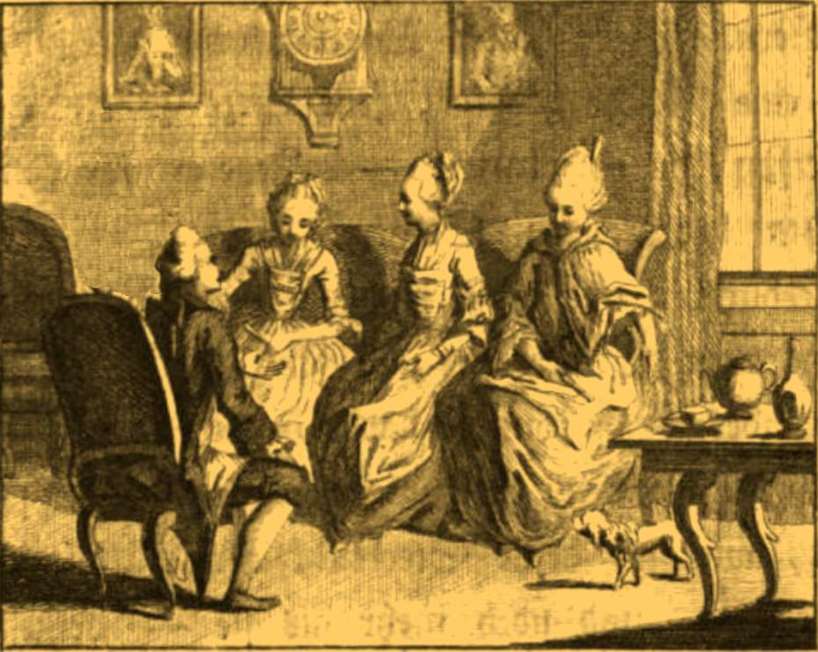
Luise Wiedemann’s (Caroline’s sister’s) memoirs are of particular importance insofar as in addition to biographical entries on all the Michaelis children — Luise herself, Fritz, Caroline, Gottfried Philipp, and Lotte — they provide considerably more details than does Caroline about growing up in the Michaelis household and in Göttingen at the time. Although Caroline was seven years older than Luise, the world of her childhood and young womanhood in Göttingen and Gotha was essentially the same as Luise’s.
II. Background Materials
The background sections on European political and cultural developments incorporated at key chronological junctures in Nicholas Boyle’s biography Goethe: The Poet and the Age, vol. 1, The Poetry of Desire: 1749–1790 (Oxford 1992), and especially vol. 2, Revolution and Renunciation: 1790–1803 (Oxford 2000), can serve the same purpose with respect Caroline’s life and letters, not least because they also deal with with the emergence of Weimar and Jena as cultural centers.
♦ A brief introduction to the status of the Holy Roman Empire of the German Nation just prior to the French Revolution.
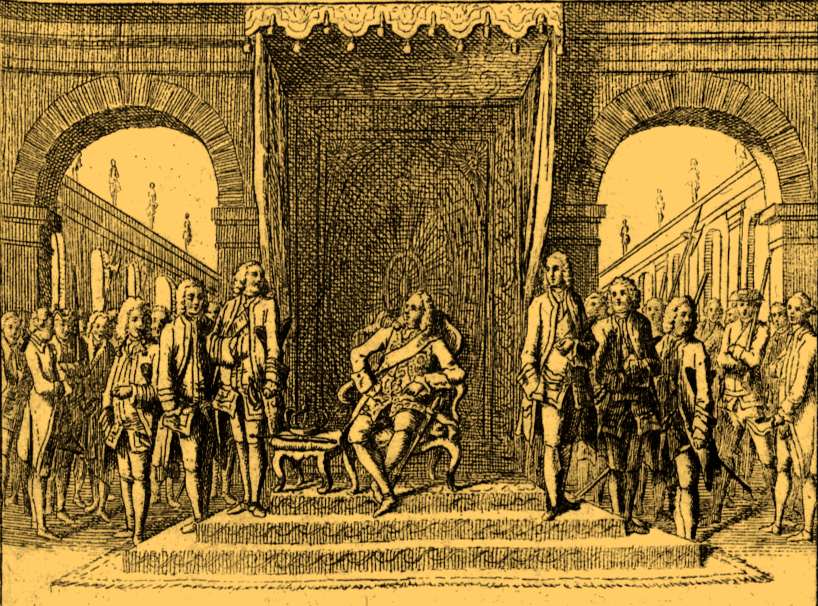
Caroline was born during the waning years of the Empire; its accellerated demise and final disintegration constituted the fundamental geopolitical reality of her life, sometimes overtly, sometimes in the background, but always present. The concise remarks here provide readers with a convenient overview of the contemporaneous condition of the Empire, whose ponderously monumental structure is then described in the following appendix, namely, Germany in the Late Eighteenth Century.
♦ Germany in the Late Eighteenth Century.

For readers outside German studies proper, and even for many specialists, the political and geographical organization of Germany as part of the Holy Roman Empire of the German Nation during the late-eighteenth century can be a confusing and even incoherent collection of principalities, territories, kingdoms, duchies, and towns whose relationships and even boundaries are anything but transparent. Why was Caroline advised to appeal to the administration in Hannover while she was incarcerated in Königstein? Why did several different duchies have a say in Fichte’s troubles at the university in Jena? These chapters from Jakob Gottlieb Isaak Boetticher’s contemporary description of Germany (translation 1800) provide a concise if decidedly dry presentation of the overall imperial system of governance and a detailed description of the specific territorial dependencies and hierarchies that play a role in Caroline’s life.
♦ The “Principal Conclusion of the Extraordinary Imperial Delegation” (Reichsdeputationshauptschluss).
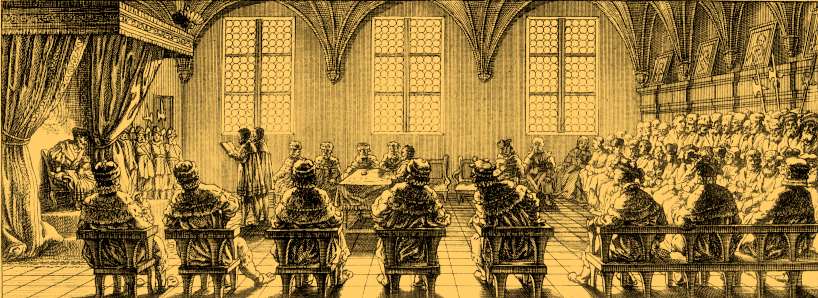
This document essentially brought to an end the geopolitical organization of Europe described in the previous document and decisively determined the course of Caroline’s (and Schelling’s) life. This appendix simplifies as much as possible the often bewildering and chaotic reasoning and implementation of the basic terms of the Treaty of Lunéville of 1801.
♦ Concerning German University Life 1826.
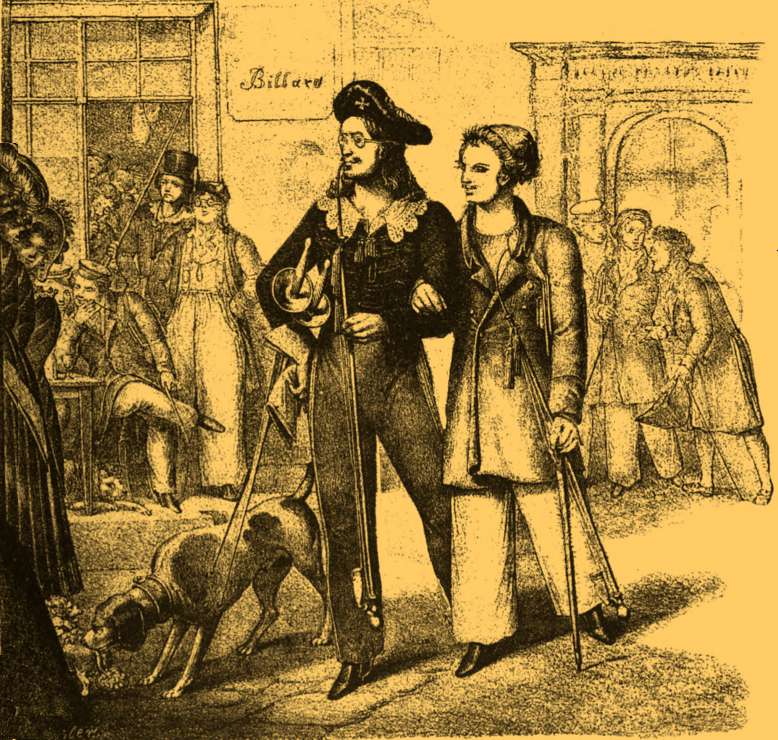
This illuminating background account of German university life, written in 1826, still reflects the circumstances with which Caroline was familiar from childhood on and which her letters copiously reflect.
♦ A Word about Honorific Titles.
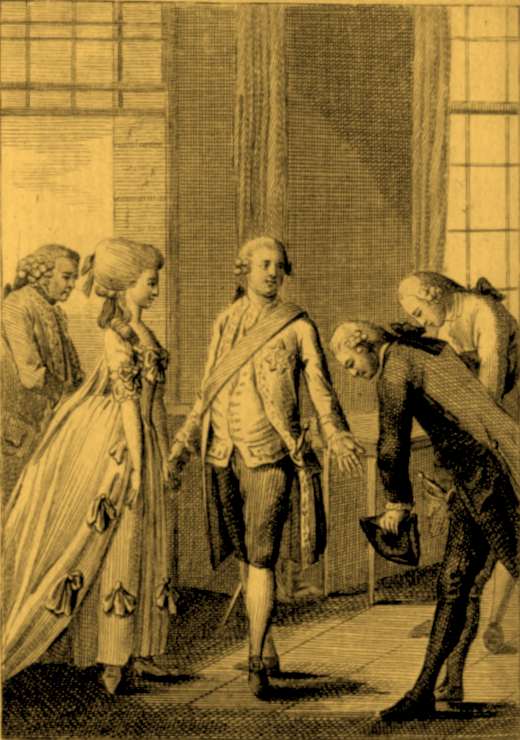
Before beginning with the letters themselves, especially readers less familiar with German social customs might profit from this brief introduction to the use of honorific titles in German society at the end of the eighteenth and beginning of the nineteenth century.
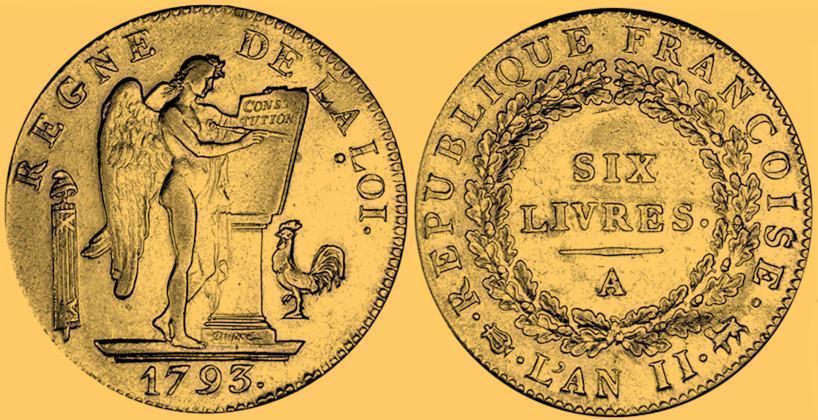
♦ Currencies and Their Abbreviations. Brief remarks on the various currencies and their abbreviations that appear throughout this correspondence.
♦ The Leipzig Trade and Book Fairs
.
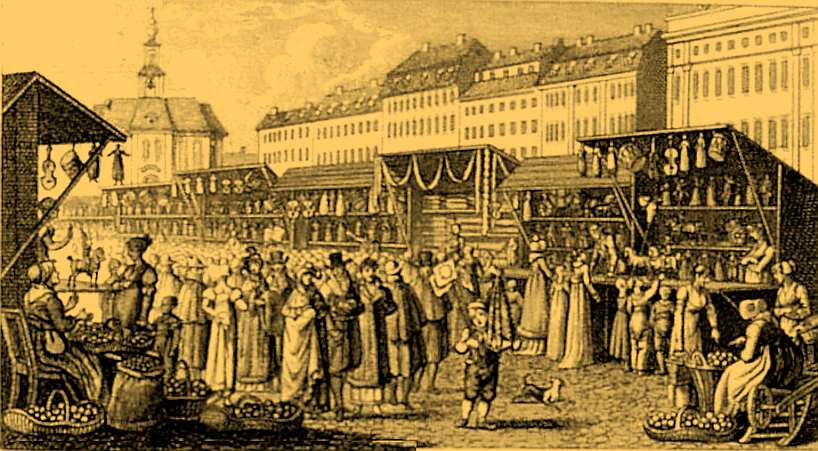
Caroline’s world was a world eminently centered in what has been called the Golden Age of German Literature. Not suprisingly, the Leipzig book fairs (part of the more broadly understood Leipzig trade fairs) play a recurring role in this correspondence.
III. Selected Recent Biographical Materials
- Appel, Sabine. Caroline Schlegel-Schelling: Das Wagnis der Freiheit. Eine Biographie. Munich 2013.
- Kahn-Wallerstein, Carmen. Schellings Frauen Caroline und Pauline. Bern 1959.
- Klessmann, Eckart. Caroline: Das Leben der Caroline Michaelis-Böhmer-Schlegel-Schelling 1763–1809. Munich 1975; rev. ed. Bergisch Gladbach 1992.
- Klessmann, Eckart. Universitätsmamsellen. Fünf aufgeklärte Frauen zwischen Rokoko, Revolution und Romantik. Frankfurt am Main 2008.
- Reulecke, Martin. Die Seele ist da, wo sie liebt! Lotte Michaelis: Spuren ihres Lebens. Würzburg 2023.
- Romantische Liebe und romantischer Tod: Über den Bamberger Aufenthalt von Caroline Schlegel, August Wilhelm Schlegel und Friedrich Wilhelm Joseph Schelling im Jahre 1800. Fussnoten zur Literatur 48 Edited by Wulf Segebrecht et al. Bamberg 2000.
- Rossbeck, Brigitte. Zum Trotz glücklich: Caroline Schlegel-Schelling. Munich 2008.
- Wulf, Andrea. Magnificent Rebels: The First Romantics and the Invention of the Self. New York 2022.
Gisela F. Ritchie, Caroline Schlegel-Schelling in Wahrheit und Dichtung (Bonn 1968), critically assesses fictionalizations of Caroline’s life prior to 1968; her principles apply to subsequent publications as well, both fiction and non-fiction.
See also the following:
- Marianne Thoms’s Podcast (in German with transcription; celebrating Caroline’s life and personality; with remarks from biographer Eckart Klessmann)
- Claudia Belemann’s Podcast (in German with transcription; celebrating Caroline’s life and personality; with remarks from biographer Sabine Appel)
- Göttingen Profiles between Enlightenment and Romanticism