
Einleitung
As described in the Project Introduction, the main strategy for making this edition more useful to English-speaking readers has been to resolve and amplify the cross-references and allusions in Erich Schmidt’s original notes; in most cases, “resolve” means including a translation of the cross-referenced material.
Such material includes passages from letters, memoirs, works published at the time, scenes from plays, various newspaper announcements, literary reviews, letters to the editor, from secondary works on the period, and an array of other documents. These appendices generally contain the lengthier materials from among these additions. The goal is not only to identify as precisely as possible allusions and references in the letters of Caroline and others, material often needing explanation even to readers more familiar with the period and with Caroline herself, but also to supply translations of that material to the extent possible so that readers need not search in often obscure sources that are, moreover, often difficult to access.
The broader goal is for Caroline’s letters to come alive through this supplementary material, and for the people involved in her life and in this cultural period to come similarly alive, with their frequently all-too-human personalities and foibles, their concerns both large and small, grand and petty, their literary, academic, and personal feuds, and their reactions to an often extraordinary cultural period. To this end, I have tried to secure and translate as many of Erich Schmidt’s references from the edition of 1913 as possible, and have also added material of my own.
A Couple of Examples

(1) In his notes to Caroline’s letters to Ludwig Ferdinand Huber on the occasion of latter’s review of the Schlegels’ periodical Athenaeum (Caroline’s letters of 22 November and 24/27 November 1799), Schmidt remarks:
This withering reproach was well deserved, since Huber’s review, “Athenäum 1798, 1799,” in the Allgemeine Literatur-Zeitung, (1799) 372 (Thursday, 21 November 1799) 473–77, is indeed extraordinarily flat, with hardly a reference to anything of significance or anything really characteristic.
Schmidt then cites a couple of sentences and offers brief, summary remarks about the review. The review itself, however, provoked significant reactions from members of the group.
After reading the review, Friedrich Schlegel quipped to Schleiermacher, “I confess I really would not have expected something this stale and trivial.” Because Caroline’s “withering reproach” is arguably one of her most eloquent epistolary moments, and because Wilhelm Schlegel also subsequently exchanged letters with Huber on the subject (that exchange is included in this edition), I have included a translation of the review in the supplementary appendix so readers can see the object of Caroline’s ire, of Friedrich’s quip, of Wilhelm’s exchange, and also an example of the kind of material published in academic journals and periodicals that genuinely did often make and break friendships.
(2) Caroline frequently mentions Friederike Unzelmann, often testily, one of the most celebrated and apparently genuinely talented actresses of the time (Friederike Unzelmann on stage with August Wilhelm Iffland; A. W. Iffland’s neue dramatische Werke, vol. 1 [Berlin 1808], following p. 146):

In his notes to a letter from 1798, Erich Schmidt provides a brief sketch and references several assessments of her talents, but also remarks:
Moreover despite her diminutive, dainty figure and relatively weak voice, those talents also extended into the sublime tragic roles of Orsina, Iphigenia, and Maria Stuart. Friedrich Ludwig Wilhelm Meyer’s characterization of her seems best to me (Friedrich Ludwig Wilhelm Meyer, Friedrich Ludwig Schröder. Beitrag zur Kunde des Menschen und des Künstlers, 2 parts in 3 vols. [part 2 in 2 vols.] [Hamburg 1819; rev. ed. Hamburg 1823], 2:143; see 201–2 concerning her performance in the role of Nina).
Not only was Friederike Unzelmann one of the most talented actresses of the time, she also happened to be romantically involved with Wilhelm Schlegel (whose poems to her are also included); indeed, Caroline’s own references to her in letters generally playfully allude to that situation, with her referring to Friederike Unzelmann variously as the “little fairy child,” “Unzeline,” and, on one occasion, “Diaboline Unzeline.”
(Almanach für Theater und Theaterfreunde, ed. August Wilhelm Iffland [1807]):
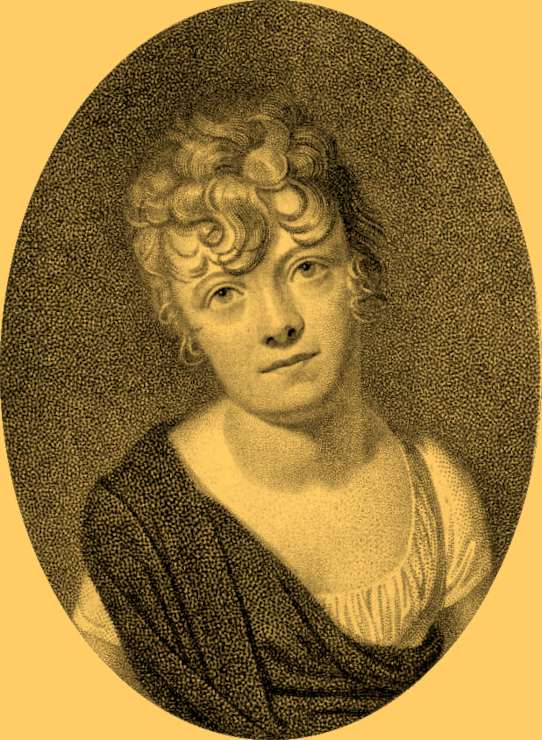
Hence it seemed worthwhile to include more about her. Translations of all the materials mentioned by Schmidt, as well as other materials and portraits, including some of Friederike Unzelmann’s own letters and the assessment Schmidt himself found best, namely, that of Friedrich Ludwig Wilhelm Meyer, can be found in the supplementary appendix on Friederike Unzelmann.
A Final Example
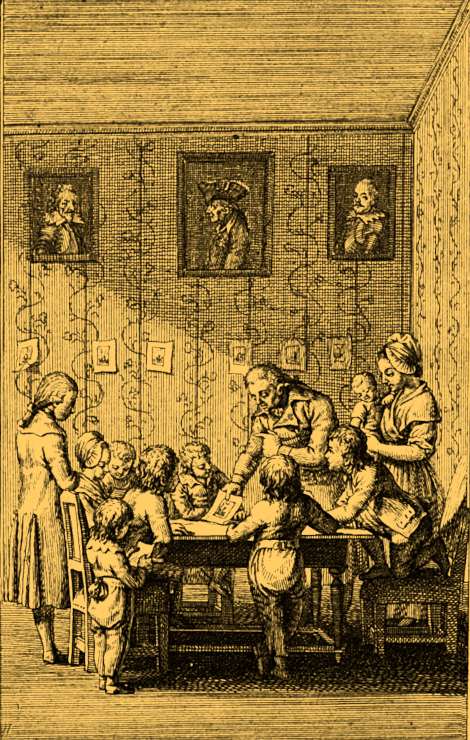
(3) On a lighter note, or perhaps less so depending on one’s involvement, young women during Caroline’s life were frequently at risk of falling prey to adventurers or rakes or simply to local young men with less-than-honorable intentions — part of the “five crises of a young woman.” Young Caroline suggests in 1779 that such was especially the case in a university town, which she calls “the most dangerous place for a girl.” Caroline’s youngest sister Luise Michaelis fell prey to a certain Karl Friedrich August Grosse (though even later Luise was not entirely certain of his intentions), to whom Caroline refers as
a disorganized windbag who out of sheer poltroonery was utterly insensitive to shame. . . . the last story [in his memoirs] involves our family. Out of revenge, he coined a couple of nicknames for me in that chapter — what I say about him is not revenge — it is instead heartfelt indignation toward stupid malice, and a complete acquaintance with the entire matter . . . It is bad enough that inexperience and an utter lack of cool judiciousness and experience with the world entangled an upright family with such a wretched hero, one too miserly to eat his fill at home and who was more interested in my mother’s coffee than in Louise’s kisses.
(Frontispiece to Gustav Schilling, Der Roman im Romane; oder, Siegfrieds Angelo; hrsg. vom Verfasser des Weibes wie es ist [Pirna 1802]):
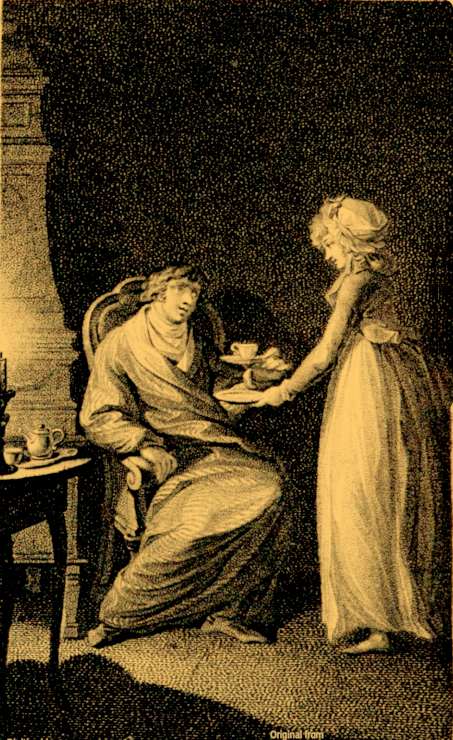
Luise recounts her version of the episode in her memoirs, and I provide a translation of Grosse’s in part derisively sarcastic chapter on the Michaelis family in supplementary appendix 114.1.