
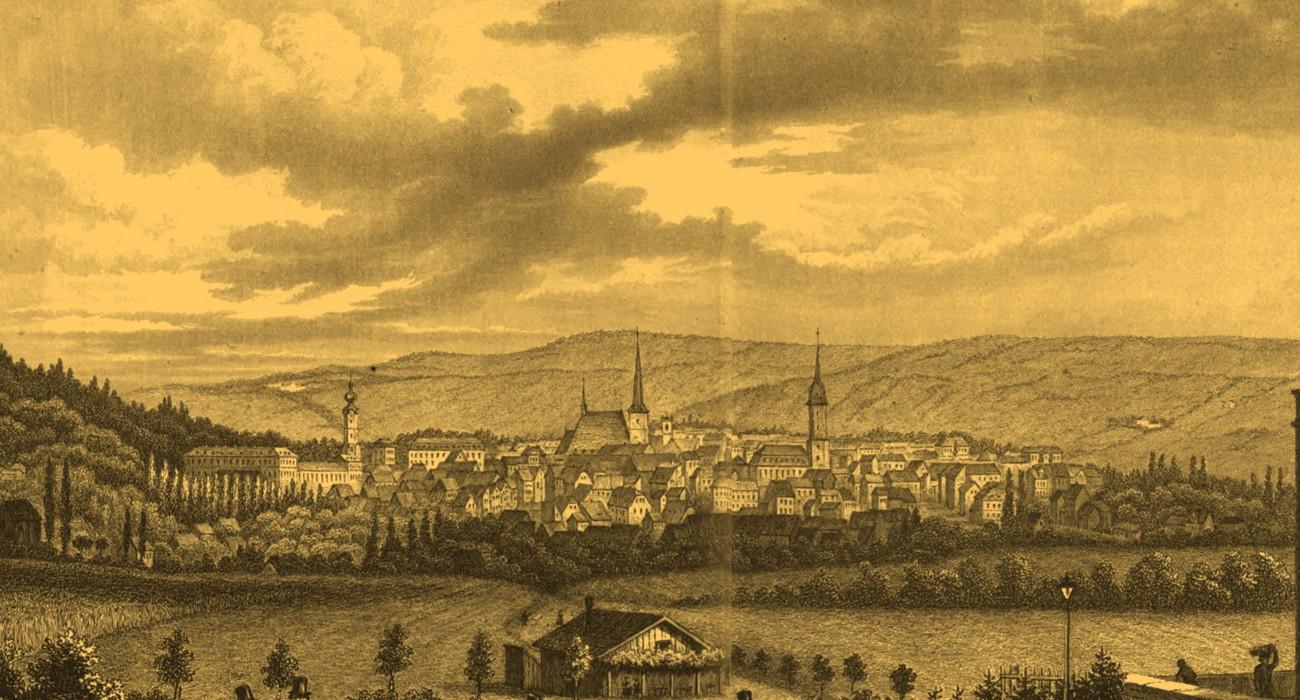
Weimar 1852
Caroline visited Weimar — ca. 20 km from Jena — on various occasions, dining with Goethe, attending the theater, the premiere of Schiller’s plays, staying for several days for the guest performances of Friederike Unzelmann in September 1801, and overseeing Friedrich Tieck’s work on the bust of Auguste after the latter’s death. Schelling and both Wilhelm and Friedrich Schlegel also regularly sought Goethe’s company in various literary and personal matters.
(Ferdinand Bielefeld, Ein Tag in Weimar:Ein kurzgefaßter Fremdenführer [Weimar 1852], frontispiece.)
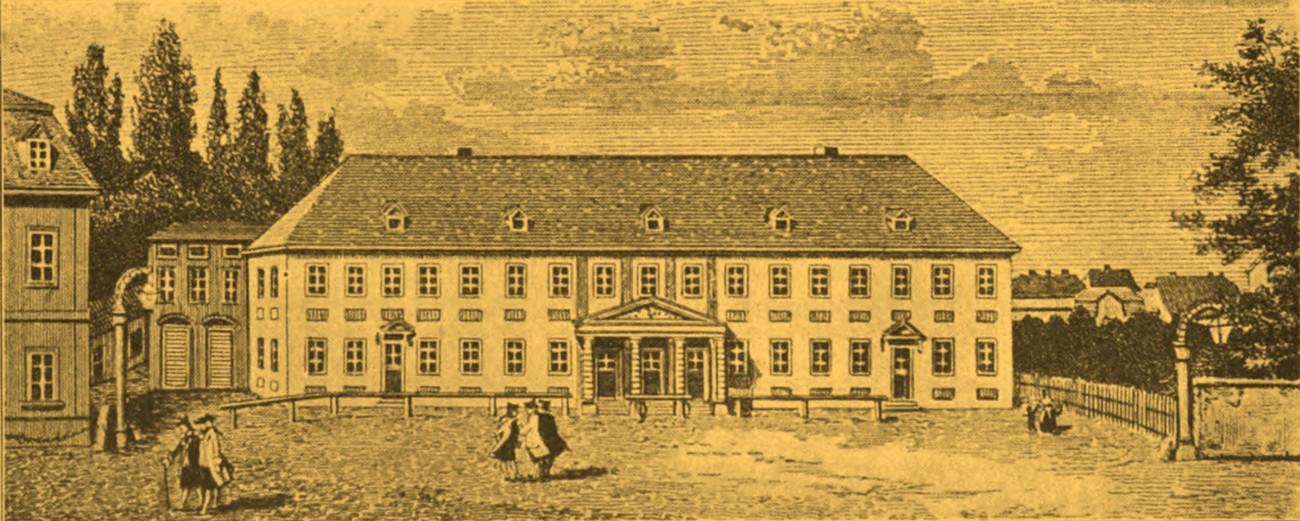
Weimar Royal Theater, ca. 1800
Caroline writes concerning the theater renovation before the premiere of Schiller’s Wallenstein’s Camp on 12 October 1798:
“He [Goethe] has completely remodeled the Weimar theater on the inside and turned it into an inviting, sparkling fairy palace. I was astonishingly well pleased with it…The illumination is extremely nice, coming from a broad garland of English lamps hovering in a small cupola through which the building’s haze also escapes.”
Caroline regularly attended performances here while she was living in Jena.
(Wilhelm Bode, Damals in Weimar, 3rd ed. [Weimar 1912], 80.)
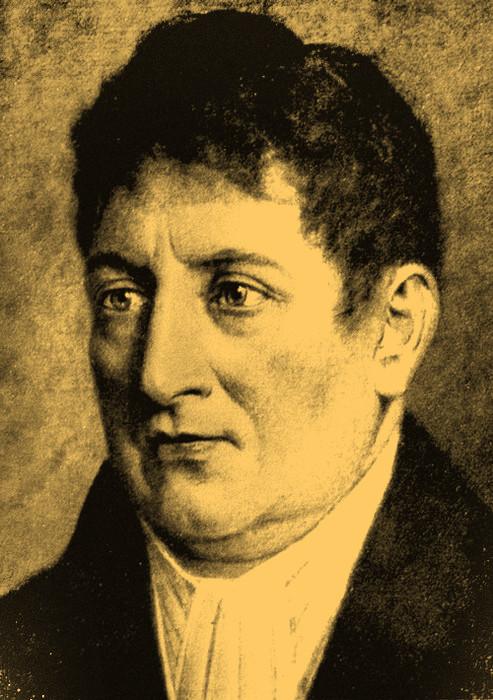
Johann Gottlieb Fichte
Although Fichte was teaching in Jena when the Schlegels arrived in 1796, he was manipulated by the Weimar administration into resigning during mid-1799 after accusations of atheism. Wilhelm Schlegel wrote to Friedrich von Hardenberg (Novalis) on 12 January 1799: “Valiant Fichte is actually fighting for us all, and if he is vanquished, the pyres have once more advanced uncomfortably close.” Despite such declarations of solidarity from various faculty members and students, Fichte moved to Berlin.
(Pencil & ink portrait, Humboldt University Library, Berlin.)
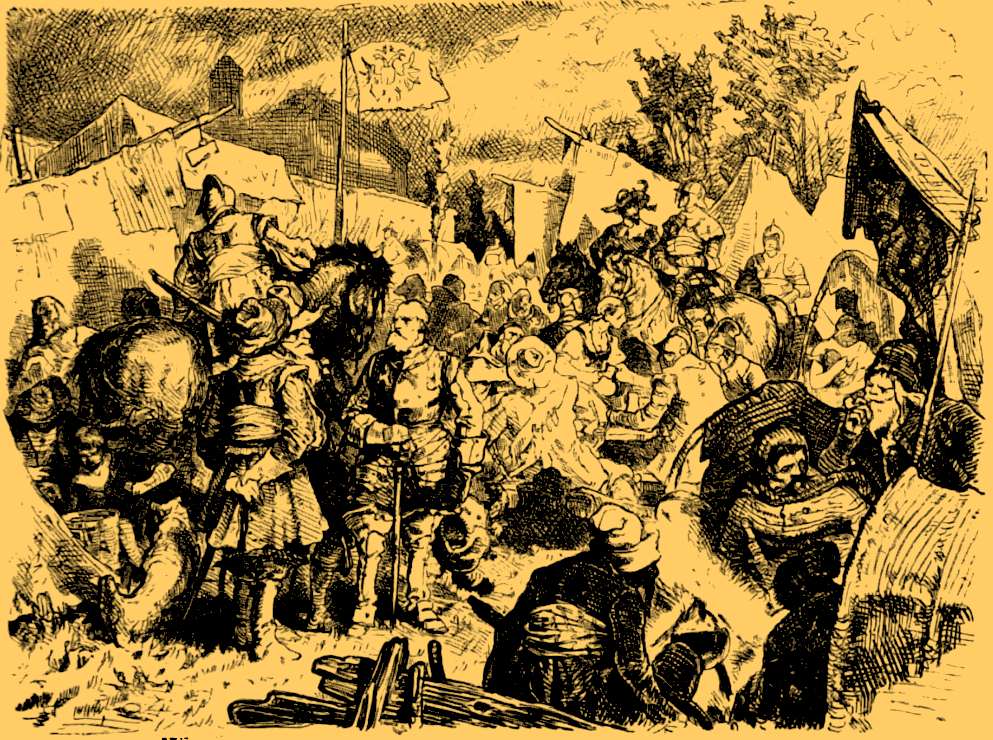
Wallenstein’s Camp
Caroline writes about the premiere of Wallenstein’s Camp in October 1798:
“Then the actors also had to be oriented so they could properly perform the prologue, in which they found everything strange and unprecedented. It depicts Wallenstein’s camp, as you know, and is composed in rhymes in the style of Hans Sachs, full of life, energy, the spirit of the age, and imaginative ideas….Nor were Göthe’s efforts in vain; the company performed excellently, it was the most consummate ensemble, with not a trace of disorganization amid the tumult. Visually, as well, it came across most superbly.”
(Illustration of Wallenstein’s camp from Schiller’s Works, ed. J. G. Fischer, vol. 2 [Philadelphia 1883], 115.)

Uttewalder Grund in Saxon Switzerland
Uttewalder Grund in Saxon Switzerland, just southeast of Dresden. Here a natural formation in the form of a rock gateway popular among visitors and artists, including Caspar David Friedrich (see next image in gallery). Caroline and Wilhelm seem to have made a day excursion to this locale with Rahel Levin, who was visiting Dresden at the time from Berlin. Friedrich Schlegel writes to Henriette Herz on 24 August 1798 from Dresden:
“Mademoiselle Levi is currently here and traveled out to the Uckewalder [sic] Grund today with Wilhelm and Caroline.”
(2009 photo and kind permission: Veit Schagow.)
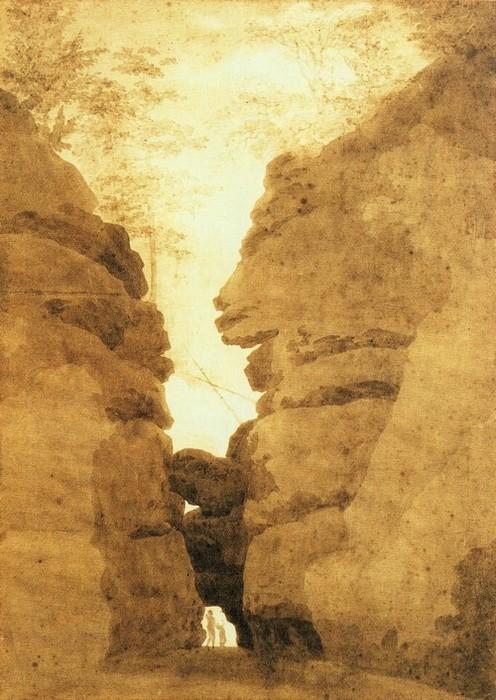
Uttewalder Grund
Uttewalder Grund much as Caroline would have seen it. Pencil/sepia drawing dated 28 August 1801 by Caspar David Friedrich, who was active in Dresden beginning in 1798 and once spent an entire week alone in the forest of Saxon Switzerland. The area also inspired other romantic artists, e.g., the painter Ludwig Richter and the composer Carl Maria von Weber, who set his opera Der Freischütz near the Uttewalder Grund.
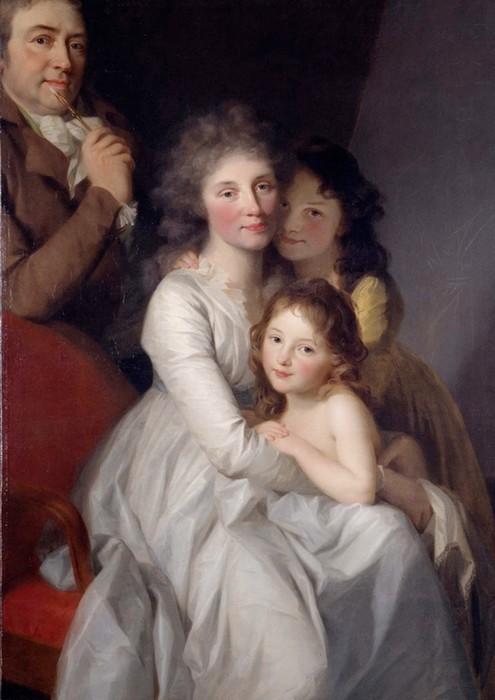
Tischbein Family
Johann Friedrich August Tischbein and his family. Tischbein did the famous portraits of Caroline and Auguste; his wife, Sophie, was likely the “Amsterdam beauty” with whom Wilhelm Schlegel was infatuated. The family spent several weeks in Weimar and Jena in the spring of 1798. Caroline writes in 1795:
“He is an excellent portraitist — I have seen paintings by him and was enraptured by the softness of his brush. She sings excellently and is allegedly otherwise quite charming as well, assuming I can trust what a common friend has told me.”
(Self-portrait with family by Tischbein himself.)

Caroline Tischbein
Caroline Tischbein, eldest daughter of J.F.A. Tischbein. She writes later in her memoirs:
“I recall one evening after a modest ball at the Schlegels’, after all the guests had departed and I happened to return to the hall to fetch something, Schlegel and his wife walked in together in considerable agitation. He was weeping, she looking extremely resolute and flushed. I quickly saw what was happening and related it to my mother. ‘They probably had an argument,’ my mother said casually, so I did not think about it further.”
(Portrait by Johann Friedrich August Tischbein; Adolf Stoll, Der Maler Joh. Friedrich Auguste Tischbein und seine Familie [Stuttgart 1923], plate 17.)
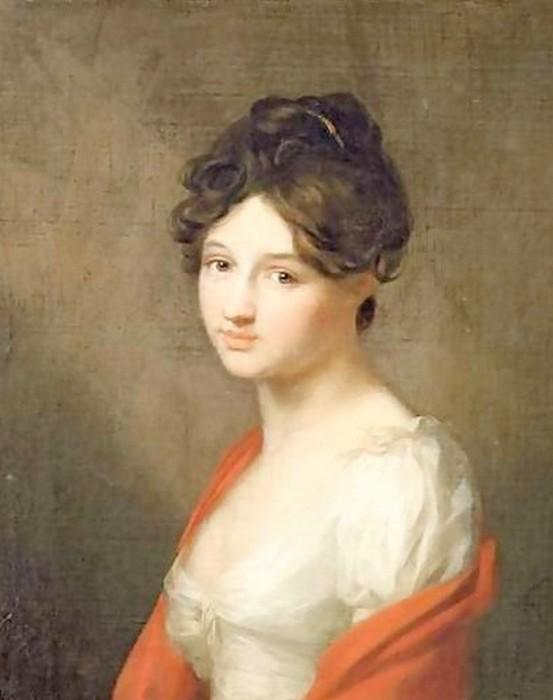
Betty Tischbein
Betty Tischbein, youngest daughter of J.F.A. Tischbein. Her sister, Caroline, describes their departure from Jena (she conflates some events later in her memoirs):
“Without quite being able to put our finger on it, the longer we stayed the more obvious it became that something was amiss in Schlegel’s relationship with his wife. He was noticeably ill-humored, and she treated him with frosty disdain. Auguste and I had a painful time saying goodbye…Auguste dissolved in tears and absolutely did not want to let go of Betty and me.”
(Portrait by Johann Friedrich August Tischbein.)

Goethe’s House in Weimar
Caroline writes in December 1796:
“Goethe gave a most charming diner, very nice, without extravagance, serving everything himself, and so adroitly that he always found time in between to describe some beautiful picture or other for us in words (e.g., he described a picture by Fuessli from the Midsummer Night’s Dream…) or to make other pleasant remarks…he has organized his surroundings with precisely the same artistic sensibility he brings to everything—except his current love affair, if his connection with Mademoiselle Vulpius is to be called such.”
(Illustration of Goethe’s house on an early postcard; image: Goethezeitportal.)
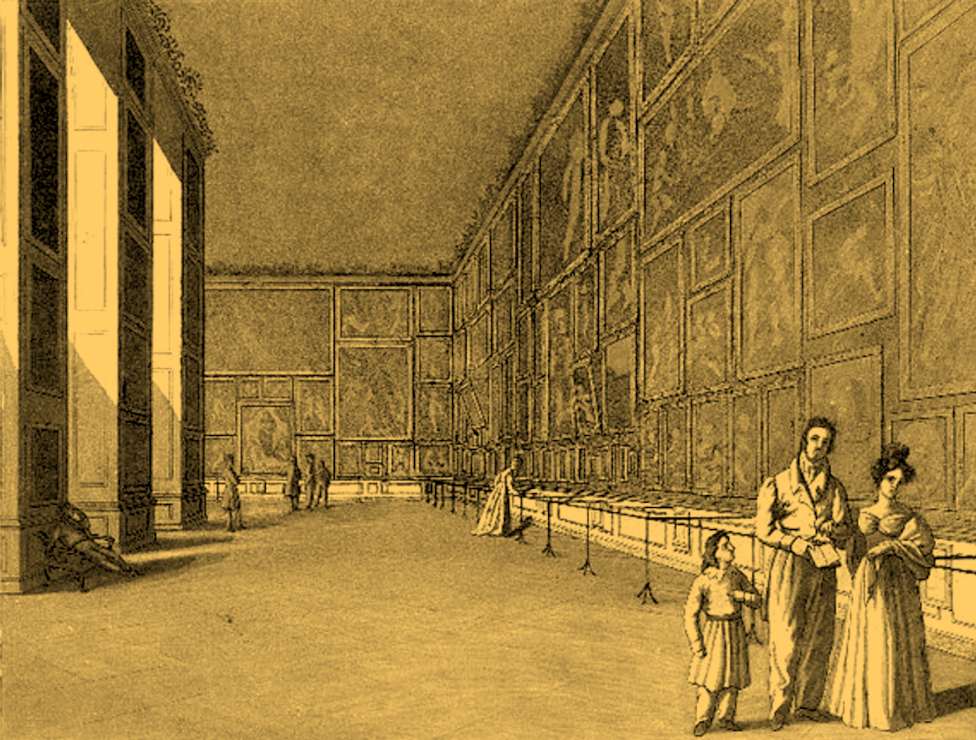
Dresden Art Gallery, 1830
Caroline and Auguste were in Dresden from the spring to the autumn of 1798. That summer, many of the later members of the Jena circle arrived as well, including Schelling, Wilhelm and Friedrich Schlegel, Dorothea Veit, Fichte, Friedrich von Hardenberg (Novalis), and Johann Diederich Gries. In a letter to Charlotte von Schiller, Dora Stock indignantly complained that “they essentially just took over the gallery and then spent almost every morning there with Schelling and Gries.”
(Innenansicht der königlichen Gemäldegalerie im ehemaligen kurfürstlichen Stallgebäude [1830].)

Friedrich von Hardenberg
Friedrich von Hardenberg: The writer Novalis, one of the most significant and well-known members of the Jena circle, who joined the Schlegels in Dresden at this time. Although he and Caroline never quite warmed up to each other, Wilhelm Schlegel could write to Goethe in September 1797, shortly after having made Hardenberg’s acquaintance:
“We find him to be an extremely interesting man, and the somewhat rapturously enthusiastic turn in his disposition brought on by the death of his beloved young lady friend, Fräulein von Kühn, has made him even more charming insofar as that disposition is countered by his extraordinarily cultivated mind, or, as it were, is balanced by it. His melancholy has plunged him into a doubly intensive engagement with the most abstract sciences, whereby his internal disquiet is betrayed by the sheer quantity and novelty of his rather strange views.”
(Portrait by F. Gareis.)

Athenaeum, vol. 1, no. 1 (1798)
The Schlegel brothers’ grand, avant-garde attempt to bring their literary, philosophical, and cultural ideas before the German reading public; here the first issue. Schiller writes to Goethe on 23 July 1798 after examining the first issue:
“What do you say to the Schlegels’ new Athenaeum, and especially to the Fragments? I, for my part, find that this impudent, determined, cutting and one-sided style makes me physically ill.”
(Scan: Österreichische Nationalbibliothek.)
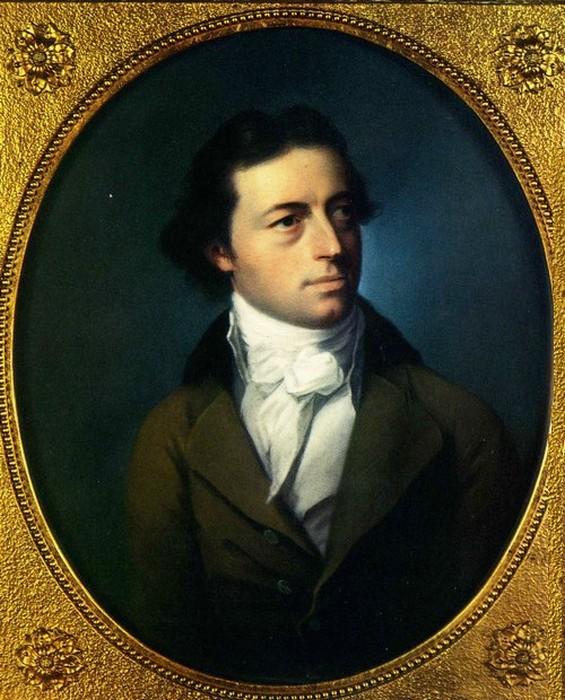
Friedrich Vieweg
Friedrich Vieweg: Berlin publisher of the first two issues of Wilhelm and Friedrich Schlegel’s periodical Athenaeum (1798). He quickly soured on the periodical’s lack of commercial success, however, and even after squirming out of the original contract regarding honorarium was disinclined to continue publication.
(Portrait: unknown artist.)

Friedrich Schlegel
Friedrich Schlegel, as Caroline and Auguste would have known him in Jena. He writes to Auguste in March 1798 from Berlin:
“Listen, I had a bit of an argument with your mother in my last letter to her. But if you notice that she is once again more amiably disposed toward me, give her my warmest regards and tell her that I really am dreadfully fond of her.”
(Pencil drawing by an unknown artist, 4 March 1798; in Briefe von und an Friedrich und Dorothea Schlegel, ed. Josef Körner [Berlin 1926], plate following p. 20.)
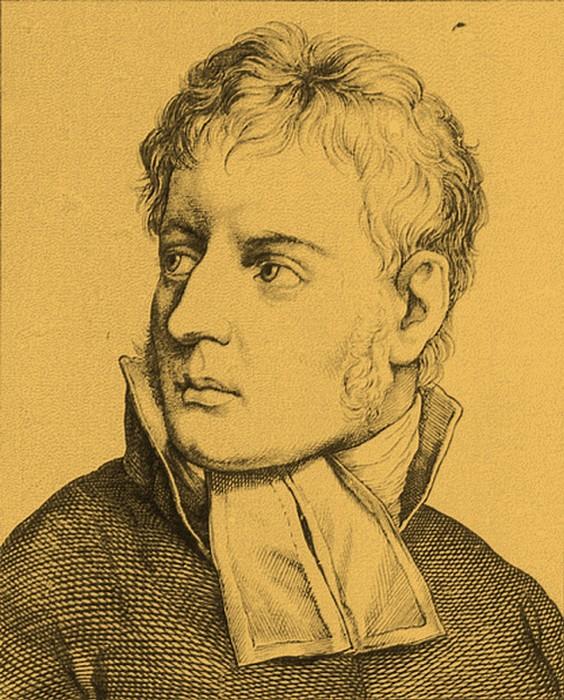
Friedrich Daniel Ernst Schleiermacher
Berlin theologian with whom Friedrich Schlegel lived beginning in late 1797. Wilhelm Schlegel writes to him in January 1798:
“Your letter would have been a total delight for me had it not so vividly aroused my concern that you are spoiling my brother in a rather unseemly fashion. How else could he have come upon the idea of engaging in his service a pen that is so considerably more witty and intelligent than his own?”
And Dorothea Veit tells Schleiermacher that Auguste had “solemnly charged me with telling you that she would love you were you not blond — that, namely, is something she simply cannot stand, notwithstanding she herself is blondissime.”
Oddly, Caroline and Schleiermacher never met in person.
(Portrait: unknown artist.)

Friedrich Wilhelm Joseph Schelling, 1801
Schelling arrived in Jena in 1798 after spending part of the summer in Dresden with members of the circle. Not always an easy personality, as amply attested by his letters to both friends and enemies especially after leaving Jena, he was nonetheless the great love of Caroline’s life.
(Portrait: 1801 by Friedrich Tieck.)

Friedrich Nicolai
Berlin publisher whom Caroline met in 1781 when he dined with her family in Göttingen but who later delighted in vexing not only the Jena Romantics, but also Schiller and Goethe. Friedrich Schlegel writes to Auguste in 1798 from Berlin:
“Nicolai, who among other things engaged in a rather comical campaign against my brother and me in the preface to his philosophical dialogues, immediately invited us to a grand evening dinner after we had jokingly made gestures of coming to visit him. His books must indeed cost him a great deal of money in this way.”
Nicolai later published a biting satire of the Romantics with the severely drawn portrait of the “Romantic coquette” Frau von C**.”
(Portrait by Ferdinand Collmann after Anton Graff [1790]; Gleimhaus Halberstadt.)
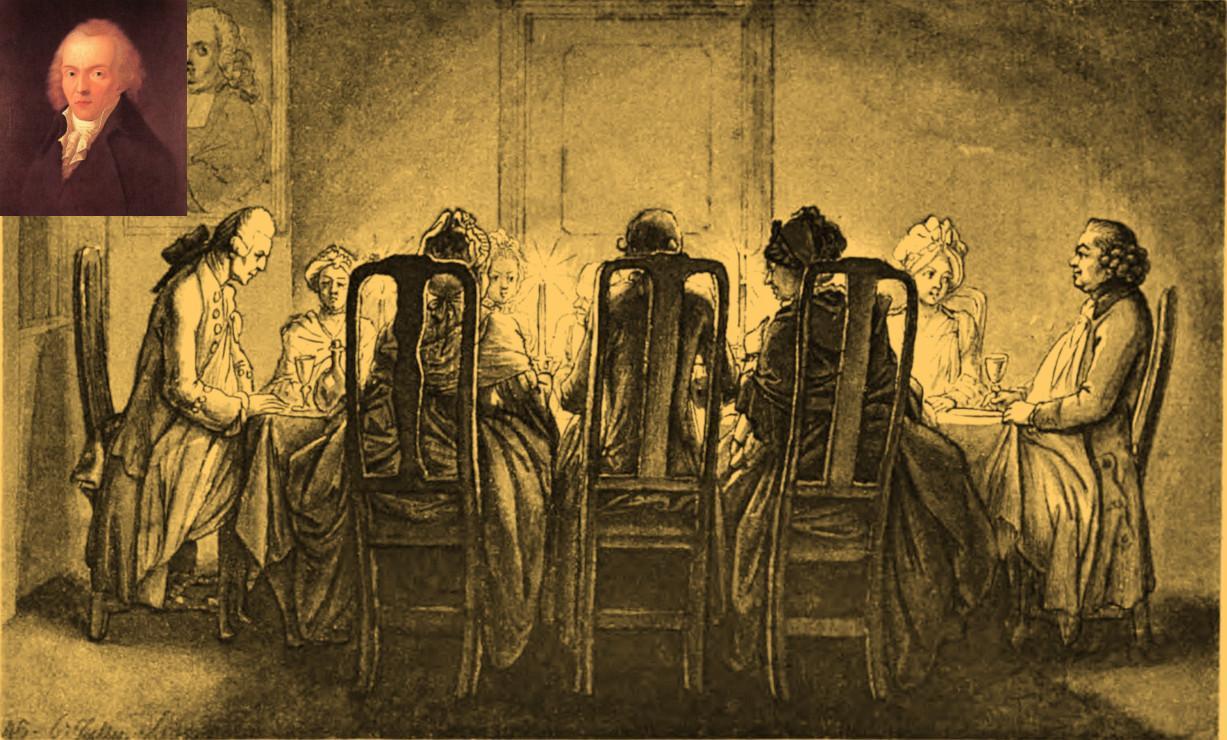
Jean Paul (Friedrich Richter) in Dresden with Caroline
This prolific and popular writer was initially a target of the Jena circle. In June 1798, he refers to Caroline as “Schlegel’s
(Portrait by Heinrich Pfenninger [1798]; Gleimhaus Halberstadt. Dinner illustration by Daniel Nikolaus Chodowiecki, Von Berlin nach Danzig: Eine Künstlerfahrt im Jahre 1773, von Daniel Chodowiecki. 108 Lichtdrucke nach den originalen in der Staatl. akademie der künste in Berlin, mit erläuterndem text und einer einführung von Wolfgang von Oettingen [Leipzig 1923], “Die Abendgesellschaft bei Pastor Bocquet,” plate 76.)

Friedrich Heinrich Jacobi
Jacobi was the initiator of the famous “pantheism dispute” involving Lessing’s alleged turn to pantheism and Spinozism late in life. Friedrich Schlegel writes to Caroline in 1798:
“My eternal opinion is now that Jacobi has cultivated the element of softness to the point of artificiality, is vain with regard to his own vanity, moreover, vain to the thousandth particle precisely about being vain.”
Jacobi will later be Schelling’s colleague in Munich in the Bavarian Academy of Sciences and Humanities.
(Portrait: Johann Peter Langer [1801].)
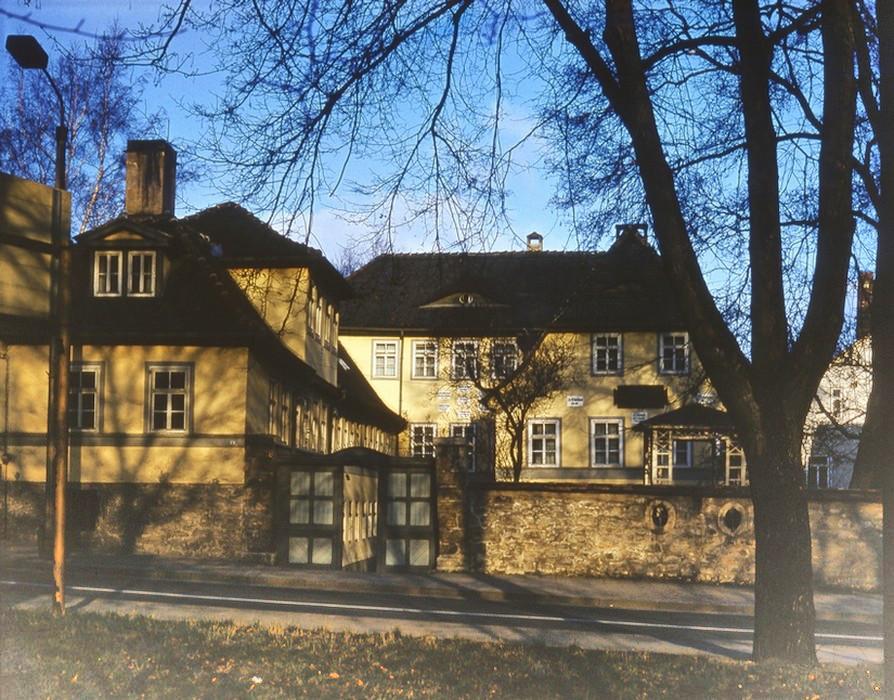
Frommann House in Jena
House of the Jena publisher Friedrich Frommann, a central gathering place for virtually everyone associated with the literary scene in Jena and Weimar. Johanna Frommann, who kept up a correspondence with Caroline after the latter’s departure from Jena, writes about the Battle of Jena in 1806:
“But my God, what a sight it was, seeing all those sweet children, huddling close together, trembling, sitting at the table in our parlor. The fire had already reached the houses diagonally across from the Seebecks. But now everyone ran forth, Buot, his people, all the officers of Oudinot who were here, Seebeck, Hegel (who was also staying with us…) to save what they could from Seebeck’s house.”
One of the things Hegel saved during the battle was the manuscript of his Phenomenology of Spirit.
(Photo ca. 1970: Stadtmuseum Jena, by permission.)

Wilhelm writes to Ludwig Tieck about angry reactions to the “Imperial Literary Informer, or Archive of the Age and its Tastes” from Athenaeum (1799) with satirical asides at their literary adversaries:
“Friedrich reports that the ‘Litterarischer Reichsanzeiger’ has caused a sensational stir in Berlin and that its insulted opponents have already raised considerable cries of zetermordio [help, murder!] against it. Caroline is plagued by such anxiety concerning the consequences that she has not yet dared even to look at it, and wherever she sees it lying around, even from afar, she immediately covers her head with her hands.”
(Toiletten Kalender für Frauenzimmer 1796; Inhaltsverzeichnis deutscher Almanache, Theodor Springmann Stiftung.)
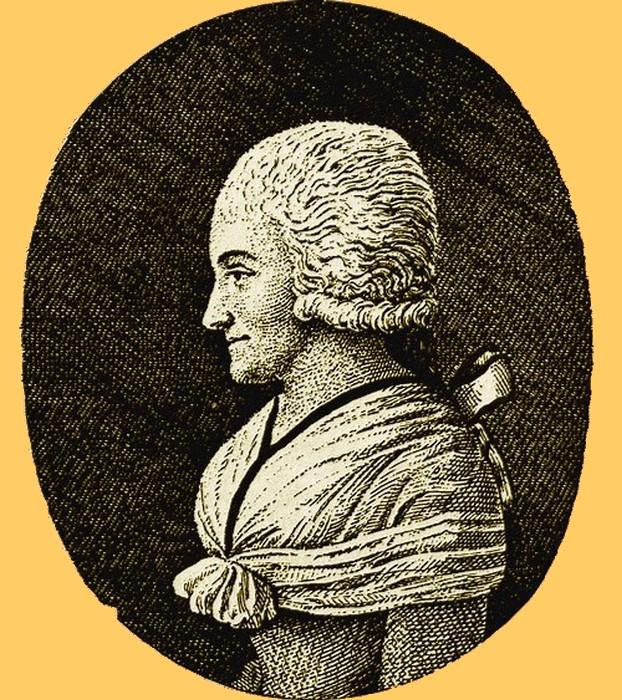
Johanne Fichte
Johann Gottlieb Fichte writes to his wife, Johanne, in October 1799 from Berlin:
“As far as Schelling and Madam Schlegel are concerned, be extremely careful and on your guard! . . . Schelling is making a bad name for himself, and that makes me very sorry. If I were present in Jena myself, I would warn him….Why does the husband not put an end to all this?”
(Portrait: frontispiece from Achtundvierzig Briefe von Johann Gottlieb Fichte und seinen Verwandten, ed. Moritz Weinhold [Leipzig 1862].)
Friedrich Karl von Savigny, who attended Wilhelm Schlegel’s lectures in Jena, writes during the summer of 1799:
“Imagine my astonishment when I entered Schlegel’s lecture on aesthetics . . . Although his eyes are quite idealistic, some destructive power can be seen in his facial features; one senses that this figure is not what it might be and what it might be if left to its natural path. He has also allegedly quite changed over the past few years insofar as he was earlier a vibrant, beautiful youth. The main cause of this change is supposedly excessive work, whose cause in its own turn is to be found in economic need.”
(Text: Adolf Stoll, Friedrich Karl von Savignys Sächsische Studienreise 1799 und 1800 (Cassel 1890), 14–15; illustration: Karl Philipp Moritz, Versuch einer kleinen praktischen Kinderlogik, welche auch zum Theil für Lehrer und Denker geschrieben ist, 2nd ed. [Berlin 1793], plate vii, no. 4.)
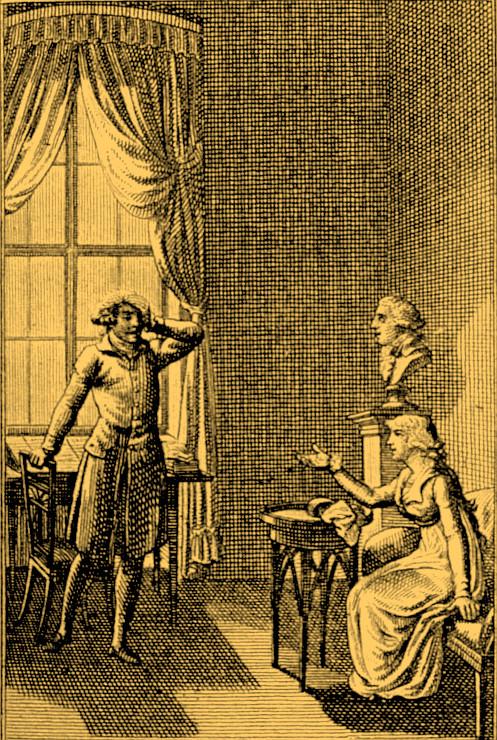
Caroline Tischbein recalls in her memoirs:
“My mother — unlike myself — soon noticed, as she later recounted, that a relationship had developed between Schelling and his hostess [Caroline] under which Schlegel suffered greatly. I can still recall that after a modest ball at the Schlegels’ home, after all the guests had departed and I myself had returned to the hall to fetch something or other, Schlegel and his wife strode in together quite agitated. He was weeping, while she looked extremely resolute and flushed with anger. I observed all this quickly and later related it to my mother. “They probably had an argument,” she responded casually, and I gave it no further thought.”
(Göttinger Taschenkalender Für das Iahr 1799.)