
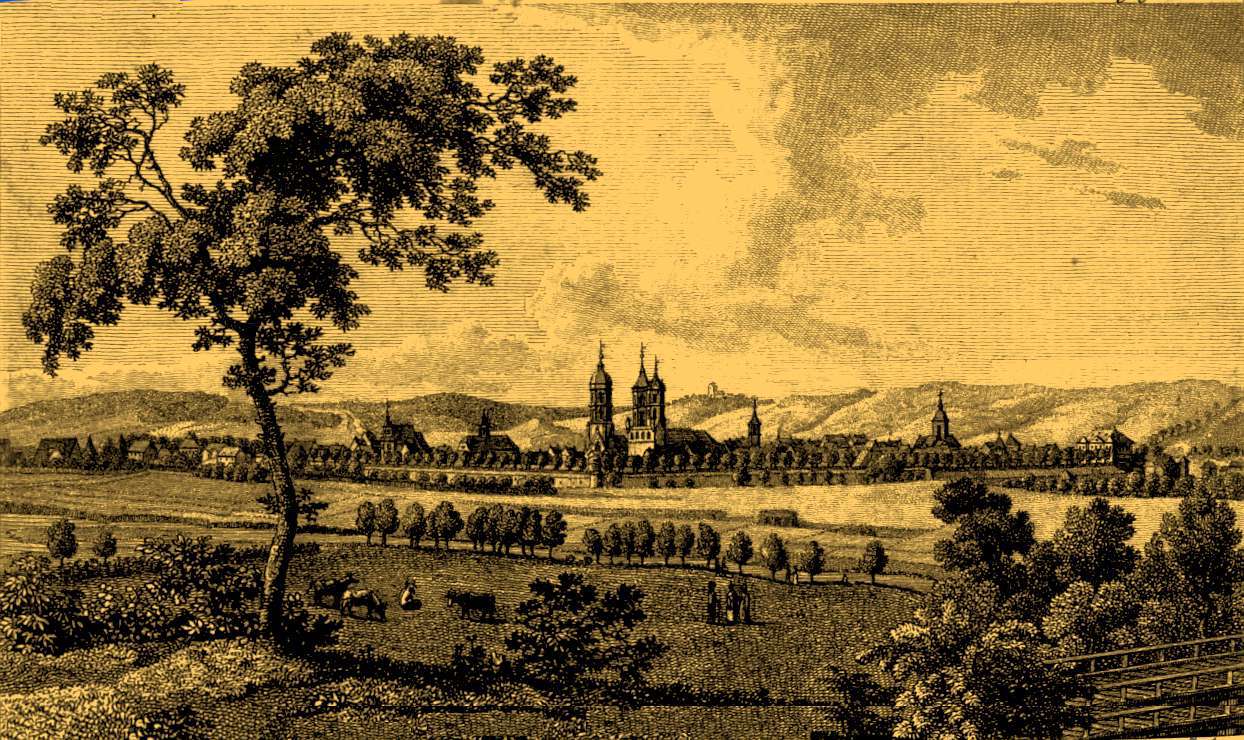
Caroline’s Hometown of Göttingen in 1801
Here the profile of Caroline’s hometown essentially as she would have known it throughout her childhood.
(Frontispiece to Christoph Meiners, Kurze Geschichte und Beschreibung der Stadt Göttingen und der umliegenden Gegend [Berlin 1801].)
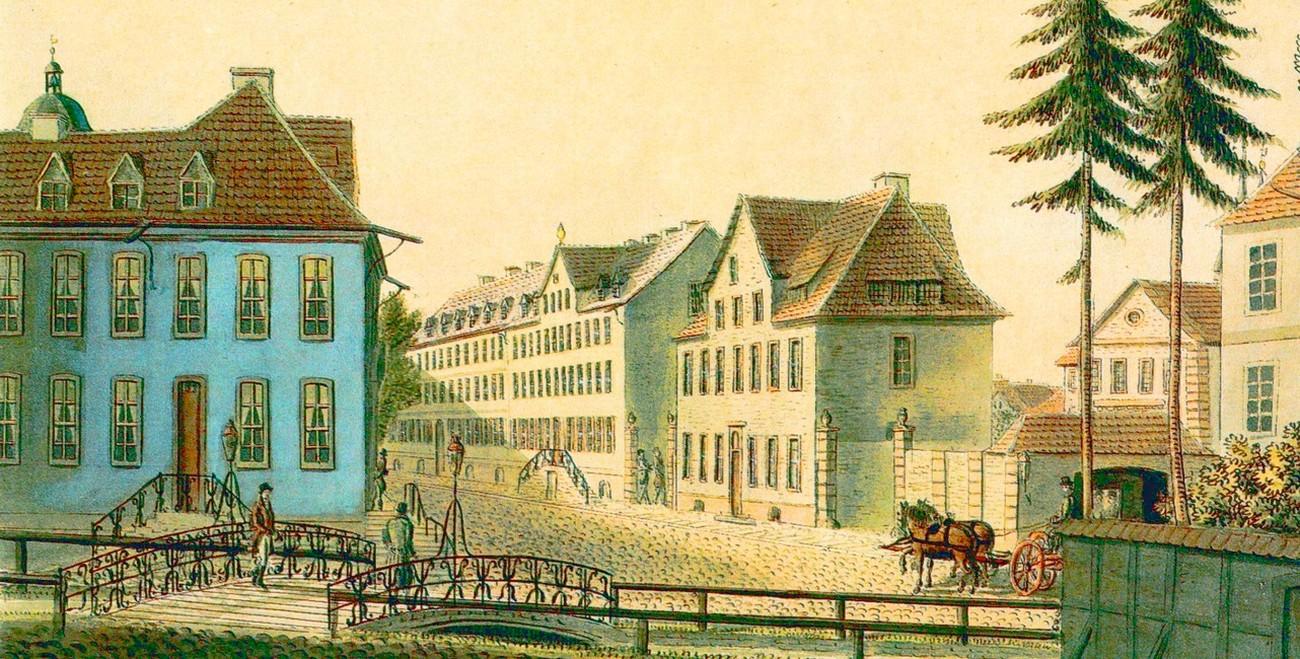
Caroline’s Childhood Home
Side view of the Michaelis house in Göttingen, Caroline’s childhood home (blue house on the left). Rooms were also rented out to students, resulting in some sticky situations with the daughters of the family. — Caroline writes in 1779: “Believe me, my dear friend, you have good reason to give thanks to God that you were not born in a university town. It is the most dangerous place for a girl, and were it up to me, I would flee and hide somewhere on earth where I could live peacefully incognito, in possession of your friendship.”
(Watercolor ca. 1820 by Friedrich Besemann.)
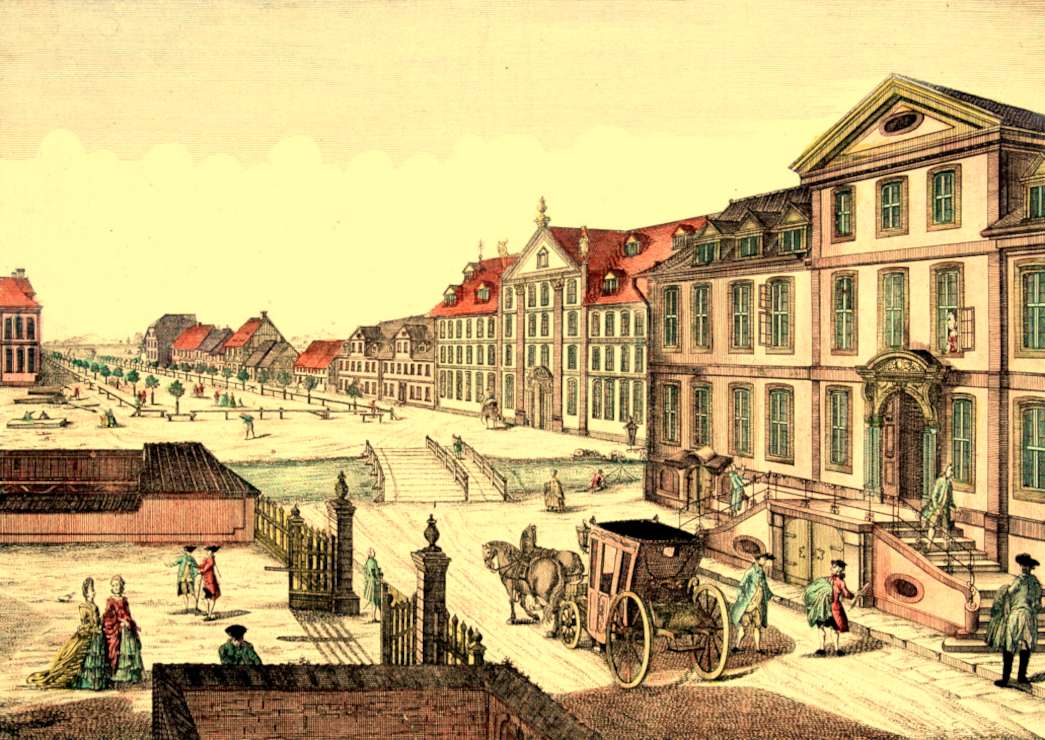
Caroline’s Childhood Home
Another view of Caroline’s childhood home from the opposite direction (house on the right with the staircase and coach in front).
(Anonymous colorized engraving, late 18th century.)
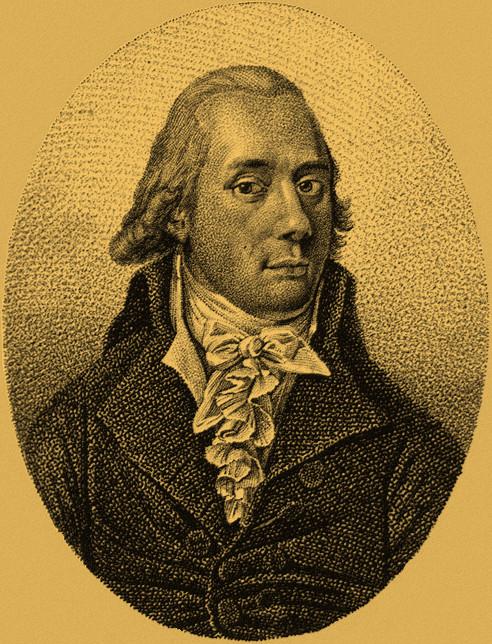
Johann Friedrich Blumenbach
Johann Friedrich Blumenbach: A Göttingen professor widely viewed as the founder of physical anthropology based on anatomical and physiological features, but also one of Caroline’s gentleman admirers in 1777 (see letter 1). As it was, however, in 1779 he married Louisa Amalia Brandes, sister of C. G. Heyne’s second wife, Georgine.
(Portrait by unknown artist.)
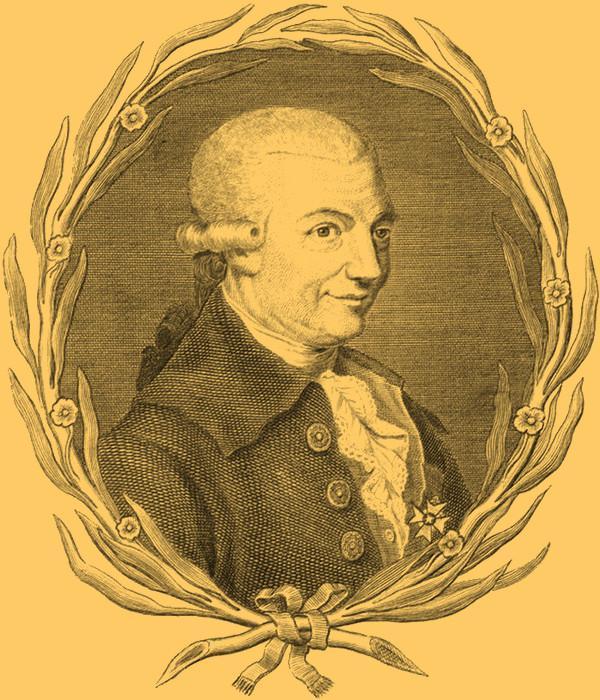
Johann David Michaelis, Caroline’s Father
Johann David Michaelis: Caroline’s father, a renowned Near Eastern scholar inclined to tell off-color jokes in class. — A student recalls: “A man of impressive physical stature and bearing, dressed as a cavalier, clothes bearing the stripes of rank, in boots and spurs, sword at his side, a pompous gait, a proud countenance betraying both grand intellect and courage, fire in his eyes, which gazed so intently that one was disinclined to look directly at him for long—thus did he stride into the auditorium, the Bible under his arm.”
(Portrait by unknown artist.)
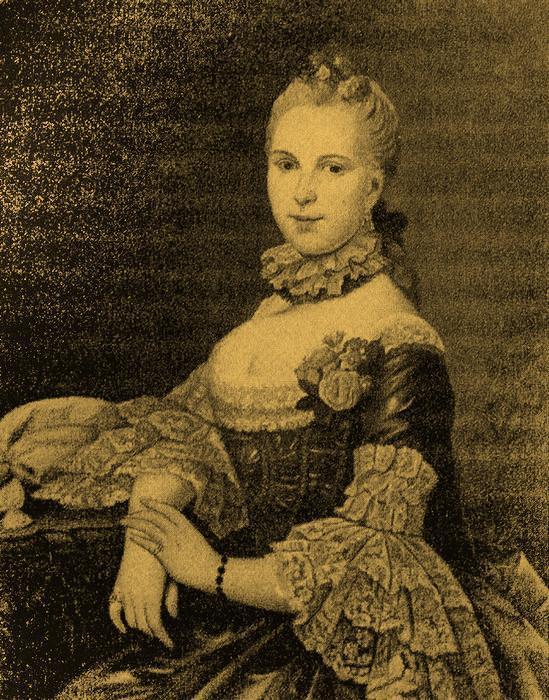
Caroline’s Mother
Louise Philippine Antoinette Michaelis, née Schröder: Caroline’s mother. — Caroline writes in 1778: “Only think how things would be for me if I did not have as cheerful a temperament as I indeed do! Though I have many reasons to be glum, I forget them so easily, console myself as best I can, and let God take care of the rest. Is it not injury enough that my mother gives preference to my siblings over me?”
(Portrait: unknown artist; from Ida Hakemeyer, Kleines Universitätsmosaik [Göttingen 1960].)
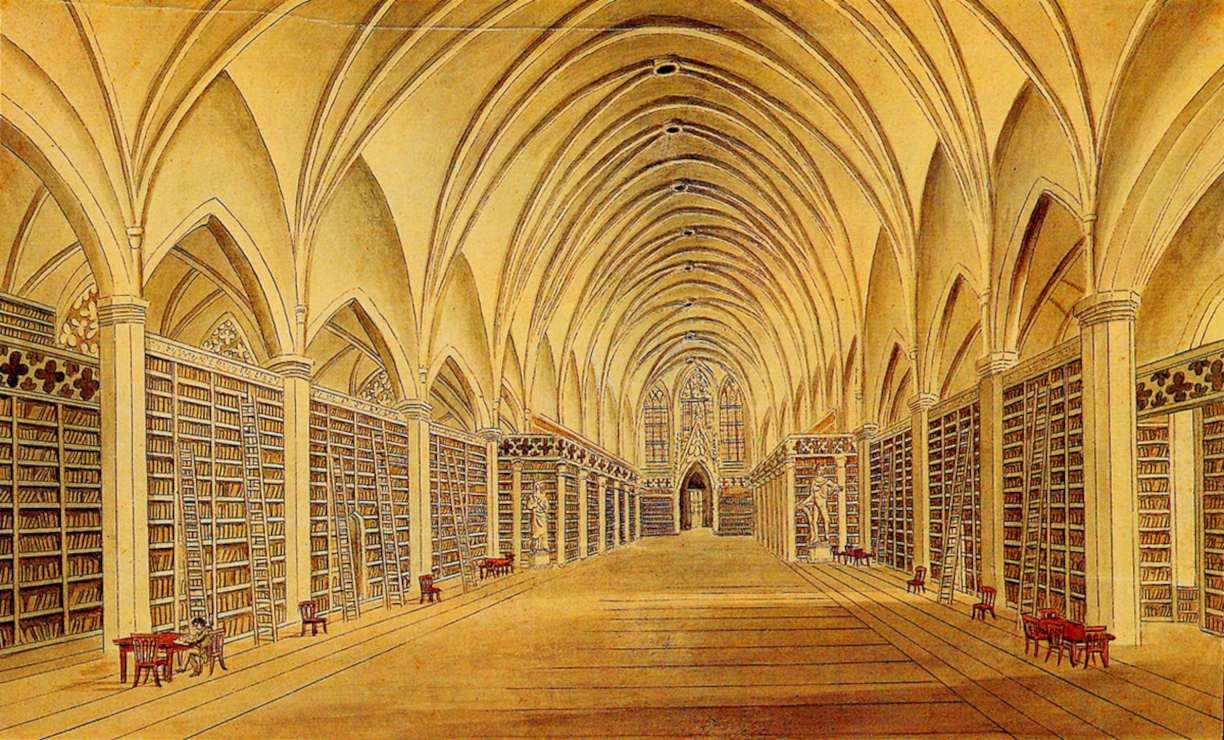
Grand Reading Room, University Library
The grand reading room of the Göttingen university library, ca. 1820, originally housed in the former Dominican monastery, the Church of St. Paul, located just around the corner from Caroline’s childhood home.
Its director 1761–63 was Caroline’s father, and during Caroline’s life it was then Therese Heyne’s father, Christian Gottlob Heyne, who also found a position in the library for one of Caroline’s early correspondents, Friedrich Ludwig Wilhelm Meyer. Caroline’s father, of course, enjoyed essentially unlimited access to the library’s holdings.
(Illustration: Friedrich Besemann, 1820.)
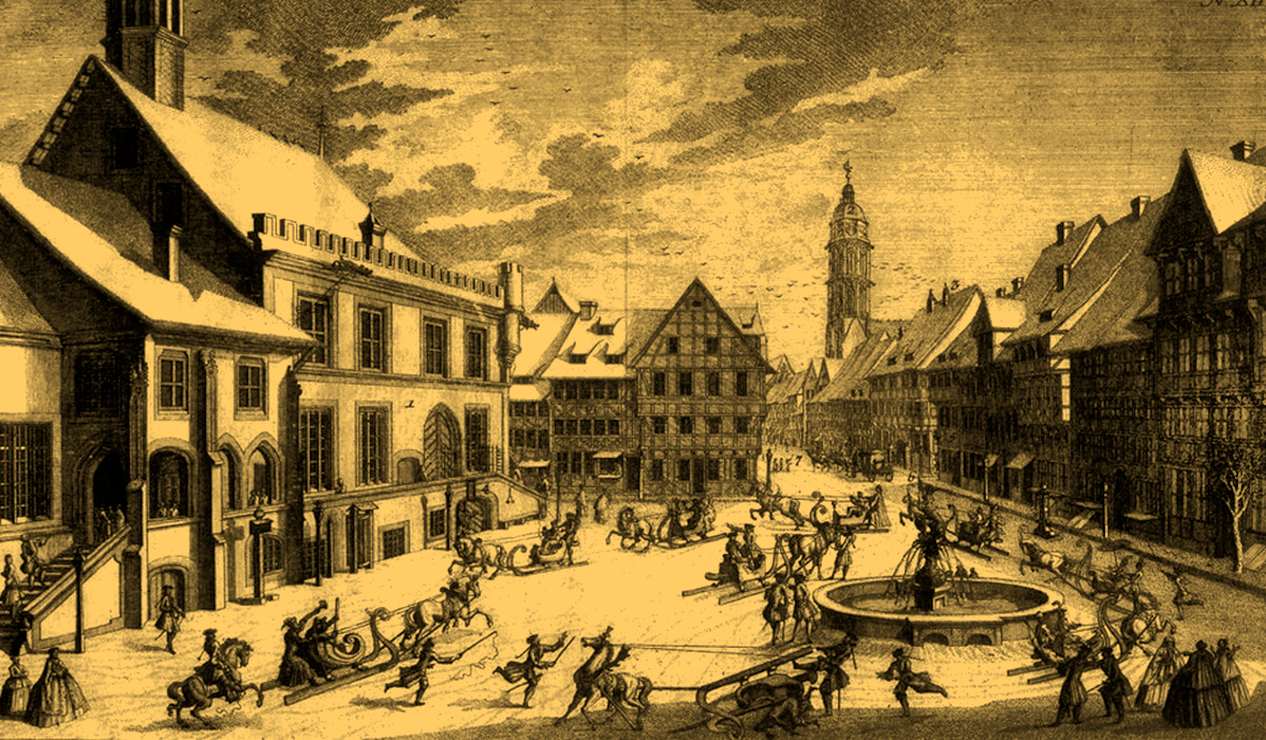
Göttingen Market Square 1747
Caroline was born in 1763 into the family of one of the most prominent professors in Göttingen at the time. She and several of her friends — Dorothea Schlözer, Therese Heyne, Meta Wedekind, and Philippine Gatterer — are known as the “University Mamsells.”
(Engraving by Georg Daniel Heumann.)

Undated Silhouette of Caroline as a Young Woman
Caroline as a young woman in Göttingen, one of the five “University Mamsells.” — Writing about an awkward early love interest: “But away with such memories! . . . Why should I, in the blossom of life, make myself so anxious? I want to enjoy my springtime—being but 16 years old and already getting gray hair from worry and care? that is not my thing.”

Meta Wedekind
Sophie Margarethe Dorothea Wedekind, “Meta”: One the five Göttingen “University Mamsells” and someone who reappears frequently throughout Caroline’s life. — Meta writes after Caroline’s death in 1809: “Oh, my Caroline! You in whom the earlier days of my youth, but in a more beautiful reflection, stood before my soul, days that gently preserved all the ties with my past that are so precious to the human heart. You, my beloved!”
(Portrait: silhouette by Gregorius Franz von Berzeviczy, in Gregorius Franz von Berzeviczy, Göttinger Profile zwischen Aufklärung und Romantik, ed. Erika Wagner and Ulrich Joost [Neustadt 2011].)

Therese Heyne
Therese Heyne: Caroline’s early friend and rival and one of the “University Mamsells.” — Caroline writes in 1781: “She talks incessantly and always with considerable wit, and for precisely that reason some find her intolerable, while others are bedazzled. Even though on the whole she is not particularly well liked, she does have various open admirers . . . Despite all her good principles, however, there is much that is false about her.”
(Portrait: unknown artist; Göttingen SUB, Cod. Ms. Th. Huber 7/7.)

Gotha
The town of Gotha from a distance, where Caroline attended boarding school in 1776–78. Her sister Lotte would later attend the same school. — Caroline writes in 1783: “Indeed, even if it were more serious and someone secretly whisked me off to Gotha in a chaise, I would not resist. Sometimes I long for Gotha with such melancholy, not necessarily for the pleasantness of the place itself, but simply to see my friends, to see you again, and to be able to thank you for your lasting friendship with the kind of tenderness and warmth no quill can express, and where a glance, an embrace always says so much more than even a thousand words.”
(Ludwig Bechstein, Thüringen, Das malerische und romantische Deutschland: In zehn Sektionen 3, 2nd ed. [Leipzig 1847], plate following p. 152.)
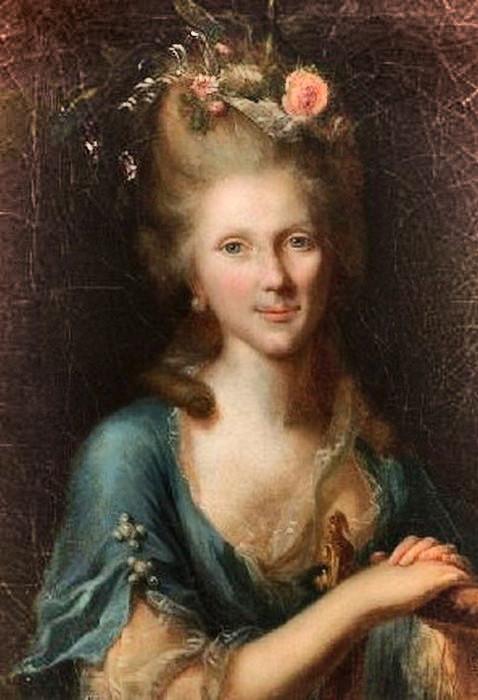
Philippine Gatterer
Philippine Gatterer: Poet and one of the “University Mamsells.” — Caroline in 1780: “our Göttingen muse, Mlle. Gatterer . . . Tischbein painted her as a muse in a sky-blue robe, leaning on a lyre, and with a garland of laurels and roses in her hair. He sent one of the pictures to her here…the second he kept for himself, and the third has been put up in the Cassel art gallery.”
(Portrait by J. H. Tischbein [1780].)
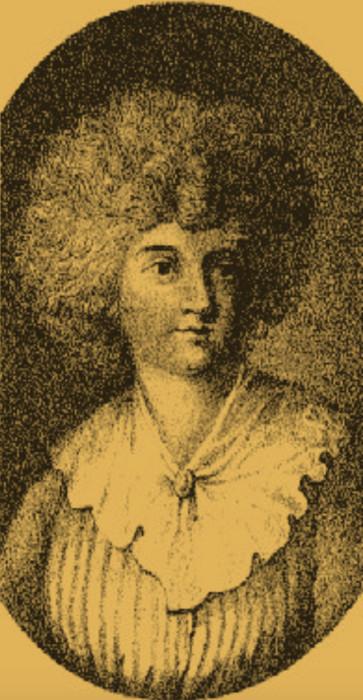
Dorothea Rodde, née Schlözer
Dorothea Schlözer: One of the “University Mamsells,” daughter of professor Schlözer, and the second woman (after Dorothea Erxleben) to be awarded a doctorate at a German university. — When she was eleven, she accompanied her father on a six-month journey to Italy. Later, as a married woman, she signed her name as “Rodde-Schlözer,” possibly the first use of the double surname in German.
(Portrait: ca. 1790; Universitäts- und Staatsbibliothek, Göttingen.)