
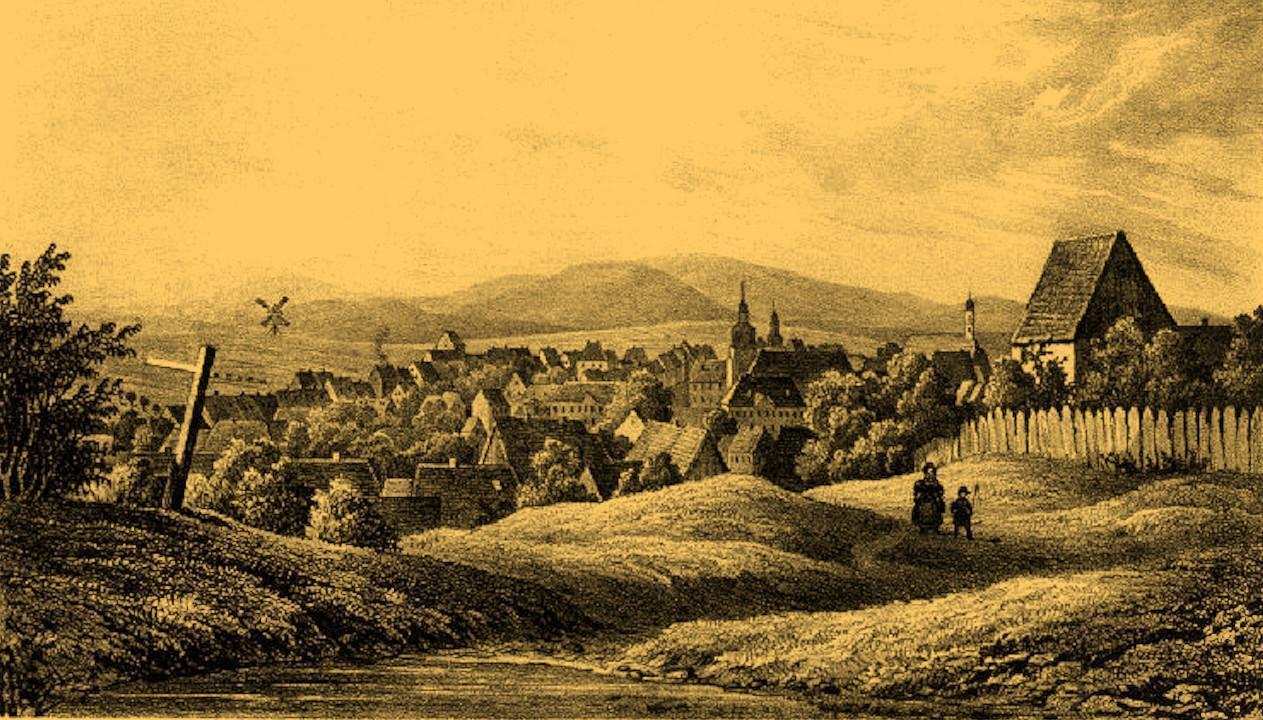
Clausthal in the Harz Mountains, 1841
Clausthal in 1841 with its signature windmill and the steeple of the Market Church of the Holy Spirit at right. Caroline and Franz Wilhelm Böhmer arrived in June 1784; it was a stark and sobering change for Caroline, who had grown up in one of Germany’s foremost university towns.
(Lithography of Clausthal by Eduard Pietzsch [1841].)
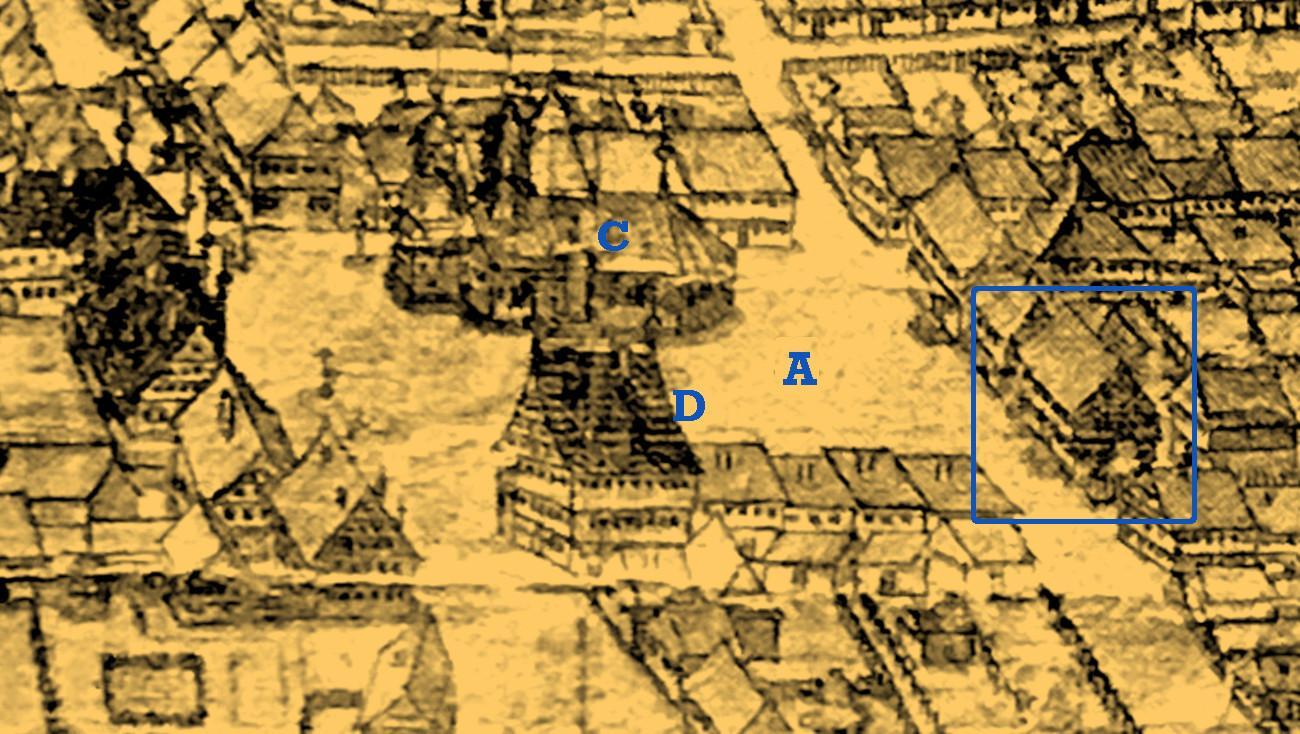
Caroline’s Clausthal residence, 1661
Caroline and Franz Wilhelm Böhmer moved into the first floor of the service residence reserved for the town physician on the east side of the market place (“A”), near the town hall (“D”), and behind the Church of the Holy Spirit (“C”) (today: An der Markt 5; the house burned in 1844). They later moved into the apartment upstairs, with which Caroline was better pleased. Caroline’s arbor garden, which she mentions in letter 44, is the area enclosed by a fence on the south side of the house.
(Adam Illing, Der Marktplatz von Clausthal im Jahre 1661, repr. in the Allgemeiner Harz-Berg-Kalender für das Schaltjahr 1928 [Clausthal 1928], 43.)
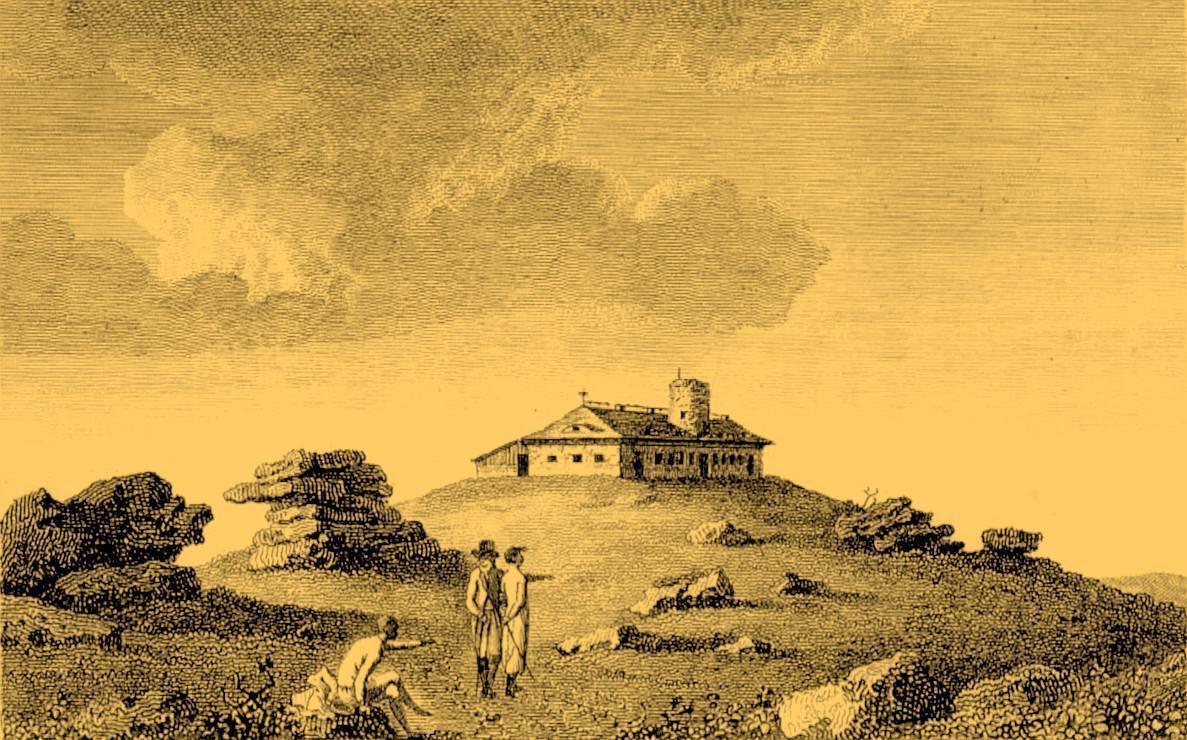
The Brocken summit in the Harz Mountains
Caroline writes from Göttingen just before her marriage, anticipating a visit from Luise Gotter to her in her new home in Clausthal in the Harz Mountains:
“Your journey to our area would be the easiest thing imaginable . . . and your husband must keep his promise to me to make that journey with you one day. We shall also build him a little hut on the summit of the Brocken with a view of the sunrise.”
(Göttingisches Taschenbuch zum Nutzen und Vergnügen für das Jahr 1804; Inhaltsverzeichnis deutscher Almanache, Theodor Springmann Stiftung.)
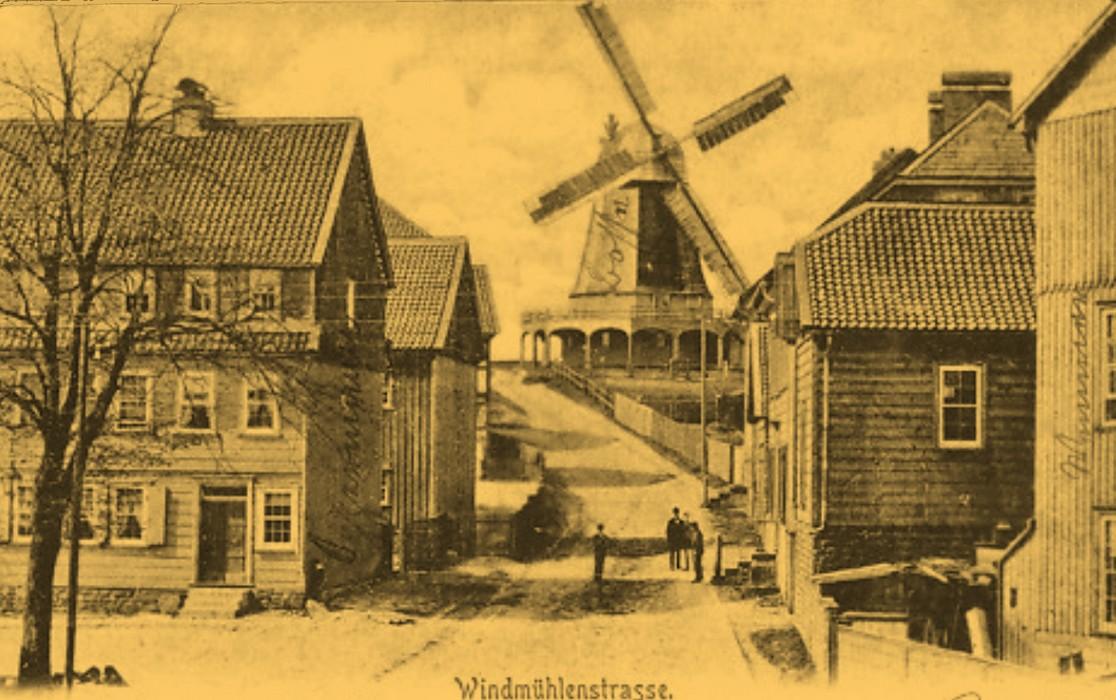
Clausthal, 1902
Clausthal with its signature windmill that appears even in extremely old (1650) illustrations of the town.
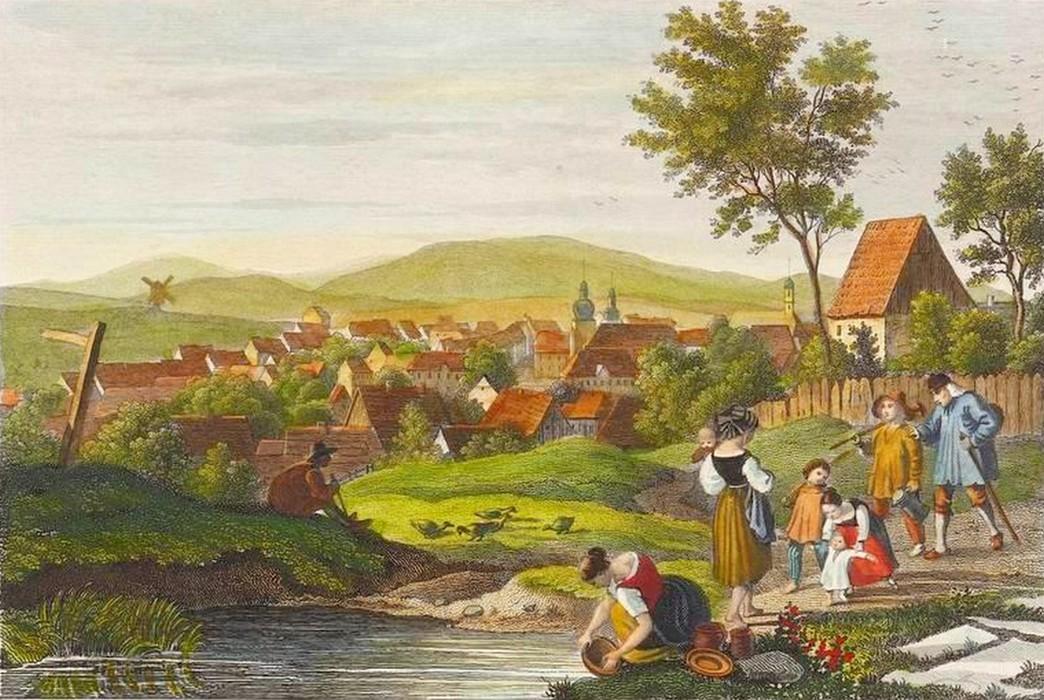
Clausthal 1838
Clausthal im Harz, ca. 1838: Caroline and Franz Wilhelm Böhmer lived in a house essentially adjacent to the Church of the Holy Spirit at the center of this illustration.
(Adolf Dworzak, after Adrian Ludwig Richter, Clausthal: Historische Ortsansicht, from Wilhelm Blumenhagen, Wanderungen durch den Harz [Leipzig 1838].)
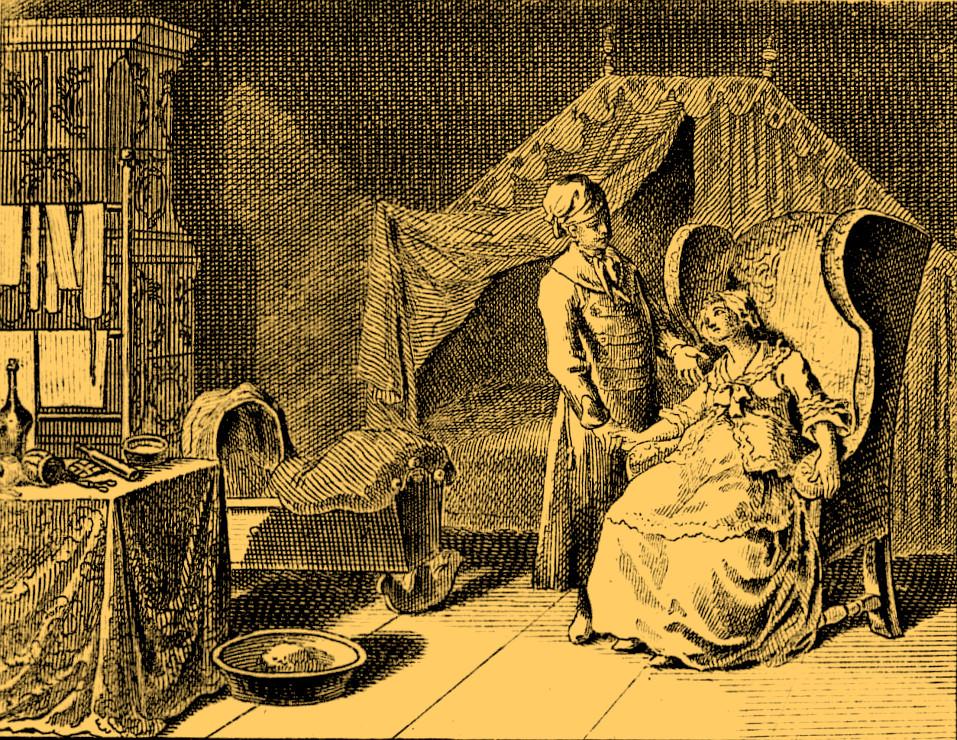
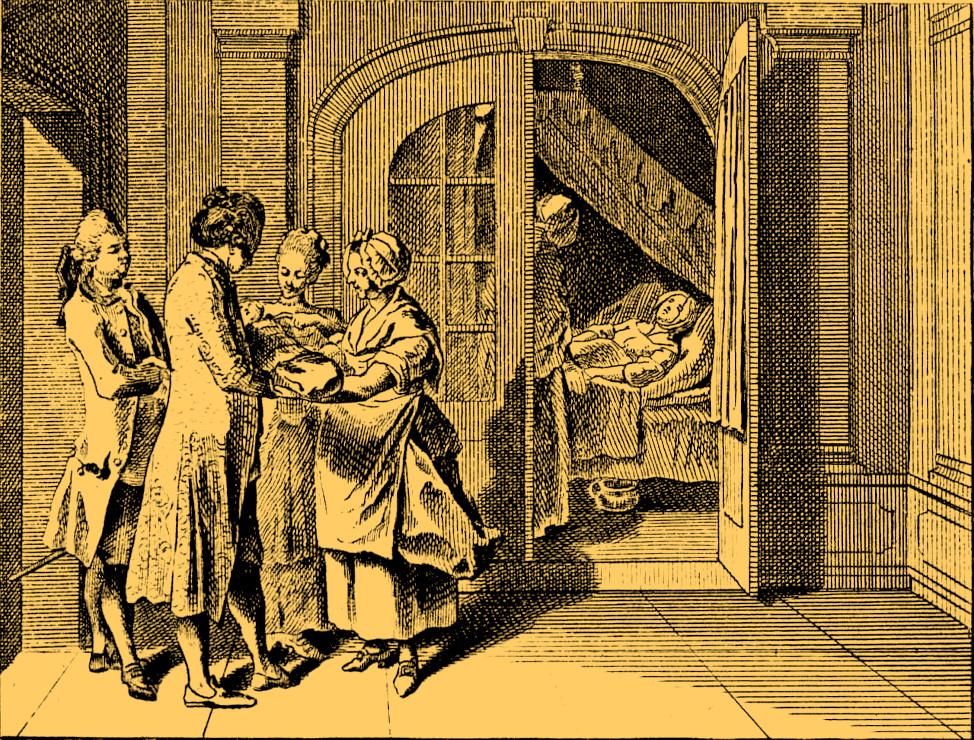
Awaiting Auguste’s birth on 28 April 1785.
Caroline writes on 22 June 1785:
“Closed up in my room here for two full weeks against the foul weather and the fear of contagion, I experienced in anticipation not only certainly all the joys, but also all the afflictions of motherhood — until at last the day came that would make me, too, a mother, albeit amid a thousand prolonged sufferings and fearful anxiety.”
(Daniel Nikolaus Chodowiecki, Kupfersammlung zu J[ohann] B[ernhard] Basedows Elementarwerke für die Jugend und ihre Freunde: Erste Lieferung in 53 Tafeln. Zweyte Lieferung in 47 Tafeln von L bis XCVI [Leipzig, Dessau, Berlin 1774], plate 29a.)
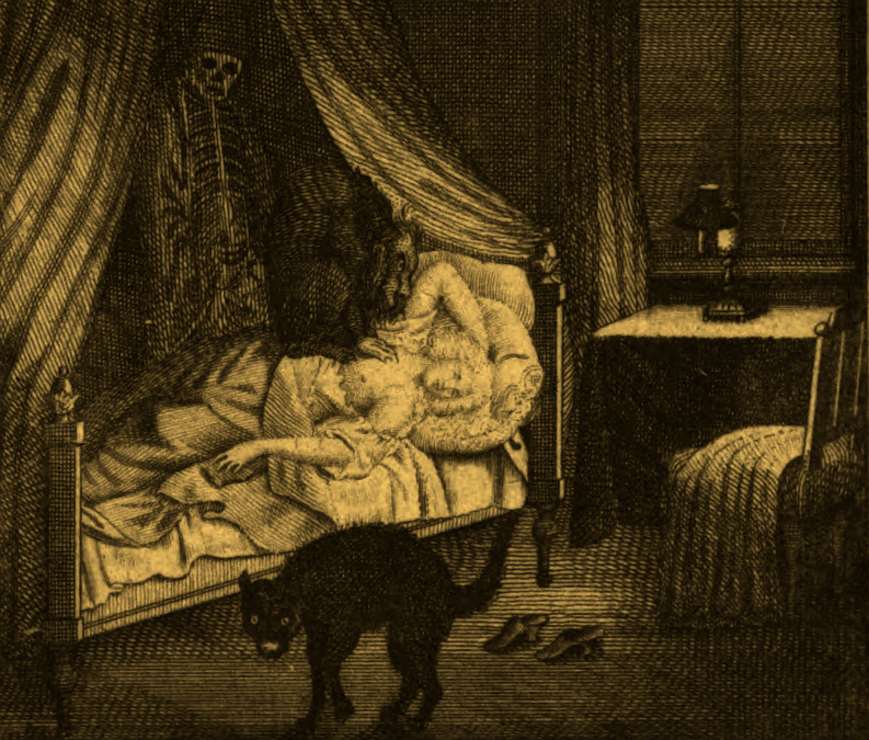
Effects of ghost stories in childbed.
Caroline writes to F. L. W. Meyer later:
“You sent me the [Horace Walpole’s gothic novel] Castle of Otranto when I was in the Harz — do you still remember? — before my first or second childbed, and were vehemently reproached for having sent something as frightening as this Burg to a woman in my condition.”
(Frontispiece to Carl von Eckartshausen, Sammlung der merkwürdigsten Visionen, Erscheinungen, Geister- und Gespenstergeschichten, nebst einer Anweisung dergleichen Vorfälle vernünftig zu untersuchen, und zu beurtheilen [Munich 1792].)
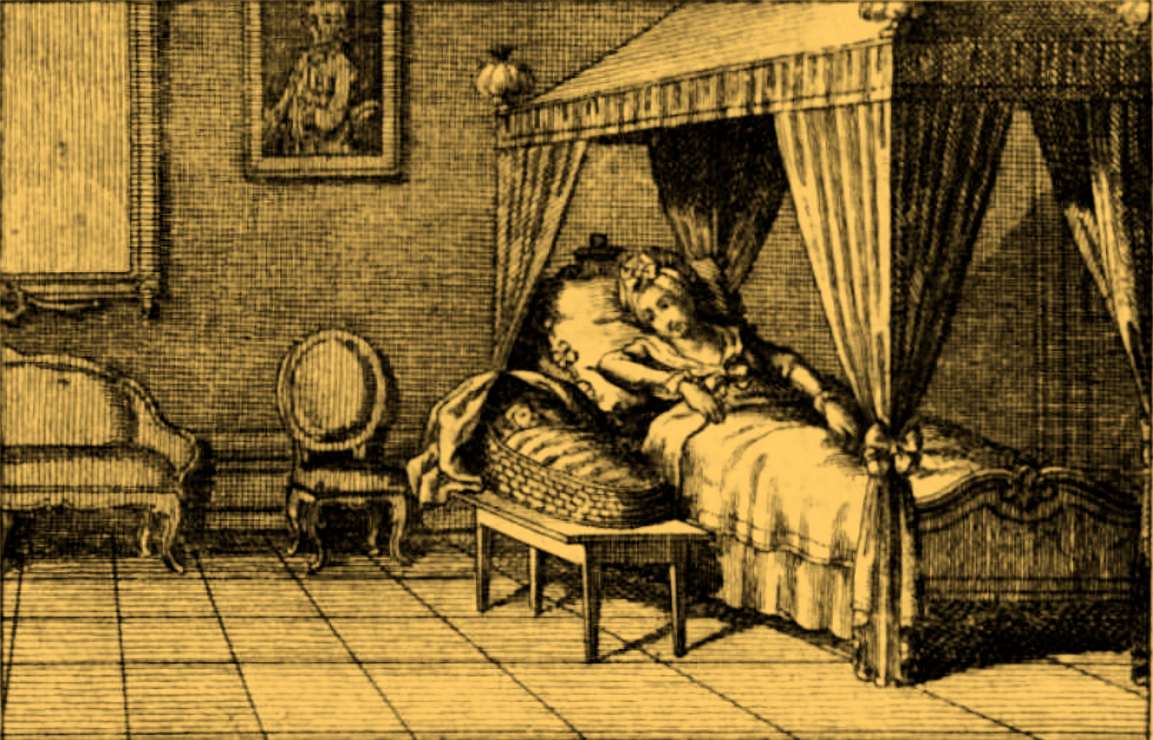
After anticipating having a baby boy she and her husband would name “Gustav,” Caroline instead gives birth to Auguste, who ultimately would play such a key role in this correspondence. Caroline writes on 22 June 1785:
“‘Gustav’ turned into an ‘Auguste,’ and this charming creature silently requests through her goodness and beauty that everyone be satisfied with her after all; and as far as I am concerned, I would much prefer a daughter — for whom a mother’s heart doubtless beats more sympathetically and with whom I can certainly begin having a relationship much earlier.”
(Raphael Johann Steidele, Verhaltungsregeln für Schwangere, Gebährende und Kindbetterinnen in der Stadt und auf dem Lande [Vienna 1787].)
Family visits after Auguste’s birth.
Caroline writes on 22 June 1785:
“During this time my parents came for a visit, as did the young Meyers on their way to Hamburg. There has certainly been no lack of physicians of all sorts for this poor sick woman, and if love could heal, I would surely have been able to get up and walk about again as if moved by a miracle.”
(Daniel Nikolaus Chodowiecki, Kupfersammlung zu J[ohann] B[ernhard] Basedows Elementarwerke für die Jugend und ihre Freunde: Erste Lieferung in 53 Tafeln. Zweyte Lieferung in 47 Tafeln von L bis XCVI [Leipzig, Dessau, Berlin 1774], plate 29b.)
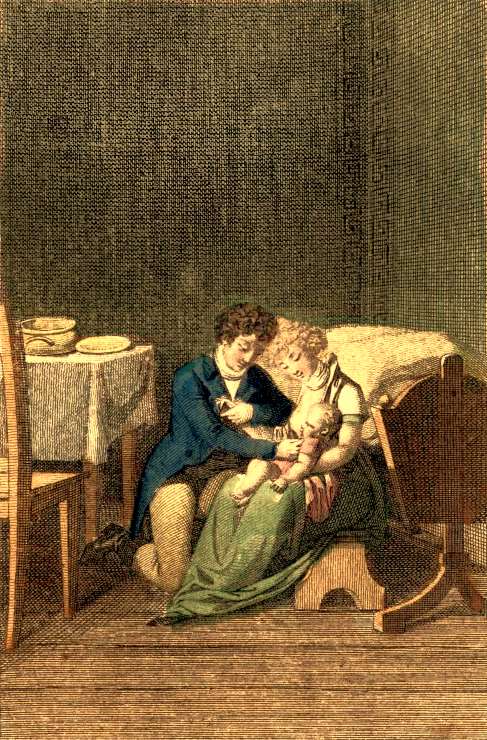
Couple with their first child
[Gynäologie: Erstes Supplement oder XIV. Bändchen: Die Kunst mit Weibern glücklich zu sein; Inhaltsverzeichnis deutscher Almanache, Theodor Springmann Stiftung.]

Auguste Böhmer
Auguste Böhmer (“Auta,” “Gustl”; born 28 April 1785). Caroline writes in 1794:
“Auguste is a dear, happy girl — one who pleases others greatly with her resolute and direct answers and with the lightness of her actions and being.”
Caroline’s first daughter is one of the most important persons in this correspondence, from soiling her bed as a child to taking lessons in Greek from Friedrich Schlegel as a teenager. She writes an epistolary poem to Friedrich in 1799:
“You can see how totally crazy I’ve got / Full of sillies that threaten quite to besot. / The reason? ‘Tis simple: Herr Faust have I read, / Whose spirit now rules in my own spirit’s stead.”
(1798 oil portrait by J. F. A. Tischbein; Otto Cramer Family Archives, courtesy of Martin Reulecke.)
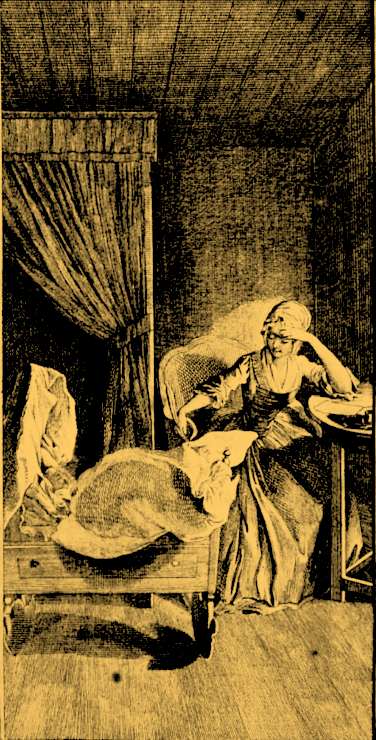
Caroline writes to her sister Lotte in July 1785, when Auguste was still an infant:
“Lotte, now as before the child is still an angel; though she does now have a pronounced snub nose, she is absolutely no less charming.”
(Johann Timotheus Hermes, Sophie’s Reise von Memel nach Sachsen, vol. 3 [Leipzig 1778], illustration following p. 558.)
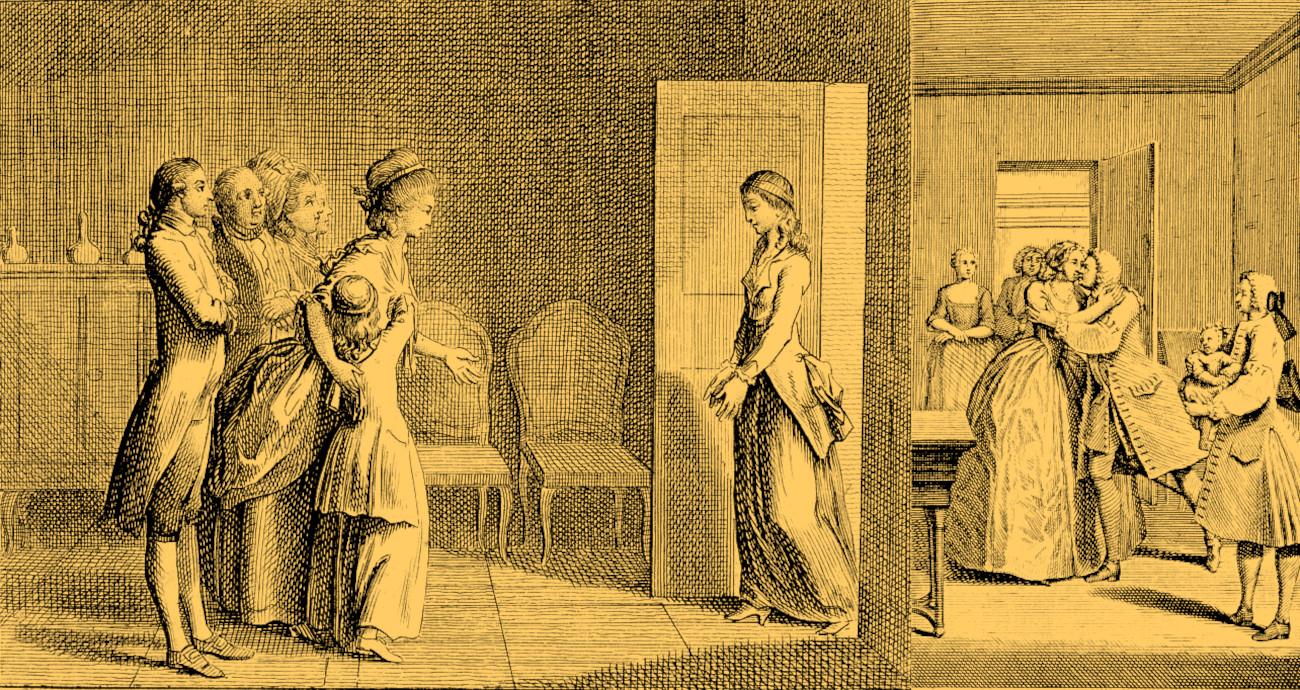
The daughter’s arrival home.
On 13 July 1785 Caroline writes home from Clausthal anticipating her first visit home to Göttingen since having left the previous summer. Auguste, barely two months old, would accompany her:
“Tomorrow I will say — the day after tomorrow! And the day after tomorrow I will say — tomorrow, and then — today I will be with all of you!”
Following the visit, she writes home again on 25 August:
“Memories! Memories! You fill my heart with bliss! Oh, how true can a plattitude be at the right time.”
(Pieter Yver, Familienbesuch [1736]; Daniel Nikolaus Chodowiecki, Ankunft der Tochter bei der Familie [1792]; Herzog Anton Ulrich-Museum; Museums./Signatur DChodowiecki-Kopie Z AB 3.14.)
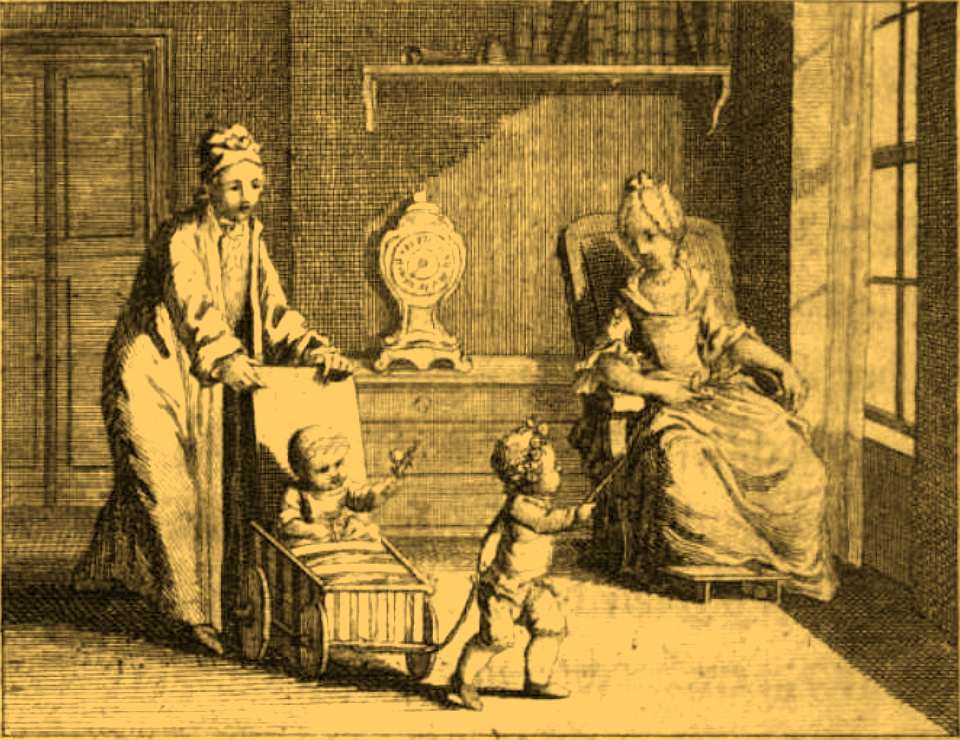
Beginning in April 1787, Caroline and Franz Wilhelm Böhmer were the parents of not one but two very young daughters: Auguste and Röschen.
(Johann Caspar Lavater, Geheimes Tagebuch, 2 vols. [Leipzig 1771, 1773], 2:344.)
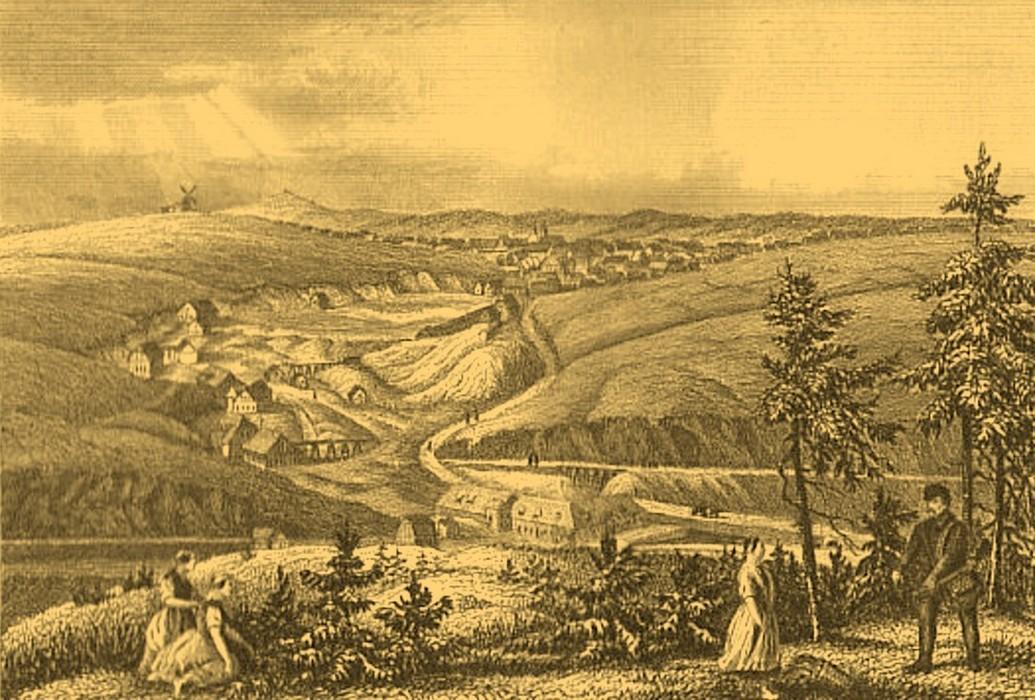
Clausthal and surrounding area, ca. 1850
Clausthal in the Upper Harz Mountains (in the distance with the church and, to the left, windmill), here with a view demonstrating the surrounding topography. Caroline lived here from 1784 till 1788 with her first husband, Franz Wilhelm Böhmer, who was the town physician. Her two daughters, Auguste and Therese, were born here. Caroline in 1784:
“Today I again paid some visits, to Cousin Schichtrupp, among others; his wife — a fine piece of livestock — looks like a human tam-‘o-shanter. He is horribly ignorant. He once heard about the American war but did not know whether Hansel or Gretel was fighting it. At the Prauns’s house…Madam von Reden was quite sweet, adorned from head to toe like a royal maternity bed. Bouche close!”
(Anonymous, Clausthal vom Einersberge Aus [ca. 1850].)

Maria Theresia Paradis
Lotte Michaelis, Caroline’s sister, writes to Caroline about a private performance in Göttingen by this blind Viennese singer in 1785:
“Then suddenly Mademoiselle Paradis began to play and to sing a song that always drives me crazy for at least an hour afterward — and as soon as I heard it, I jumped up, ran over to her — Louise right behind me — and now she began to laugh and said she had arranged with Gerwin and Madam Less to sing exactly this song, and they had all bet I would leap up from the ground as soon as I heard it!”
(Portrait: photograph of a wax bust of Maria Theresia von Paradis purportedly made during her tour of Germany at this time, allegedly from the inventory of the Viennese museum Magazin.)
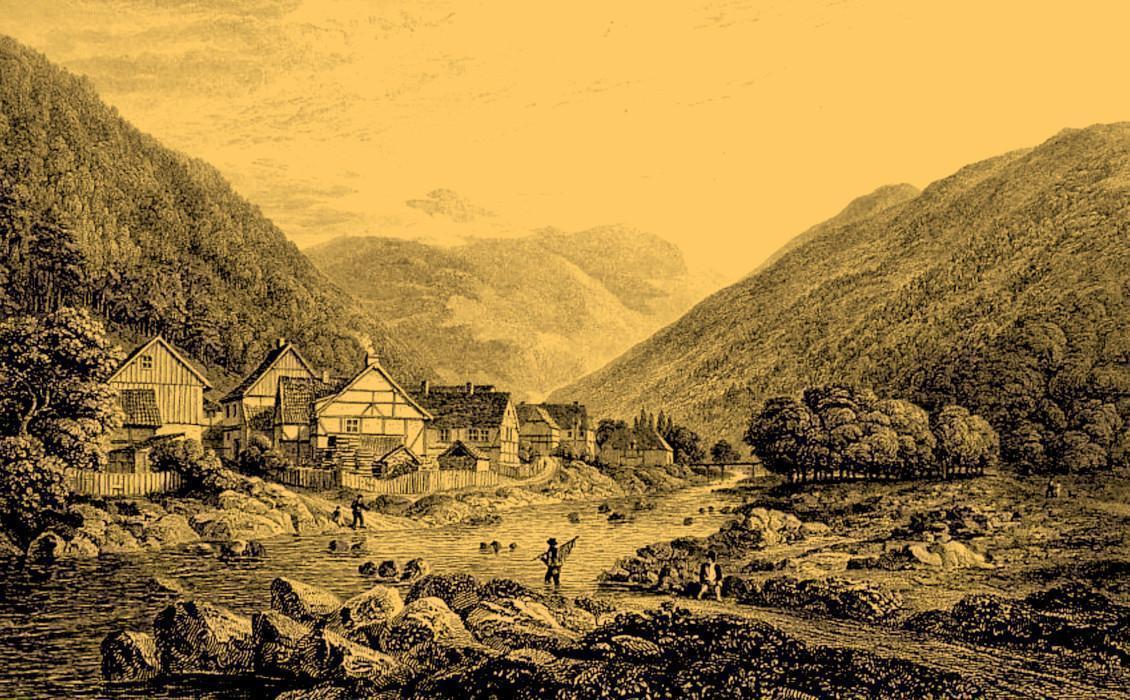
Oker in the Harz Mountains
Oker near Goslar, ca. 1820s, an excursion destination for Caroline and Franz Wilhelm Böhmer from Clausthal in 1784. Caroline writes:
“But now take an excursion with me into the domain of love. 14 days ago we traveled through Goslar to Oker, a locale with a hundred houses situated at the foot of a steep, forested mountain and bordered quite closely on the other side by the Oker River. We were visiting an acquaintance and spent one night with him. The route to Goslar itself is beautiful and, at the midpoint, quite charming when, emerging from the dense forest, one has a view of the whole countryside extending even past Halberstadt.”
(Engraving by A. Schule.)
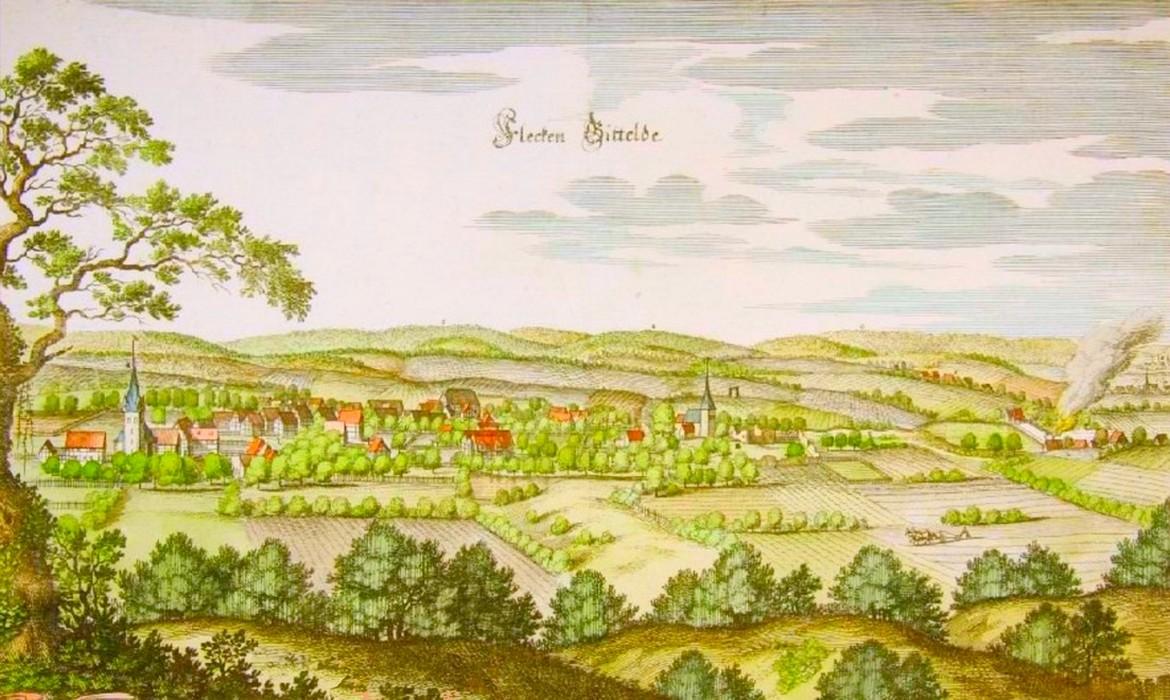
Gittelde
Gittelde, ca. 10 km east of Clausthal. Caroline apparently visited the small village on several occasions. She writes in June 1785:
“Until then I will also be taking several excursion to Gittelde to see Madam Böhmer, Louise B[öhmer], and the Hofrath [Louise’s fiancé, Georg Jacob Friedrich Meister]. The summer, which has arrived so slowly, will pass quickly amid many such distractions.”
(Matthäus Merian, Topographia und eigentlichen Beschreibung der vornembsten Stäte Schlösser auch anderer Plätze und Örter in denen Hertzogthumer Braunschweig und Lüneburg [Frankfurt am Main 1654].)
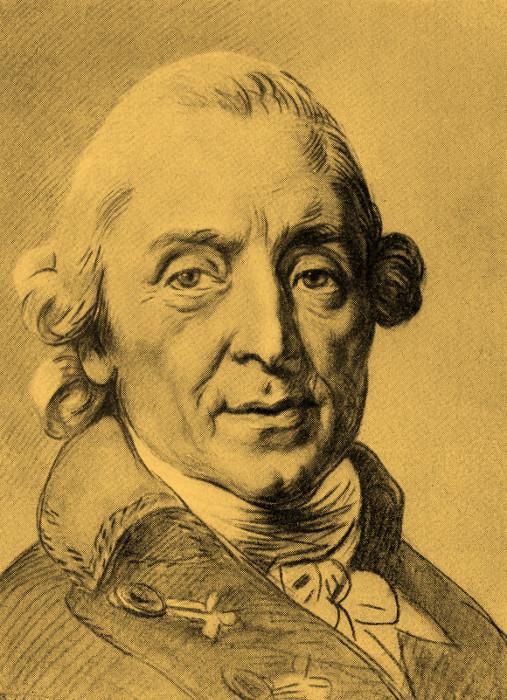
Friedrich Wilhelm Heinrich von Trebra
Caroline and Franz Wilhelm Böhmer visited the Trebra family in nearby Zellerfeld in late March or early April 1786, and presumably on other occasions as well. Trebra was the deputy mining administrator in Zellerfeld and would eventually head the administration in Clausthal and the famous mining institute in Freiberg. He was, moreover, a friend of Goethe, who himself visited Clausthal in the summer of 1784, arriving on 10 August, not quite two months after Caroline had arrived.
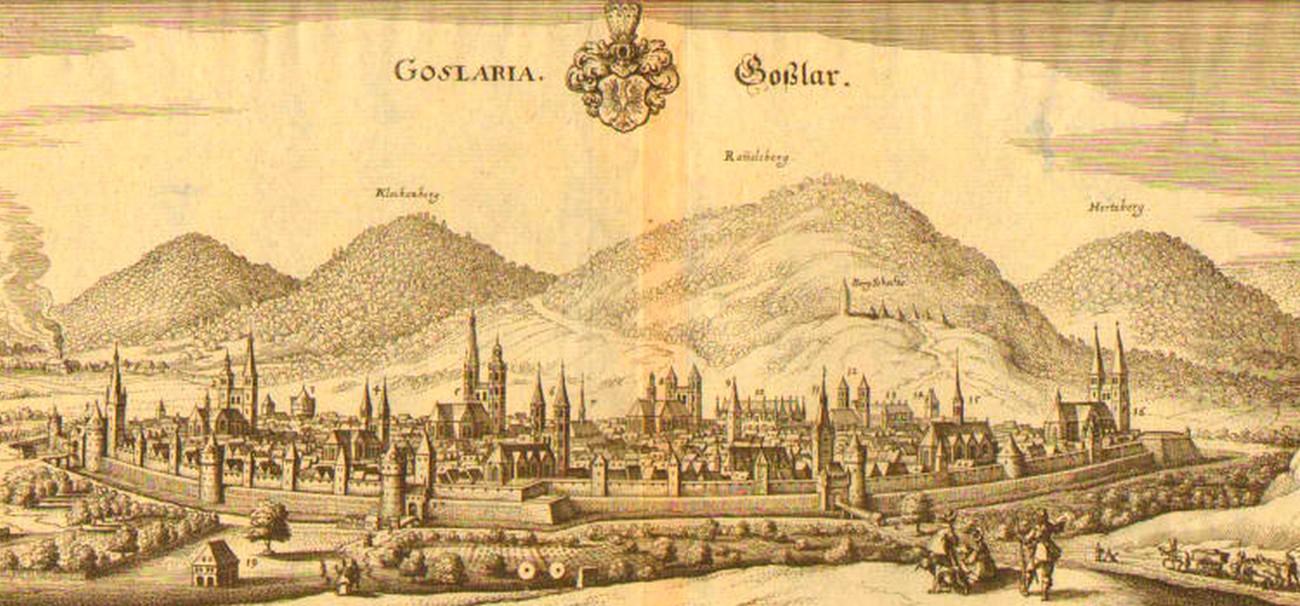
Goslar
Goslar, ca. 16 km northeast of Clausthal, with — according to Caroline’s remarkably accurate observation — its “needlepoint” towers. She and Franz Böhmer passed through it on their way to Oker in 1784. Caroline writes:
“But in Goslar itself — as soon as from a far distance you glimpse the needlepoint shapes of the octagonal towers — nature itself dies away, the grass withers, and everything languishes and droops toward the ground. You travel between bare mountains and then through a gate — where from sheer fright love itself would have to breathe out its last sigh, else fall into fearsome despair…Monasteries without windows and churches without number, and everywhere 16-cornered watchtowers that look like chained guard dogs.”
(Matthäus Merian, Goslaria. Goßlar, from Topographia Saxoniae Inferioris [Frankfurt 1653].)
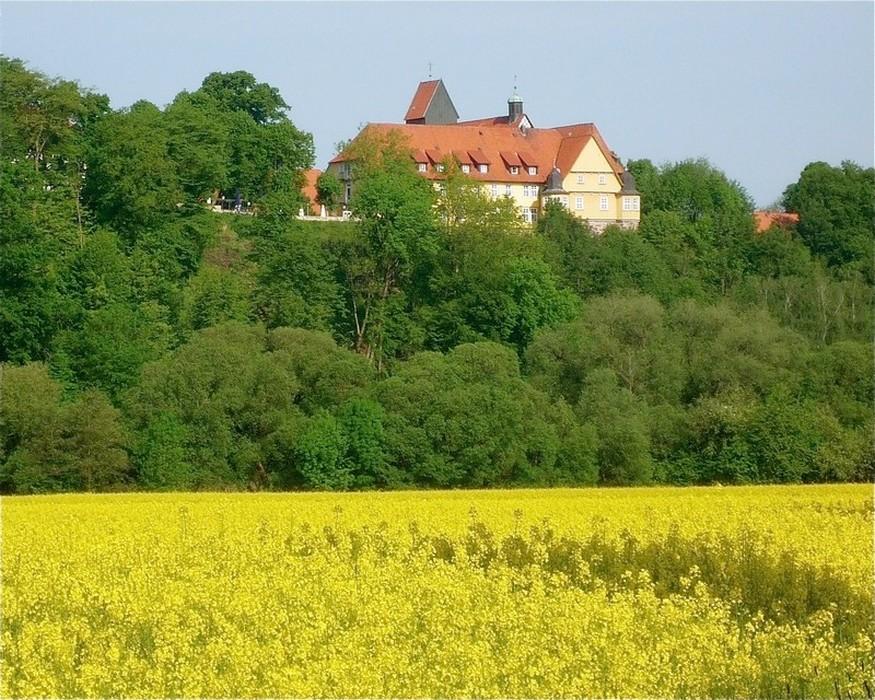
The Katlenburg Estate
The Katlenburg estate from the east, the direction from which Caroline would have approached, above the village formerly known as Duhm. Even before an anticipated journey to Göttingen in 1785, Caroline was acquainted with the locale, the estate, and the magistrate occupying the residence. The route to Göttingen passed by the estate. She writes in June:
“My mother-in-law is once again spending some time at a mineral springs spa near here, and I will be accompanying her [to Göttingen]; I am really looking forward to it, and they in their own turn are looking forward to seeing me and my child. Along the way, which passes by the Catlenburg — thus the name of the fairy-tale castle of Magistrate [Johann Arnold] Reinbold [Caroline’s mother’s uncle] — I am hoping to see Madam Sturz.”
(Photo courtesy of Birgit and Kristian Schlegel, Katlenburg.)
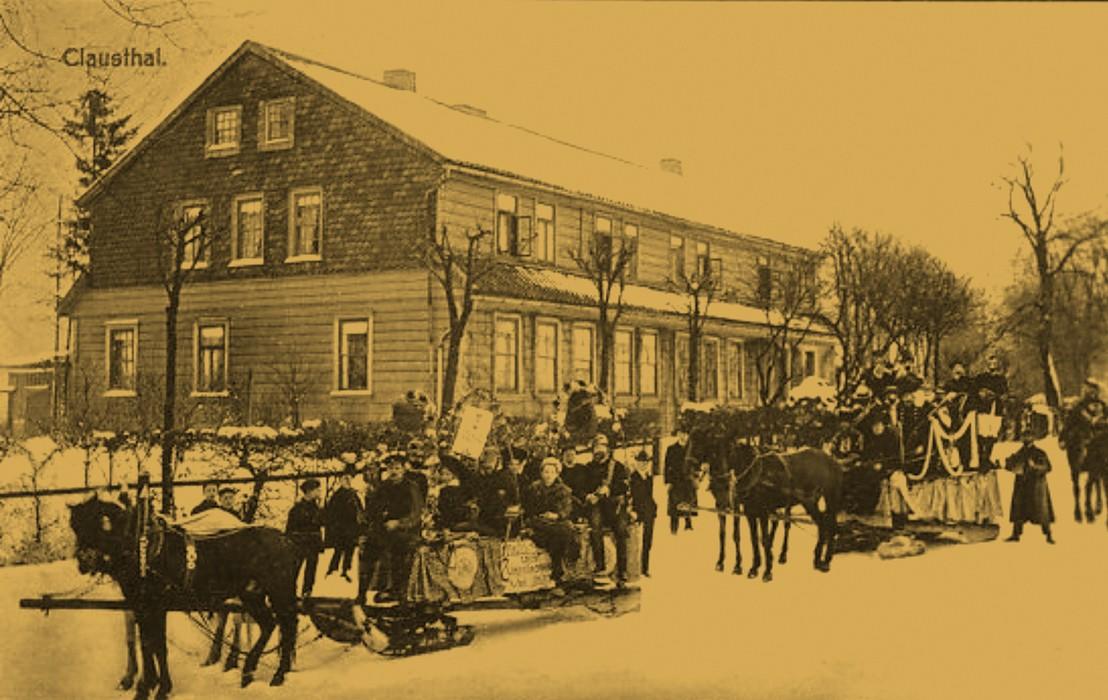
Clausthal Sleighs
Caroline writes in March 1786:
“On Wednesday we were yet able to take a lengthy sleigh ride to which Madam von Reden had invited us. We departed from in front of the Mining Administration Building, 17 sleighs in all, though the procession was admittedly not as impressive as when lead riders are bearing flags. The truth is, we did not have any lead riders, and the sleigh équipage here, especially considering how often one travels by sleigh, in general leaves much to be desired; for example, there are never any feather tassels on the horses, and when one with tassels did recently pass by with an out-of-towner, the ladies talked about it like in the story of the green ass. But in return, our ride was the most charming imaginable, taking us through a valley and through an avenue lined with green fir trees that always look quite green close up but then dark from afar.”
(1902 postcard of Clausthal students preparing for a similar sleigh excursion and processional as part of Carnival festivities.)
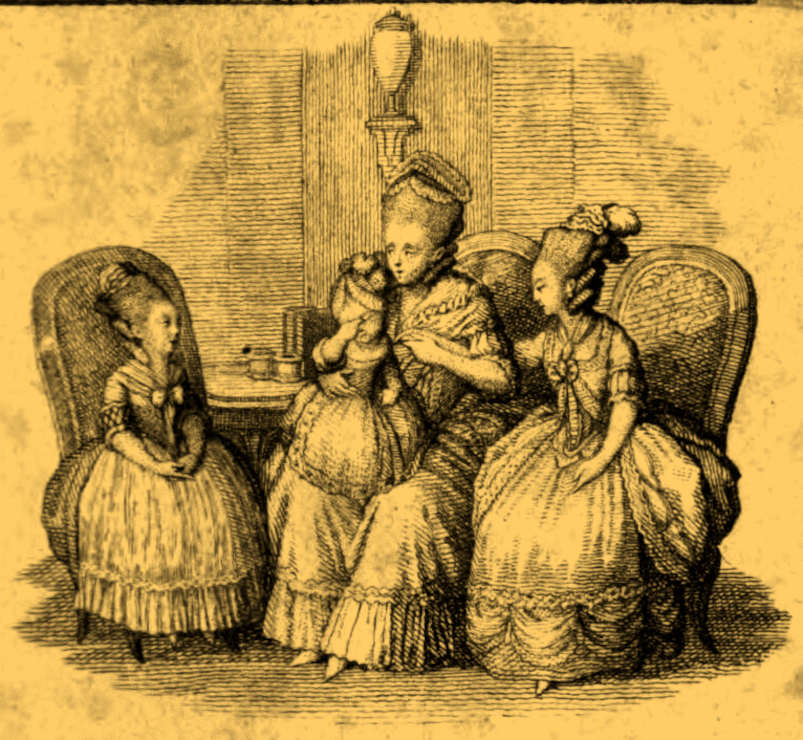
Luise Gotter and Her Three Daughters
Caroline writes from Clausthal to Luise Gotter in December 1787:
“I have not heard from you in such a long time that now there is just so much I must hear about. Professor Meyer told me quite a bit about your children. My own are growing and thriving.”
Luise’s Gotter’s children, Cäcilie, Julie, and Pauline, like Luise herself, played an ongoing and extremely important role in Caroline and Auguste’s life and correspondence and even beyond insofar as Pauline ended up marrying Schelling after Caroline’s death in 1809.
After Auguste died in Bocklet in 1800, Caroline and Wilhelm Schlegel stayed over with Luise and her daughters on their way to Braunschweig, where Caroline would try to recover.
(Representative illustration, title vignette to Johann Gottlieb Schummel, Kinderspiele und Gespräche, Das kranke Kind, oder die drey Mährchen, Kinderspiele und Gespräche, vol. 3 [Leipzig 1778].)
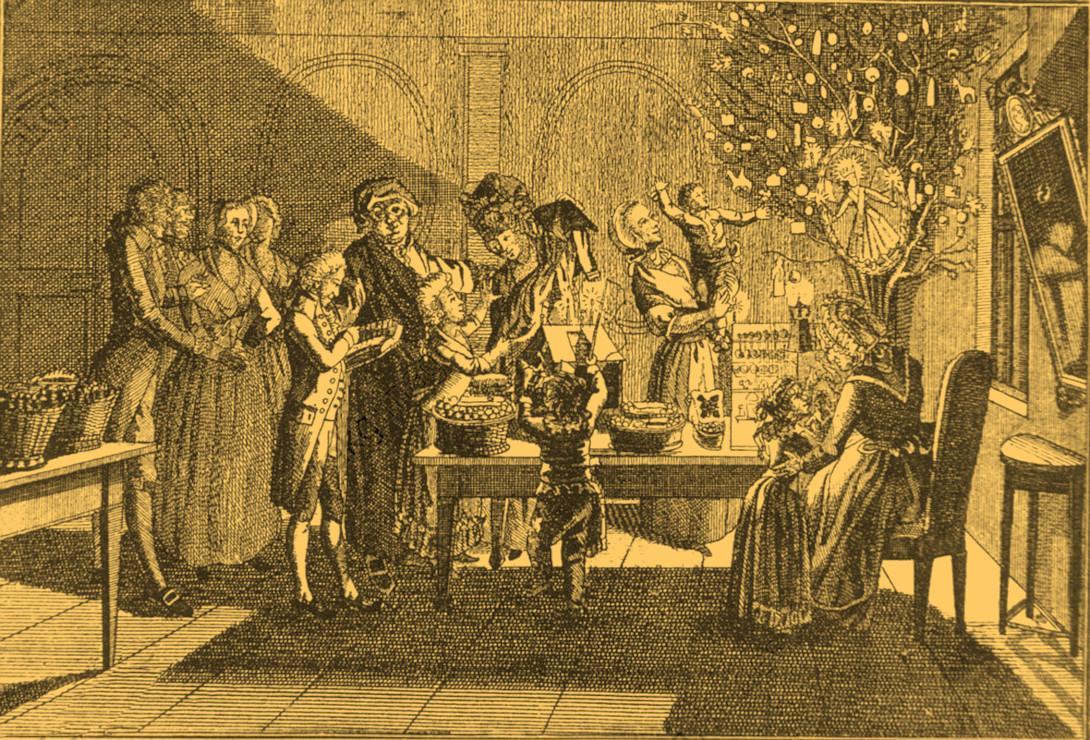
Christmas 1780s
Caroline writes about Christmas 1787 in Clausthal, mentioning also her daughters, Auguste and Therese:
“That notwithstanding, Auguste’s Christmas joy exceeded my expectation, and her gratitude was so sweet. She came into the illuminated room with outstretched arms and then loudly, naively rejoiced at every single item. She guesses who had given her the doll, and says — “Let me also thank those aunts for having given it to me, and thank Grandmama ‘about it,'” which is the way she usually expresses it. Presents were first distributed at the Dahmes, where she received bags, a pair of colorful shoes, and all sorts of other things, and then everyone came over here, where the doll then paraded around in the middle of the couch, the clothing pieces for the children to each side, and on the one side especially stood the tall highchair, on which Billy’s trousers were affixed and hanging down and the rest of the stuff arranged such that it formed a sitting figure, and on the other side the round table with little Therese’s toys and sugar figurines, and again in the middle Auguste’s things with the utensils and pewter, the wagon and a small spinning wheel and bobbin symmetrically arranged on the ground and decorated with several small wax candles.”
(A contemporaneous Christmas scene reflecting the essential setting, characters, and ambience of Caroline’s description here: Joseph Kellner, Die Christbescherung oder der fröhliche Morgen [1780].)
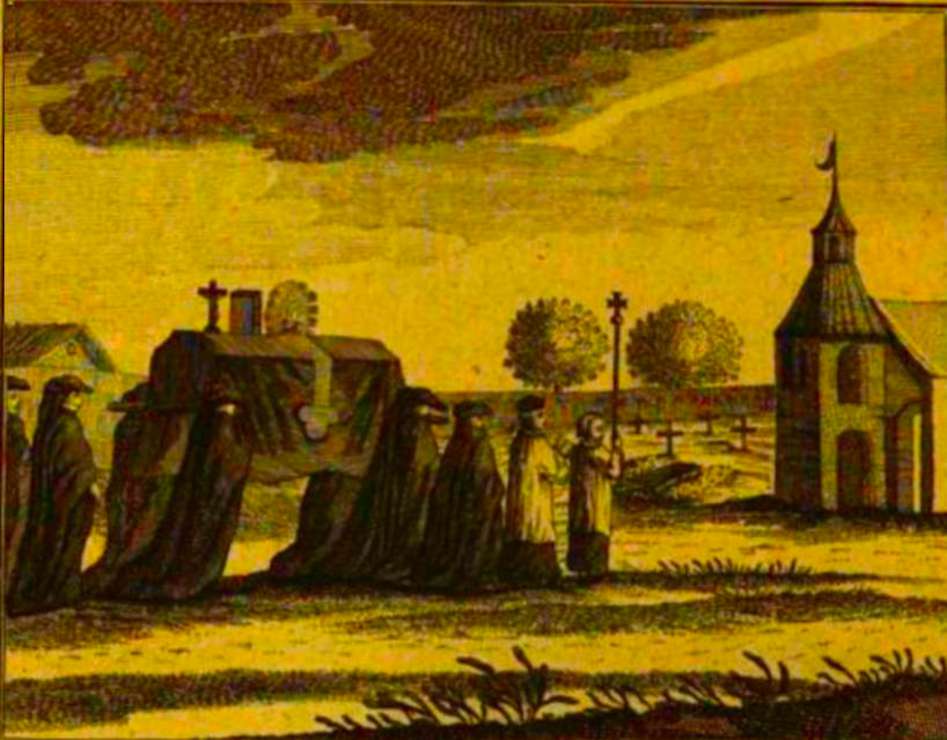
Funeral Procession
After Böhmer’s death on 4 February 1788, he was buried in the Old Cemetery barely 100 paces from their home. Caroline writes:
“Suffering gently is requiring the most strenuous effort of which I am capable just now, and is certainly necessary, for the eruptions of my grief, the violent tears of mournful misery do nothing but harm me straightaway…It is not as if I were trying to empty myself of all feeling or as if the images of the past were less vivid — your Caroline is a living monument to the deceased, he lives in my heart with the most vivid presence — the reflection of that final, smiling, grateful look in his eyes is still in mine — that is how I feel now — and yet, precisely because these images, perpetually hovering around me, draw me away from reality, they make my condition easier.”
(Schauplatz der Natur und der Künste, vol. 6 [Vienna 1779], plate 24.)