
• 68. Caroline to Lotte Michaelis in Göttingen: Clausthal 1785/6
[Clausthal 1785/6]
|146| Why, my dear Lotte, are you vexing me with such doubts? It is always the same old story with us. What else should I do, how much gentler can I be except to warn you? Especially considering that I, who am in fact not dreaming but am standing here wide awake watching your dissimulations, cannot possibly approve of them? Nor, truly, have I done anything more than warn you, and did so quite considerately and must do so again.
Lotte, you must be extremely important to me if even the fear of becoming tiresome to you does not silence me. Were I intent on merely giving in to my own impatience, I would certainly do so, and would simply let things take whatever course they may; but as long as I still harbor some hope that I might put a stop to your ill-considered course, even if unnoticed, even if unbeknown even to you yourself, I have no intention of backing off. [1]
I certainly understand that you cannot go back completely now, nor will you ever really want to, but I also know that if you continue to cultivate this familiarity more closely, then fruitless weariness will be what ultimately brings it to an end. You are |147| not the girl who can be a man’s lady friend with impunity, and for him — I confess I wanted to hope for more but cannot — for him you will never be more than that.
You are imagining now that such a life could not but be eternally appealing — and indeed it would could your heart be at peace with itself in such a relationship; but the heart always goes one step further until it gets to the boundary — where you already have often turned around with annoyance and dissatisfaction, where our incompleteness and the inadequacy of our entire being can no longer endure the excess and must bend, since only rarely do things ever get so far that it actually breaks. But then we have to traverse the entire way back again.
I am extremely satisfied that you insisted on Saturday. It must not and indeed ought not be more often. My dear child, please do only believe that I genuinely care about you.
The light tells me that it is already time to close, otherwise I would tell you about our most delightful ball. Perhaps I will write to Louise this week. The Gusta girl also pleases me, and be, or should Elizabeth have the nerve, I will be the Essex of this Rutland, but the piece is to have a different ending; Elisabeth shall be toppled from her throne! [2]
Why have I not received Ossian? [3] We have no choice but to concede Madam Volborth yet another louis d’or this year [4] . . .
Notes
[1] Göttinger Taschen Calender Für das Iahr 1794; Inhaltsverzeichnis deutscher Almanache, Theodor Springmann Stiftung:
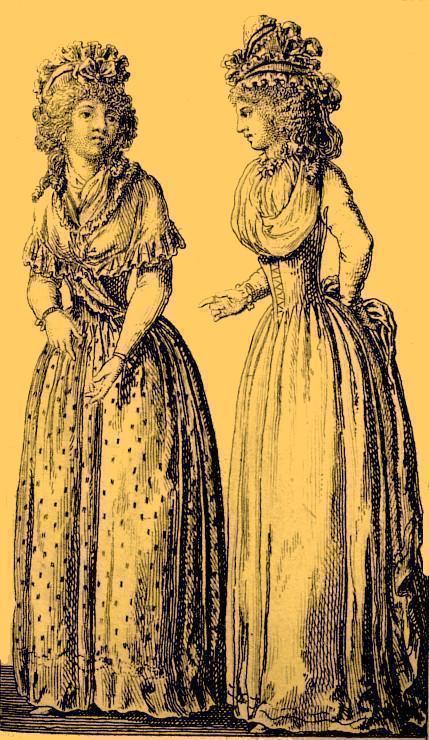
The reference here and below is doubtless to Lotte’s ill-fated and, for Caroline, exasperating relationship with Friedrich Ludwig Wilhelm Meyer; see Caroline’s letter to her on 18 October 1785 (letter 61), on 9 November 1785 (letter 62), and Lotte’s to Caroline in November 1785 (letter 64). Back.
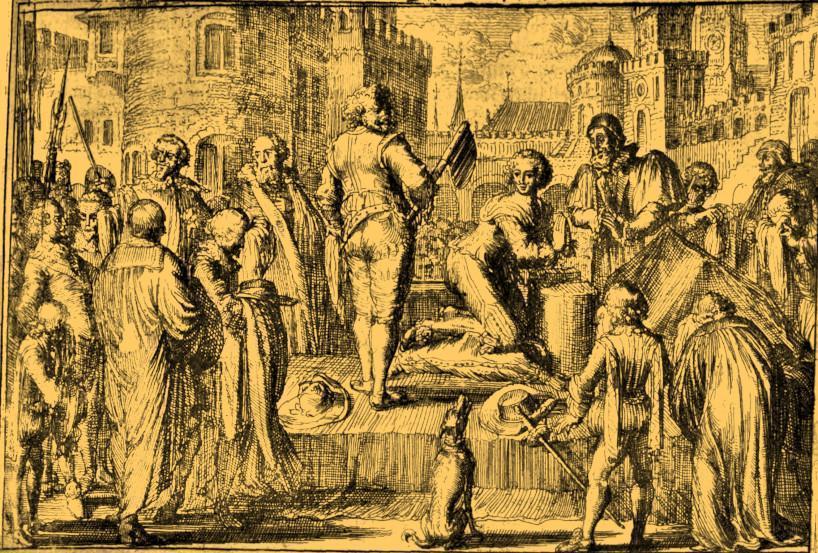
[2] An allusion to the play by John Banks mentioned earlier (to Luise Gotter on 13 July 1781 [letter 24], esp. note 4), Graf von Essex. Ein Trauerspiel in fünf Akten in Johann Gottfried Dyk’s adaptation (Frankfurt, Leipzig 1777; 1780; 1786), Eng. orig. The Unhappy Favorite; or, the Earl of Essex. A Tragedy (London 1682). The background to the play is the unsuccessful rebellion, during the period of the Nine Years War, of Robert Devereux, 2nd Earl of Essex, in 1601, as a result of which the earl was beheaded on 25 February 1601.
The play alters the story such that the earl is now secretly married to a lady-in-waiting to Queen Elizabeth, Countess Rutland (Rotland in the German translation), and the rebellion derives solely from the court intrigues rather than from the earl himself, as was historically the case. The earl’s adversaries at court are now clearly cast as villains; those adversaries include Countess Nottingham, with whom the earl allegedly earlier had a relationship that did not end well, and her deception and intrigues — in her quest for revenge — contribute not only to the tragedy of the earl’s execution, but also to the hallucinatory mental state of Countess Rutland at the end of the play (act 5, scene 14:
Tell the queen nothing of my love, or of the death I died! — She would but mock it. — [Rises.] Ah! the blade flashes! Beloved blade, oh, glitter not! At least not there! But solely above me! . . . Tears come from the heart, and mine is dead! — cold as the grave! — But my brain glows! — — Phooey on this head! A useless head! Off with it! Ah, behold the steaming blade! — Speak but a single word, thou harbinger of death! etc.
Here an illustration of the execution in February 1601 of the historical Earl of Essex; from Hiob Ludolf, Allgemeine Schau-Bühne der Welt/ Oder: Beschreibung der vornehmsten Welt-Geschichte, : So sich von Anfang dieses Siebenzehenden Jahr-Hunderts Biß zum Ende desselben/ In allen Theilen des Erd-Kreisses/ zumahlen in der Christenheit/ Sonderlich in unserm Vatterland Dem Römischen Reiche/ Nach und nach begeben, vol. 1, 1601–1630 (Frankfurt 1699), plate on page with cols. 41–42:
Although the earl’s adversaries succeed in having him executed, Elizabeth, who in the play herself alludes to her amorous feelings for the earl, eventually sees through their intrigue and assures them she will act accordingly, something that did not happen historically. But, of course, she is not “toppled from her throne,” but instead remains in power, while Essex and his secret spouse, Countess Rutland, perish. Although “Gusta” is a nickname for Auguste, it is not clear whether Caroline is referring to her daughter and, if so, in what context. Caroline seems to be responding to something in Lotte’s letter. Back.
[3] Concerning Ossian, see Caroline’s letter to Lotte Michaelis on 22 March 1786 (letter 67), note 11. Back.
[4] Concerning Madam Volborth (Vollborth) and the Göttingen reading society, see Caroline’s letter to Lotte Michaelis on 20 March 1786 (letter 67), note 8. Back.
Translation © 2011 Doug Stott