
• 1. Caroline to Luise Stieler in Gotha: Göttingen, 4 September 1778 [*]
Göttingen, 4 September 1778
|3| . . . My birthday was this week, [1] and it gave me pause for some rather sad reflections; how utterly different everything was this time last year, I can still remember every detail. On that very day, Blumenbach [2] had to go out to the countryside, so that morning he wrote a billet to my brother asking him to congratulate me and at the same time to assure me he would drink to my health that very afternoon and would do so doubtless with an extremely warm heart, and to me he sent a bouquet with the following verses: [3]
This small bouquet I bind for you,
Plucked from my heart, where once it grew,
Do take, Belinda, for you see,
This small bouquet, it comes from me.
The evening he returned, he still managed to come by in person. [4] But how all that has now changed! This year he did not even think about it, nor have I seen him for three weeks now. . . .
I again am about to lose one of my girlfriends here, who will be married in Jena, Mlle. Röderer; she is marrying Professor Loder, a pleasant man who has only been in Jena since Easter and who was a student here; I hope the marriage will be a happy one. [5] . . . she was living with her sister, who does, however, have a rather obstinate husband, namely, Herr Schlözer, [6] whom you presumably already know par renommée [7] . . .
Notes
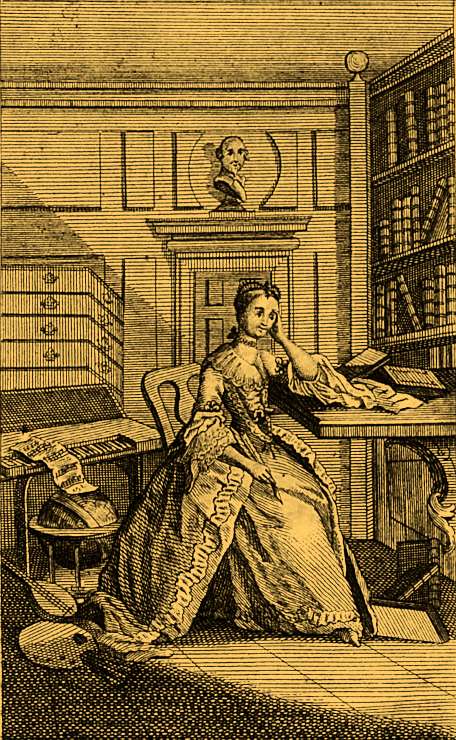
[*] Here at the beginning of her extant correspondence, Caroline was but fifteen years old (frontispiece to Johann Christian Koppe, Das wohlgezogene Frauenzimmer, oder Vollständige Anweisung zur weiblichen Erziehung in einer Reihe Briefe einer Mutter an ihre Tochter [Rostock 1767]):
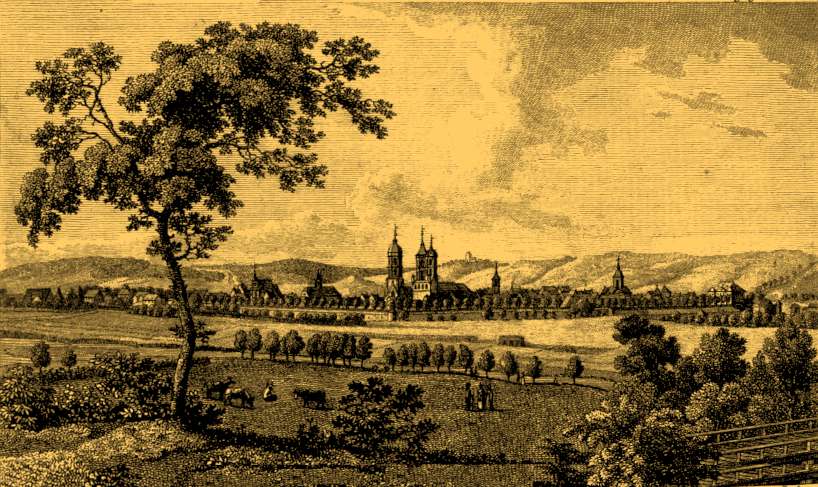
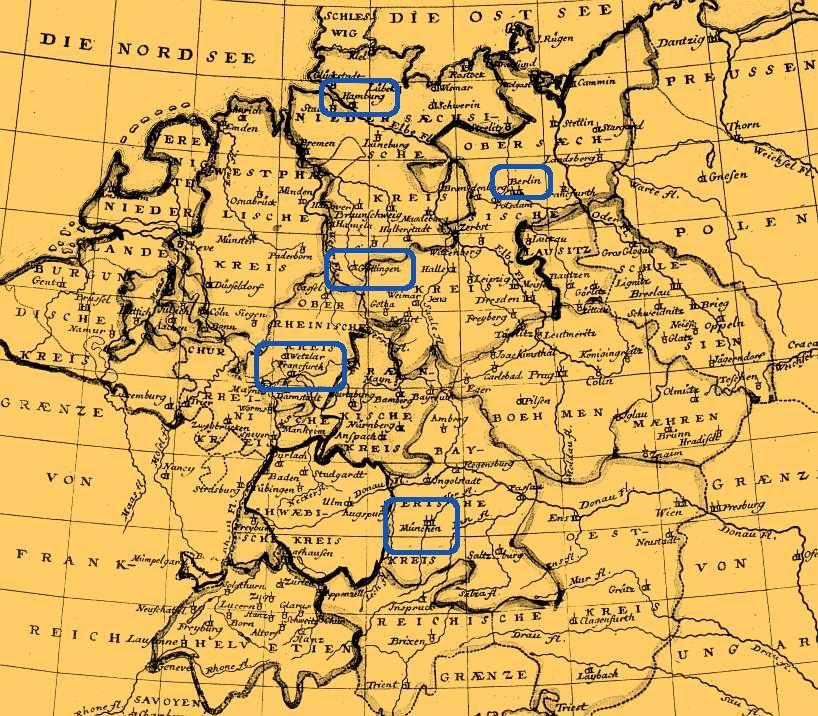
She was born and grew up in Göttingen in the Holy Roman Empire of the German Nation, Circle of Lower Saxony, Electorate of Hannover. Hence Göttingen was her home town, the Electorate Hannover her home state.
Here the town in 1801 (frontispiece to Christoph Meiners, Kurze Geschichte und Beschreibung der Stadt Göttingen und der umliegenden Gegend [Berlin 1801]):
Here Göttingen’s location on a map with, for orientation, the major cities of Hamburg, Berlin, Frankfurt, and Munich (Daniel Nikolaus Chodowiecki, Besetztere und illuminierte Landkarte von Deutschland, from the Kupfersammlung zu J[ohann] B[ernhard] Basedows Elementarwerke für die Jugend und ihre Freunde: Erste Lieferung in 53 Tafeln. Zweyte Lieferung in 47 Tafeln von L bis XCVI [Leipzig, Dessau, Berlin 1774], plate xlv):
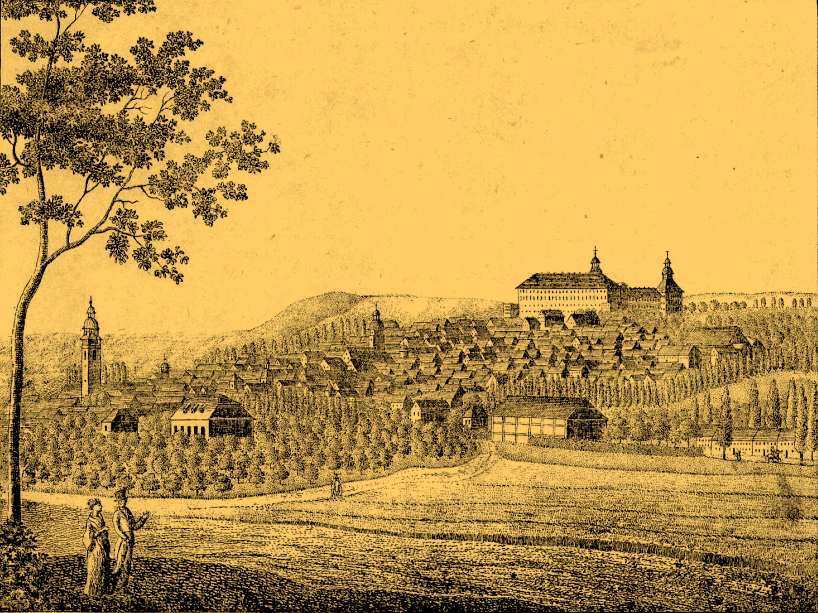
Erich Schmidt (1913) preferred to “leave in abeyance the question of the origin of Caroline’s lifelong friendship with Luise Johannette Wilhelmine Stieler, daughter of Gotha Hofrath Caspar Hermann Stieler and later wife of Friedrich Wilhelm Gotter, a friendship Schelling so eloquently acknowledged after Caroline’s death,” though Schmidt did rightly surmise that Caroline attended boarding school in Gotha for a time, ca. 90 km southeast of Göttingen (Neue Bildergalerie f.d. Jugend, vol. 1, 5th ed. [Gotha 1829], plate 1):
Gisa Steguweit, “Eine ‘berühmte Erzieherin’ des 18. Jahrhunderts in Gotha: Sara Elisabeth Schläger (1722–1803)” (Gotha 2012), 10, maintains that Caroline arrived at this school at Easter 1774.
She remained for two years, living with the family of Julius Karl Schläger (Caroline mentions his wife, “Mother Schläger,” often in her early letters). Steguweit similarly remarks (ibid.) that even prior to Caroline’s arrival, her father, Johann David Michaelis, had carried on a scholarly correspondence Carl Julius Schläger, who was also a specialist in Greek and ancient Near Eastern languages (Post Karte Durch ganz Deutschland, ed. J. Walch [Augsburg 1795]; illustration: Matthäus Seutter, Die Hochfürstliche Residentz Frieden Stein und Haupt Stadt Gotha. H. A. König delineavit [Augsburg ca. 1738]; Staats- und Universitätsbibliothek Bremen):

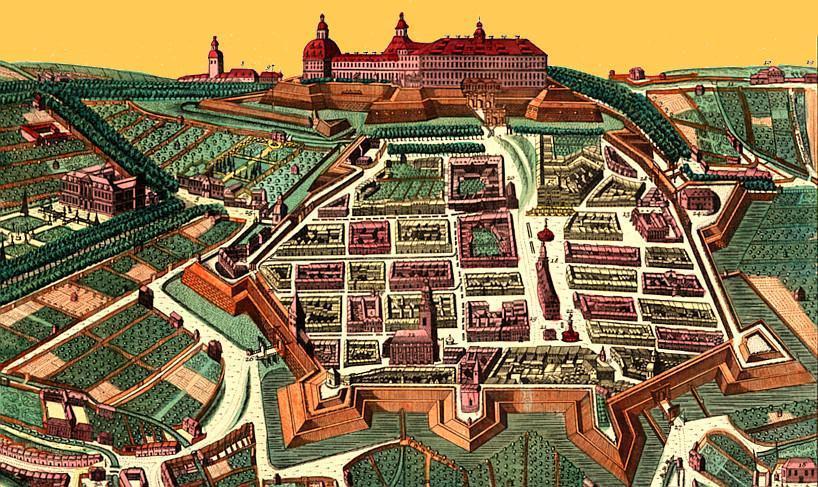
Max Berbig, “Caroline v. Schelling und Therese Huber in ihren Beziehungen zu Gotha,” Mitteilungen des Vereins für Gothaische Geschichte und Altertumsforschung (1925), 11–25, here 12, also maintains that Caroline moved to Gotha and entered this school at Easter 1774. Both of Caroline’s sisters, Lotte and Luise Michaelis, similarly attended school there, though Lotte under rather different circumstances (see notes to letters 21, 25a ).
Madame Schläger’s “school,” however, must not be understood in the sense of a traditional boarding school in which a larger group of pupils lived in what today might be understood as dormitory rooms. Instead, the pupils — girls — were wholly integrated into the family as “daughters of the house” who sooner enjoyed a family-based, philanthropic education (Gisa Steguweit, “Eine ‘berühmte Erzieherin’ des 18. Jahrhunderts in Gotha,” 10) (illustration: title vignette to Paulin Erdt, Philotheens Frauenzimmer-Akademie: Für Liebhaberinnen der Gelehrsamkeit [Augsburg 1783]):
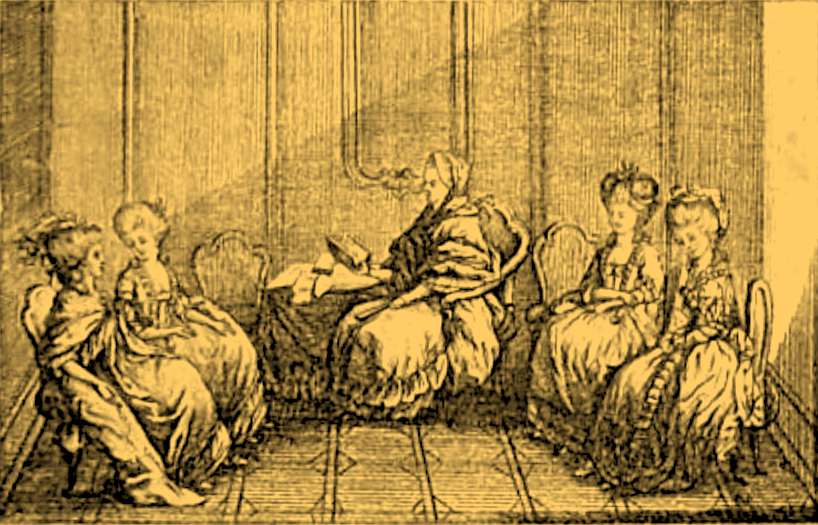
This circumstance accounts for Caroline’s frequent references later to Madame Schläger as “Mother Schläger.” Back.
[1] Caroline’s fifteenth birthday, 2 September, fell on a Wednesday in 1778; she is here writing on that Friday. Back.
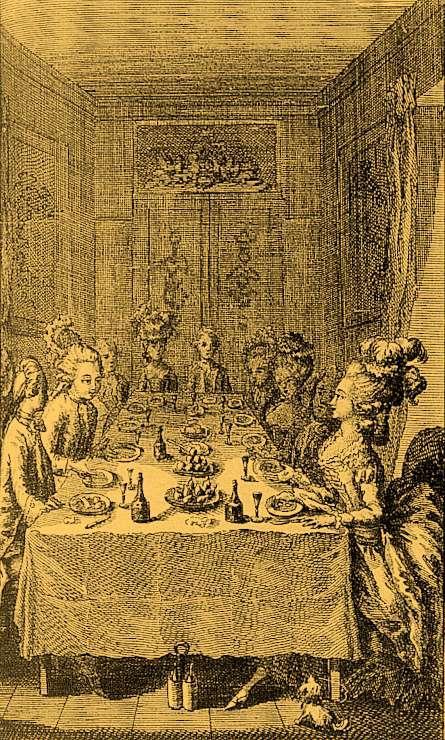
[2] Gotha was also the hometown of the long-lived anthropologist Johann Friedrich Blumenbach, who became a professor in Göttingen in 1776; he eventually married Christian Gottlob Heyne’s sister-in-law. In a letter to Wilhelm Schlegel from Hannover on 4 September 1791 (Körner [1930] 1:17), Caroline Rehberg, describing the company she kept in the mineral-springs spa Pyrmont during a visit that summer, remarks that “Blumenbach’s company contributed considerably to the joy; always cheerful and yet at the same time something so dependable about him, that is doubly valuable in a place where all around one love and friendship seem to be the most moody and unstable of deities” (illustration from Retif (or Restif) de la Bretonne, Les contemporaines; ou, Avantures des plus jolies femmes de l’âge présent, 42 vols. in 12 [Leipsick 1780–85], vol. 7 [1780], 170):
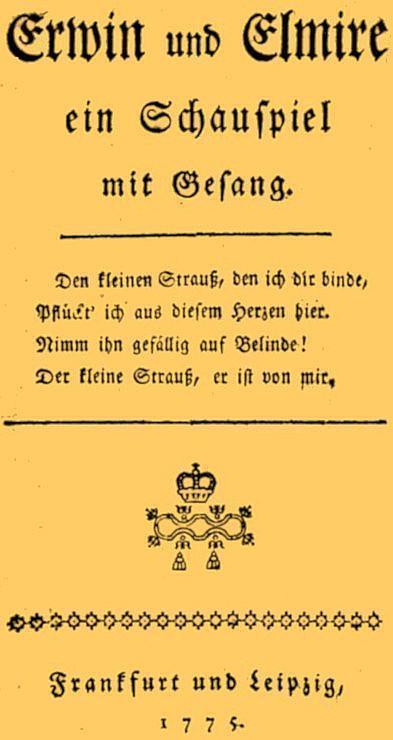
[3] “This small bouquet . . . ” was Goethe’s dedicatory poem to Lili Schönemann that also passed into the pirated Himburg edition of his works prefacing the singspiel Erwin und Elmire. Ein Schauspiel mit Gesang (Frankfurt, Leipzig 1775; illustration of Elmire by Daniel Nikolaus Chodowiecki, Elmire in der Einöde; Frankfurter Goethe-Haus / Freies Deutsches Hochstift):

[4] Illustration from the Almanach und Taschenbuch für Haeusliche und Gesellschaftliche Freuden auf das Jahr 1800; Inhaltsverzeichnis deutscher Almanache, Theodor Springmann Stiftung:
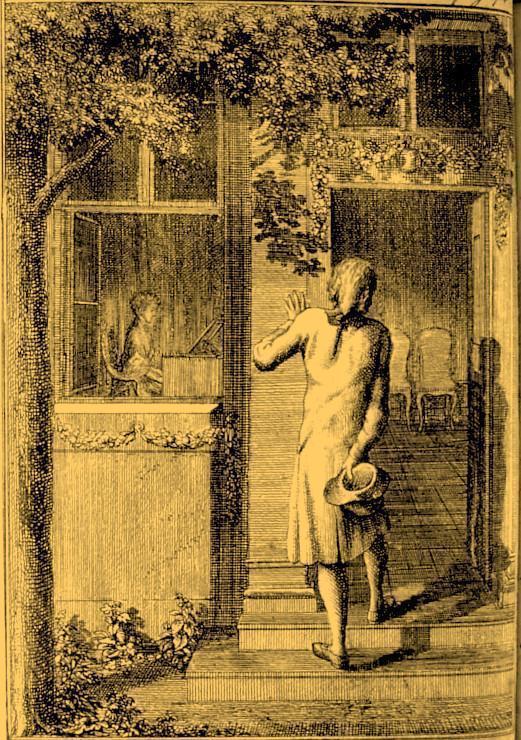
Accounts of visits and more or less informal social gatherings recur frequently in these letters, and with good reason, since these events were reckoned among the most important social gestures during this period.
Daniel Nikolaus Chodowiecki, Ich stand da, albern und betroffen genug (1794); Herzog August Bibliothek; Museums./Signatur Chodowiecki Sammlung (6-444):

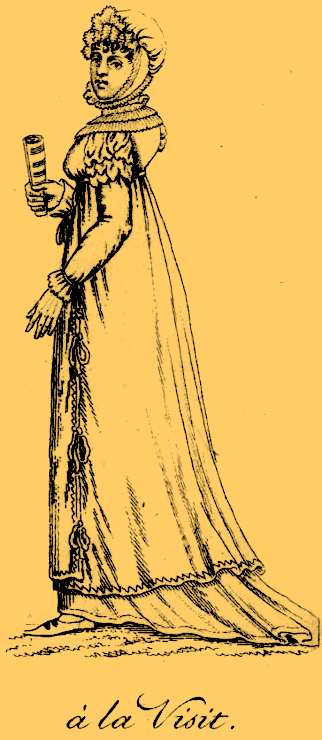
Women generally adhered to certain attire dictated by fashion for such visits as illustrated by the Toiletten Kalender für Damen 1805 (Inhaltsverzeichnis deutscher Almanache, Theodor Springmann Stiftung):
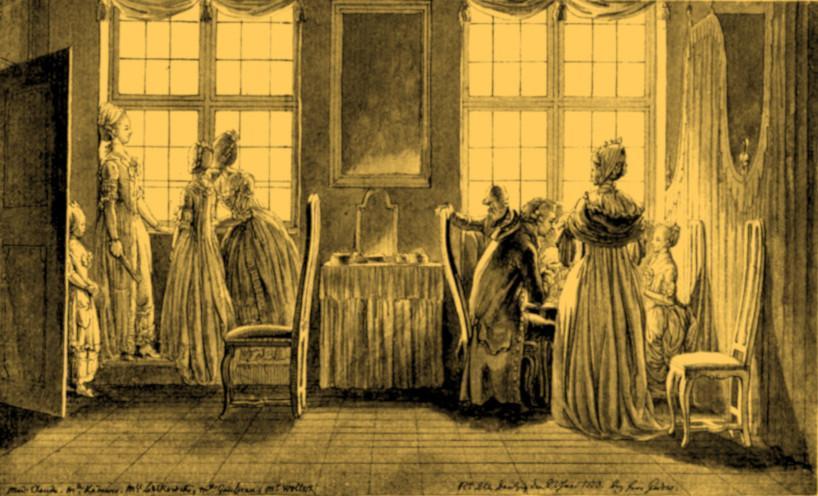
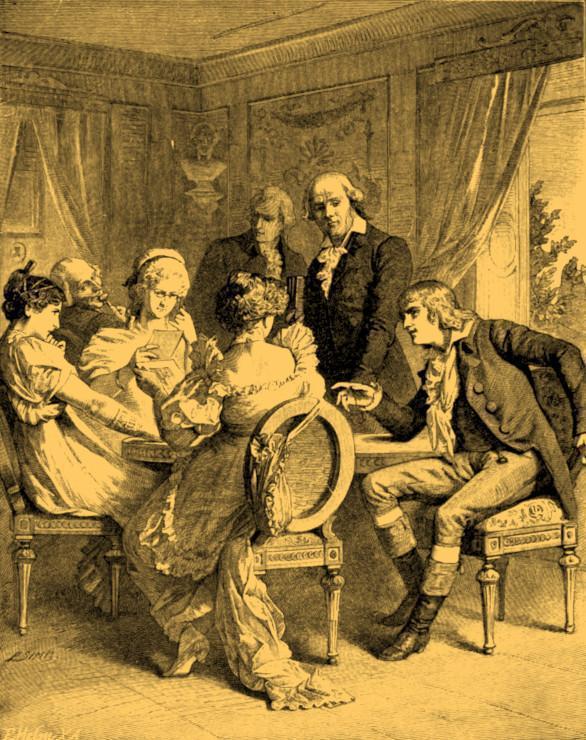
Additional engravings depict, first, perhaps the sort of visit Caroline here describes but with the family around; second, a more leisurely evening gathering; third and fourth, evening company or gatherings (Daniel Nikolaus Chodowiecki, Von Berlin nach Danzig: Eine Künstlerfahrt im jahre 1773, von Daniel Chodowiecki. 108 Lichtdrucke nach den originalen in der Staatl. akademie der künste in Berlin, mit erläuterndem text und einer einführung von Wolfgang von Oettingen [Leipzig 1923]: first two illustration: “Besuch bei den Fräulein von Rosenberg,” plate 74; “Eine Abendgesellschaft bei Herrn Gerdes,” plate 53; third illustration: “Abendgesellschaft,” Fragment einer Heirathsgeschichte [1794]; Herzog Anton Ulrich Museum; Museumsnr./Signatur DChodowiecki AB 3.988; Sehe Sie! ob mein Vater mit Recht versagte [1794]; Herzog August Bibliothek; Museums./Signatur Chodowiecki Sammlung [6-445]:

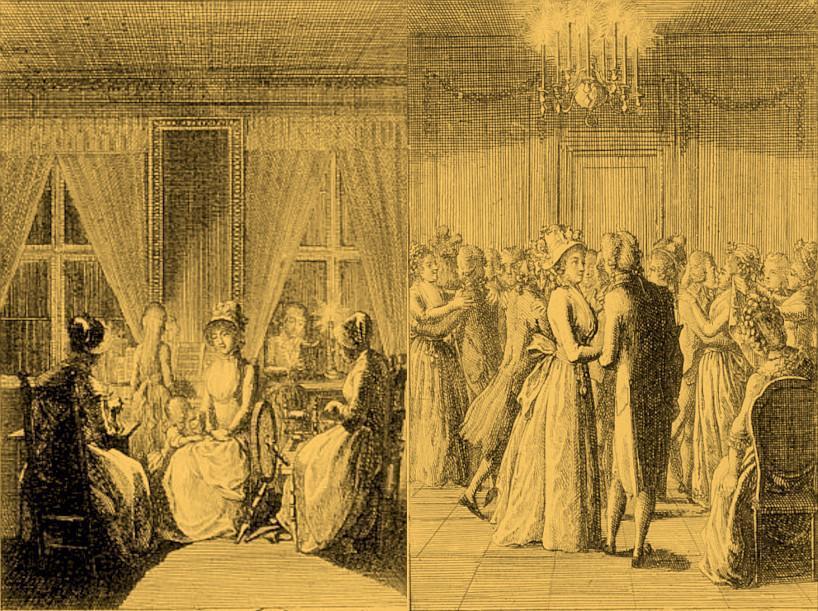
Next two illustrations: to Goethe’s novelle The Good Women [Die guten Weiber (1801), Goethe’s Works, trans. George Barrie [Philadelphia, New York, Boston 1885], vol. 3, 242; and to A. G. Eberhard, “Zwist und Liebe,” Neues Taschenbuch zum geselligen Vergnügen 1 [1801], 2–65; illustration in the next volume [1802]):

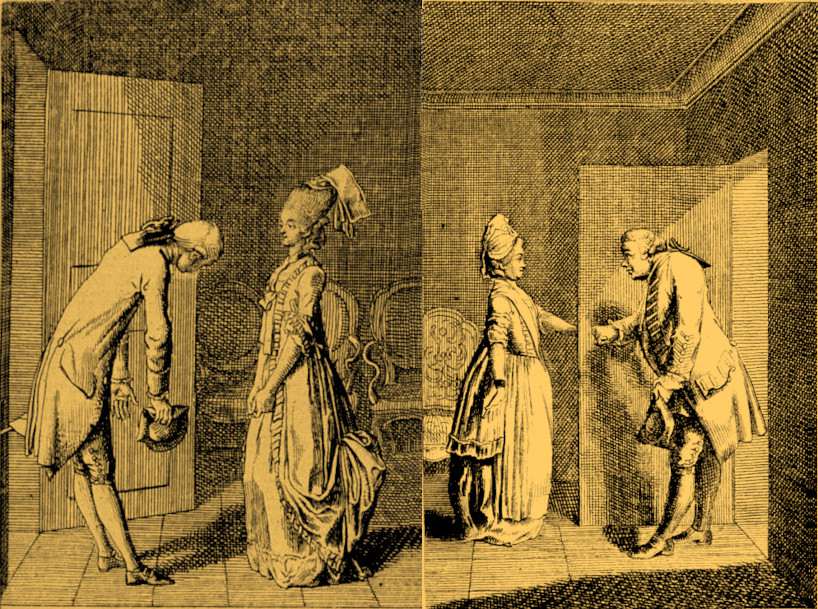
Here two illustrations, with gentleman callers, of (1) the proper form of greeting before entering a residence, and (2) a neighbor stopping by for a visit (Daniel Nikolaus Chodowiecki, Der Grus [1778]; Herzog August Bibliothek; Museums./Signatur Uh 4° 47 [187]; Die Haushaltung [1780]; Herzog August Bibliothek; Museums./Signatur Uh 4° 47 [130]):
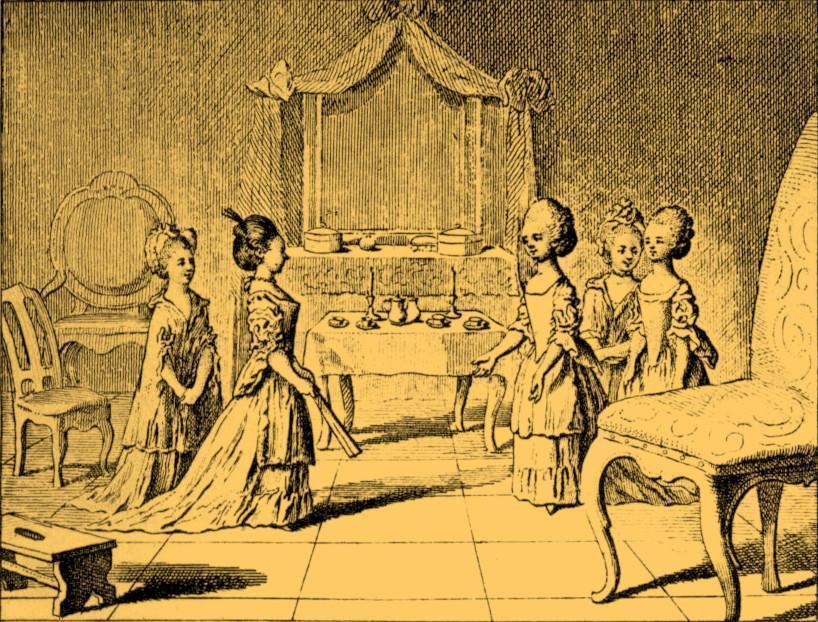
Indeed, even children played at the “game” of visiting (Chodowiecki, Das Besuchspiel, Kupfersammlung zu J[ohann] B[ernhard] Basedows Elementarwerke für die Jugend und ihre Freunde: Erste Lieferung in 53 Tafeln. Zweyte Lieferung in 47 Tafeln von L bis XCVI [Leipzig, Dessau, Berlin 1774], plate 6a):
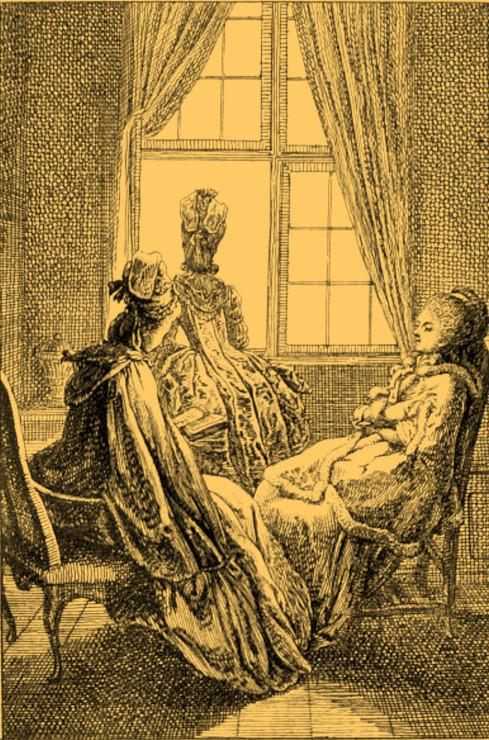
One particularly popular activity during social gatherings, especially among those interested in literature and one Caroline and her closer acquaintances mention often, was that of a private reading among acquaintances (Taschenbuch für gesellschaftliche Spiele [n.d.]; Inhaltsverzeichnis deutscher Almanache, Theodor Springmann Stiftung):

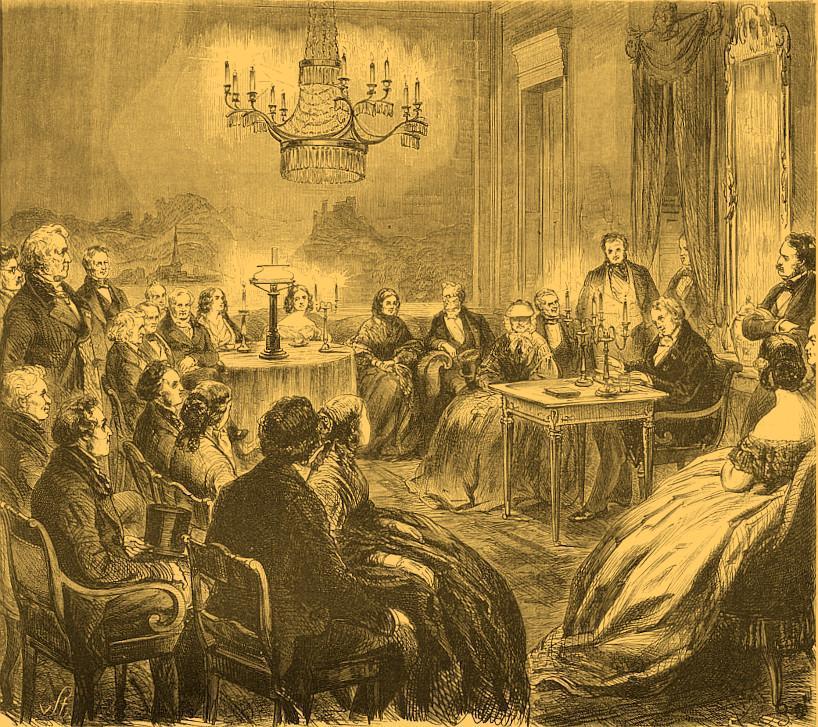
See esp. the following illustration of Ludwig Tieck during a later period in Berlin (Schelling is seated at far left; Ludwig Pietsch, “Ein Abend bei Ludwig Tieck,” Der Bazar. Illustrirte Damen-Zeitung [1866] 42 [8 November 1866], 337–38, illustration on p. 337; second illustration: Daniel Nikolaus Chodowiecki, “Das Lesen,” from Occupations des dames; Herzog August Bibliothek; Museums./Signatur Uh 4° 47 [165]):
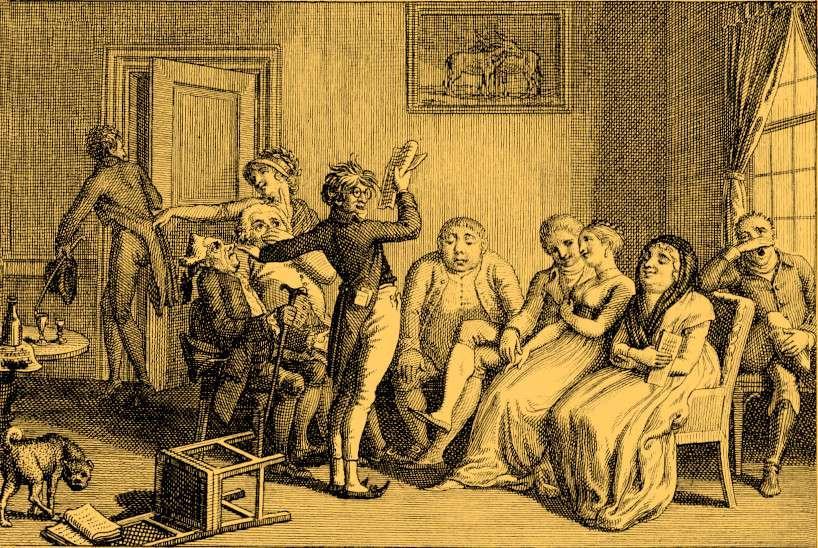
There were, of course, more satirical takes on the less exciting side of such readings (“Ein Leseconvent,” Taschenbuch auf das Jahr 1803: Dem Edeln und Schönen der frohen Laune und der Philosophie des Lebens gewidmet [1804], plate 4):
[5] Wilhelmine Dorothea Victoria, née Röderer married the anatomist and university physician Justus Christian Loder in 1778; Loder and his (from 1792) second wife, Louise Loder, play a considerable if varying role in Caroline’s letters from Jena. Back.
[6] The historian and politician August Ludwig von Schlözer had a long and respectful relationship with Caroline’s father, whose lectures he attended as a student in Göttingen; he had married Caroline Röderer in November 1769. Back.
[7] Fr., “by [his] reputation.” Back.
Translation © 2011 Doug Stott